Lithium batteries - are they worth it?

No doubt many are interested in the cost.

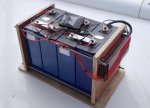
I installed 400Ah of Winston LiFePo4 cells, 4 cells to give nominal 12V system, including Orion BMS, alternator regulators for 3 alternators, all the required enclosures, relays, fuses, wiring etc etc for the complete system. Total cost was €2600.

I did not have to pay VAT on the majority of the total cost and I got the Orion BMS off Ebay for about 1/3 full price, so realistically you are looking at around €3500 including VAT if you purchase everything new.

Also the above does not include any labour costs since I did all the design and installation myself, probably between 60 and 80hrs work for everything.
It sounds like you did your conversion very economically. By comparison I can have Trojan T105s replaced four times for the same money. I am fortunate that I get them for $150 each. If I get five years out of a set then your bank has to last 20 years or so. On that basis is it worth the hassle to convert? The Trojans have a design life of 8 years. We get them fully charged every day. We dont discharge below 80%. We have battery balancers installed and they are equalised monthly. Five years should be a minimum
 
These are my LFP plans so far but still subject to possible change. Ours is a 32 foot boat with an L-shaped battery box that can take 2 x 100 SLA batteries or, if I pay a lot more, 2 x 130amps. (The engine battery is a small sealed AGM which is tucked away elsewhere.) With 8 prismatic cells I can make an LFP battery by joining two sets of four cells (in a 2P2S configuration) in series, each half of the battery occupying the two legs of the 'L'. and then forming a 2P4S single battery of nominal 12 volts and 200 ah. Using a very conservative range for long-life of between 90% and 30% state of charge gives 120 usable amp hours. This compares to something like 70 - 90 usable ah with my SLAs (for brand new 100ah or 130ah with a relatively steep decline assuming difficulty in regularly getting the batteries back to full charge to inhibit sulphating). But the other gains for a small boat is the lower resistance of LFP to receiving charge so charging from alternator and solar is more efficient.

The intentions are to have the whole system maintenance-free, not to have to intervene at all in normal operation, and never have to buy batteries again. The last of these might sound fanciful but I have about 15 years left in my sailing and reports for those who have well-designed systems is that properly charged LFP batteries are still going strong after 12 years +.

While not a fully integrated system like that of crisjones - the intention, nevertheless, is to have 4 escalating levels of monitoring / protection.

1. Bluetooth monitoring of batteries at cell level - state of charge, passive cell balancing, temperature. Only to keep an eye as needed but not required for normal operation. Achieved with 123SmartBMS
2. All charging sources user-defined and ceasing probably at 90% state of charge - no float. No manual intervention required in normal operation. (Sterling B2B charger, Sterling Pro Bat Ultra mains charger and Victron solar controllers all able to be user-defined for LFP.)
3. Warning alarms set just outside parameters for ideal charging and temperature but before parameters for low voltage disconnect, high voltage disconnect, high temperature disconnect, low temperature disconnect. Achieved via Victron BMV712 with temperature sensor and external alarm on relay. These are not required for normal operation, only if something is amiss in 2.
4. Cell level protection to prevent catastrophic damage to the battery. BMS controlling separate bi-stable relays for charge bus and load bus. (Separate in order that a low voltage disconnect of all loads still allows the battery to be charged, and a high voltage disconnect does not cut off the loads.) These should never be needed, only if something is amiss in 2 and warnings missed in 3.

This uses equipment already running my SLA batteries (chargers chosen with LFP eventually in mind) so I only need to buy cells, BMS and relays. Total additional cost from now is around £1500. I don't have the space for equivalent capacity in SLA but assuming I did and assuming a hard life of SLAs regularly cycled once we start long-term cruising (and rarely taken to full charge) to be 3 years then at £100 per SLA battery the cost of lead acid and LFP for me is equivalent. This does not include all the other advantages of LFP listed previously. Of course that depends on not shortening their lives or destroying them - and there's the challenge for LFP.
 
Last edited:
It sounds like you did your conversion very economically. By comparison I can have Trojan T105s replaced four times for the same money. I am fortunate that I get them for $150 each. If I get five years out of a set then your bank has to last 20 years or so. On that basis is it worth the hassle to convert? The Trojans have a design life of 8 years. We get them fully charged every day. We dont discharge below 80%. We have battery balancers installed and they are equalised monthly. Five years should be a minimum

You are not actually comparing like with like. 400Ah of LiFePo cells gives close to 400Ah of usable capacity, to get the same usable capacity from LA you need 800Ah total capacity since you can only discharge to 50% for decent life expectancy, hence you need 8 x T105's to equate to my lithium bank.

The T105's are good batteries and have been a favourite of long term cruisers for many years however I think lithium is the way to go for liveaboard boats especially if costs come down a bit more. We had 1000Ah of Rolls deep cycle before changing to Li and they lasted 11 years so I have plenty of experience with LA. Currently a new set of Rolls batteries would cost more than my Lithium install.
 
You are not actually comparing like with like. 400Ah of LiFePo cells gives close to 400Ah of usable capacity, to get the same usable capacity from LA you need 800Ah total capacity since you can only discharge to 50% for decent life expectancy, hence you need 8 x T105's to equate to my lithium bank.

The T105's are good batteries and have been a favourite of long term cruisers for many years however I think lithium is the way to go for liveaboard boats especially if costs come down a bit more. We had 1000Ah of Rolls deep cycle before changing to Li and they lasted 11 years so I have plenty of experience with LA. Currently a new set of Rolls batteries would cost more than my Lithium install.
on pure costs perspective:
don't know how much better the Rolls are compared to T105, still I fail to see if you do pay VAT - most do - and even with nil design and labour costs how 8XT105 two times means (in my book 10yrs at least) are going to cost 3.5k, more like 2k.
I'm not saying Li is bad, go LA, but there still lots to be done before prices drop to something comparable first for you liveaboards and then the rest of us (where a set of T105 most likely lasts a decade of lighter use)

hoping things change dramatically and I'll be able to upgrade to Li by the time my T105RE are dead (3yo now)

cheers

V.
 
I'm running a LFP bank, installed just before an Atlantic crossing. A 271ah bank made up of for Aluminium prism cells replaced 450ah of Trojan T105s. I actucally had 6 T105, plus a starter battery plus a windlass battery. That was over 200kg of lead, which made no sense to me, so I started cutting down.

My LFP bank is roughly 25kg. I added an 18kg AGM starter battery to act as go between for the alternator. I've been using the system around the Canaries, across the Atlantic and around the Caribbean. The cost of the cells was on par with getting a couple of 468ah 6v rolls batteries in Spain.

Charging is via 820w of solar (less now as two panels died under warranty), and an 80a alternator connected to the starter battery and a Sterling BB1260. I have an old Mastervolt BattMon Lite for quickly glancing at the battery status. A Daly 200a BMS, and an iBattGO for cell level monitoring.

If I was doing it again, I would no choose the Sterling battery to battery charger. It's a much poor product than my old Alternator to battery charger (also Sterling), and programing it is a real pain in the backside. Instead I'd choose the Victron Orion Smart.

I would love to have an externally regulated alternator, but Balmars one of the few that will fit the original Yanmar 3GM30 mounts, are $1000. Newer engines, or those with more space around the engine have a greater choice.

Overall, I'm happy with the system, but it will be tweaked and added to over time.
 

Attachments

  • jade-lfp-bank.jpg
    jade-lfp-bank.jpg
    47 KB · Views: 21
on pure costs perspective:
don't know how much better the Rolls are compared to T105, still I fail to see if you do pay VAT - most do - and even with nil design and labour costs how 8XT105 two times means (in my book 10yrs at least) are going to cost 3.5k, more like 2k.
I'm not saying Li is bad, go LA, but there still lots to be done before prices drop to something comparable first for you liveaboards and then the rest of us (where a set of T105 most likely lasts a decade of lighter use)

hoping things change dramatically and I'll be able to upgrade to Li by the time my T105RE are dead (3yo now)

cheers

V.

Certainly using T105's is cheaper than a comparable Li setup, I was merely giving the costs for my setup so people can see what the real world costs actually are.
Lithium has many advantages over LA but it is an individual decision as to whether the extra cost of Li is worth paying to get those advantages.
Weight and space saving are big advantages for us since we are on a catamaran, not so important on a mono. We went from 330Kg of LA to 50kg of Li so a huge difference.
As already said, at the moment, Li is best suited to long term liveaboards who fully understand the complexities of the complete system. Regardless of what Mastervolt and Victron may try and promote there is no such thing as a simple drop in Li battery system to replace an existing LA setup, it is much more complicated than that.
 
Regarding small Lithium Batteries , in 2000 at a boat show I bought the only Humminbird Hand Held Ship to Shore Radio they had. The battery in it lasted about 6 years and I could not get another battery. So in 2006 I sent it off and had a new Lithium Battery put inside it. Although I dont use it often and at one point did not use it at all for 2 years, when I switch it on it still works perfectly. , after 14 years.
 
Note the Trojan T105 is flooded. I found it a PITA to keep them all topped up. A better comparison is with a sealed battery. The price gap with lithium is much less when comparing to a sealed lead battery.
 
Note the Trojan T105 is flooded. I found it a PITA to keep them all topped up. A better comparison is with a sealed battery. The price gap with lithium is much less when comparing to a sealed lead battery.
Very true, eventually got the piped cups for them. All 12 cups hooked together to a four lt distilled water plastic container. Every few weeks, in early afternoon with them fully charged, lift the container for four five mins over the batteries to fill them all up, then lower it else it will start overflowing...
A pita indeed otherwise

V
 
Looking to upgrade to lithium on a budget that will be around 650$. Don't like the idea of loading 60Kgrs on the boat with 2x 100Ah LAs and actually have 100Ahs!
Cost is for
- 1 panel 100w
- controller for lithium with bulk (CC)- absorption (CV) and adjustable current and voltage cut off setting- no float charging,
-2x 100ah batteries shipping included
Batteries found on Alibaba, 100Ah Lifepo4 for only 186$ with internal BMS. Think of getting 2 of them but first, I will ask for pictures of the inside to check if they are robustly constructed. The car alternator will probably burn with 200ah of lithium drawing big current, so initially, think of feeding the lithium just with solar. Later, if solar is not enough, I 'll add a dc to dc charger for reducing current and feed the lithium with the alternator also. Installing a monster alternator on the small 25hp Volvo is not an option. Fridge which will be the largest load for the small boat can run from the LA starting battery when the engine is running and from the lithium under sail.
 
Last edited:
"The problem with the GEL setting installation, revolved around absorption DURATION, not the voltage. 14.2V is a perfectly safe LFP charge voltage. The problem was the duration the cells spent at 14.2V. The 14.2V the absorption duration was 4 hours long, with no way to change the length of the absorption cycle-timer. On top of a 4 hour absorption, the chargers charge rate, which was very low in comparison to the banks Ah capacity, his cells were actually hitting 100% SoC before the voltage even got to 14.2V. Continuing to charge beyond the 100% SoC point can lead to lithium plating."
Just a little confused with this as so far I've read that a 3.2 cell is fully charged at 3.65 volts. 14. 2v can only give 3.55v that will never get the cell at 100 SoC% and damage it. However, if the charge controller has a cut off voltage setting, it can stop the charging at the moment the voltage rises to 14.6 ( highest charging voltage for lithium) thus avoiding the absorption stage. The battery will then be at 85% which is good.
As my curiosity on if a lead-acid charger can be used for a lithium, i got to the conclusion that if we set absorption charge voltage at 14.4-14.5 volts ( not 14.6 for safety), we will get to the absorption (cc) stage an stay there until the current decreases big time, so to get to float charging. Now my thought is that if the lithium can't be damaged if saturates at 14.5v unable to get the 100% of charge, neither the floating charge will damage it if trickle charges at 13.6 volts when the battery reaches that voltage around 90% SoC . The only problem would be that if the lead-acid charger has a fixed "return to bulk" voltage at 12.7v, it will let the lithium suffer at 15% SoC before starting the charge cycle. If the controller has adjustable " return to bulk " voltage there is no problem i guess. No expert here just digging in the battery world!
 
Last edited:
Just a little confused with this as so far I've read that a 3.2 cell is fully charged at 3.65 volts. 14. 2v can only give 3.55v that will never get the cell at 100 SoC% and damage it. However, if the charge controller has a cut off voltage setting, it can stop the charging at the moment the voltage rises to 14.6 ( highest charging voltage) thus avoiding the absorption stage. The battery will then be at 85% which is good.

This is what Rod at Marinehowto has to say "One area folks often misconstrue is thinking a lower charge voltage means it’s 100% safe for the LFP battery. It may not be. If your charge sources are not suitable they can still potentially over-charge by holding the constant-voltage stage (absorption) for too long. Over absorbing, even at pack voltages as low as 13.68V, can result in charging to 100% SOC. Continuing to charge beyond the point where the Li-Ions have stopped moving, from the cathode to the anode, would be considered charging more than is necessary. Charging at high voltages, beyond when the bank is full, can lead to a phenomenon known as lithium plating. If the CV (constant voltage) stage of the charger is held long enough an LFP cell can be fully charged at voltages as low as 3.42VPC."
 
You are not actually comparing like with like. 400Ah of LiFePo cells gives close to 400Ah of usable capacity, to get the same usable capacity from LA you need 800Ah total capacity since you can only discharge to 50% for decent life expectancy, hence you need 8 x T105's to equate to my lithium bank.

The T105's are good batteries and have been a favourite of long term cruisers for many years however I think lithium is the way to go for liveaboard boats especially if costs come down a bit more. We had 1000Ah of Rolls deep cycle before changing to Li and they lasted 11 years so I have plenty of experience with LA. Currently a new set of Rolls batteries would cost more than my Lithium install.

If we are being fair, there is an argument for charging Lithiums to 90% SOC, and using them down to 20% SOC, in order to prolong their life. So you actually need "only" 560Ah of LA to compete with 400Ah of Li. However, the length of time it will take to charge your LAs back to 100% SOC, at least every other day, will be interminable.
 
As an aside, is it possible for a LA bank to be too big? I.e. so big that you never get it back to 100%? Or will the lower level of discharge make up for this?
 
As an aside, is it possible for a LA bank to be too big? I.e. so big that you never get it back to 100%? Or will the lower level of discharge make up for this?

For a given power demand, the larger the capacity of lead acid batteries the lower the depth of discharge = good, but the longer it takes to get back to 100% = bad. This trade-off is one not faced by the weekends-and-holidays sailor who either has shore power available or solar panels to bring the batteries up to full charge before next use. This is why, with current costs, the argument is made that LFP is more worthwhile for off-grid folks who are cycling their batteries daily.
 
If we are being fair, there is an argument for charging Lithiums to 90% SOC, and using them down to 20% SOC, in order to prolong their life. So you actually need "only" 560Ah of LA to compete with 400Ah of Li. However, the length of time it will take to charge your LAs back to 100% SOC, at least every other day, will be interminable.

For liveaboard life there is no issue with charging Li to 100% and the high charge acceptance and high charge efficiency make it very easy to do so. Our batteries are usually at 100% by early afternoon. The argument for only charging to about 90% is more applicable to battery banks that are not cycled on a daily basis since it is well known that holding Li batteries at high charge levels for longer periods is detrimental. For batteries that are cycled on a daily basis it is perfectly ok to charge to 100% without risk.
If you want to make a fair comparison then you should use 40% of available capacity for LA since most people struggle to actually get them to 100% on a daily basis so you generally find that you are working between 50% and 90% for LA.

Using Li down to 20% is a sensible target so no problems with that, in fact even after a couple of cloudy days the lowest I have seen with our Li bank is about 22%. However the same applies with LA, we very rarely went below 60% with our LA bank. You could then say that our battery banks are oversized but we run a large inverter so the larger sized bank is better for the high discharge rates when using the watermaker via the inverter - this applies to both Li and LA but more important for LA due to Puekert factor. If you do need to use the Li bank down to below 10% then it is perfectly OK to do so without any real risk to battery longevity, however it is definitely not a good idea to discharge below 11V - highly likely to have permanent damage with only one occurence.

You have probably looked at the MarineHowTo site and he has had a 400Ah Li bank on long term test with full charge and discharge cycles - now around 800 cycles I think and last time I looked the capacity was about 420Ah from a nominal 400Ah bank, absolutely no way could you would expect to get near to rated capacity from LA after 800 cycles down to 50%.

I tested our Li bank after initial charge and balancing and found the capacity to be 440Ah - 10% above rated capacity so much better than any LA battery. This really means that for full time liveaboard usage we can safely use between 10% and 100% of our 440Ah, so 396Ah available, hence my original comparison was not far out especially when you use only 40% of total capacity for LA - indeed it is only fair to do so if you want to calculate with only 70% of Li capacity.

There are other factors to consider when sizing your Li battery bank and it is generally considered better not to oversize a Li bank. Then the smaller bank will get more fully cycled and this is considered to better for battery life than just using say 40% of a larger bank. For LA it is normally better to oversize the bank to counteract the Peukert factor and other inefficiences - even though this potentially makes the problem of charging the last 10% even more time consuming.

Overall it is not easy to make direct comparisons between LA and Li battery bank sizes but most knowledgable sources reckon a 50% difference between LA and Li is a fair comparison. Our Li bank is 40% of our previous LA bank and I find it to be directly comparable, if not better, for our lifestyle. The one noticable difference is that battery voltage is always very steady above 13V so everything on board works better compared to LA where the voltage varied much more.
 
I wonder how memory effect can be avoided on banks that charge only with solar panels which are unable to maintain constant output from one hand and have a low charge rate also. From alternator or shore power, the current is big and steady at bulk, while reduces at the absorption phase and the charge stops at the desired level. For example, if the battery solar-charged to 60% during the day and charge stopped at sunset, we would have a partial charge which is supposed to harm the battery due to memory effect. Additionally, another problem, with solar panels, is that only a voltage termination can take place which is not a precise method for SoC, because the current is already small from the beginning bulk stage let's say at 0.05 C ( 100w solar giving 5 amps on a 100ah battery) Any thoughts?
 
As I understand it, memory effect only really appears in NiCad cells under almost lab-like conditions. It gets used as a scapegoat for generally falling capacity, and every new battery technology that comes out claims to be free of it.
I remember when NiMH first appeared on the RC scene, it was claimed to be the answer to memory effect. But then Li-ion made the same claim a few years later, with adverts insinuating that NiMH suffered from this problem.

For Pb cells it is of course a problem to not fully recharge, but that's not the same thing as memory effect.
 
LiFePO4 is so compelling. The charging efficiency and tolerance of partial recharging especially.
Is there some kind of compromise solution where you run a small Li bank alongside a Pb one? I fancy an electric outboard for my yet to be built nesting dinghy... A smallish (say 80Ah) Li battery for this could be hooked up to the yacht to provide additional capacity. Just wondering how best to configure this with B2B charger etc- I'd rather be cycling the Li battery than the main bank given their relative lifespans.
 
Top