Lithium batteries - are they worth it?

That's what I found... I had all the monitors, followed the "rules", trashed my batteries quickly, both cheap brands and expensive ones :(
Don't think many people actually really,really get back to 100% that often. Takes a very long time, most think when the default settings on the solar regulator go to float the batteries are charged, far from it... So that's a big bonus for cruisers if a completely non techy solution ever comes cheaply enough.
Might go for a hybrid one day, trojan and a LiFePo4 to soak up spare solar power or lots from the engine then drip feed back to the lead acids. Not for the average user though , would be far from automatic.
 
I'd recommend that anyone UK or Europe based should ignore "drop-in replacements" and have a look at GWL-Power based in the Czech Republic. They seem to understand the issues of lithium systems, have good kit based on imported Winston cells, and videos showing how to build batteries. Their customer support is said to be very good. Most will conclude it is too expensive and / or too complex and those are not bad conclusions to reach at the moment for all except nerdy offgrid liveaboards. This is worth a read. Shop GWL | USE OF LIFEPO4 BATTERIES IN SHIPS
 
Last edited:
Sounds good. Do you have a circuit diagram you'd be willing to share as I think that might illustrate the point about the need for a lithium system?

The diagrams I produced were mainly for individual parts of the sytem, I have attached the nearest I have to an "overall system diagram"

Sadler's detailed post above gives a very good overview of the pro's and con's, the websites he links to are also very informative and I used much of the info found there.

I used the Orion Jr BMS to control the sytem, it is highly configuareable and has many more input / output options than most other BMS units, response from Orion on technical queries was excellent and detailed. It is more expensive than the simple cell based systems offered by the likes of GWL Power but the BMS is not an area to skimp on - it is the MOST important part of the system.

If you do go the Lithium route then make sure you also include adequate charging ability, preferably solar to match your daily consumption. It is no good fitting lithium if you still need to run the engine or generator on a regular basis to keep the batteries charged, albeit run times will be much shorter due to the charge efficiency and acceptance of lithium.
 

Attachments

The diagrams I produced were mainly for individual parts of the sytem, I have attached the nearest I have to an "overall system diagram"

Sadler's detailed post above gives a very good overview of the pro's and con's, the websites he links to are also very informative and I used much of the info found there.

I used the Orion Jr BMS to control the sytem, it is highly configuareable and has many more input / output options than most other BMS units, response from Orion on technical queries was excellent and detailed. It is more expensive than the simple cell based systems offered by the likes of GWL Power but the BMS is not an area to skimp on - it is the MOST important part of the system.

If you do go the Lithium route then make sure you also include adequate charging ability, preferably solar to match your daily consumption. It is no good fitting lithium if you still need to run the engine or generator on a regular basis to keep the batteries charged, albeit run times will be much shorter due to the charge efficiency and acceptance of lithium.

Marvellous, thanks. I think you have adequately demonstrated that good lithium systems are necessarily complex! Incidentally, I have, in my planning, been flip-flopping between 123SmartBMS or the Orion Junior BMS. I'm inclined to to look more closely at the Orion now as it clearly offers more control.
 
If you do go the Lithium route then make sure you also include adequate charging ability, preferably solar to match your daily consumption. It is no good fitting lithium if you still need to run the engine or generator on a regular basis to keep the batteries charged, albeit run times will be much shorter due to the charge efficiency and acceptance of lithium.

Was thinking of installing this for when underway: Watt and Sea, hydrogenerator Cruising 300

And some removable solars for when at anchor. Cheap as chips these days.

My main considerations for contemplating switching to lithiums were:
1. limited space available for batteries.
2. would be off-grid for up to 3 months at the time
3. no voltage drop depending on state of charge
4. if need be, ability to use more than 50% of charge without causing harm to the batteries
 
I'd recommend that anyone UK or Europe based should ignore "drop-in replacements" and have a look at GWL-Power based in the Czech Republic. They seem to understand the issues of lithium systems, have good kit based on imported Winston cells, and videos showing how to build batteries. Their customer support is said to be very good. Most will conclude it is too expensive and / or too complex and those are not bad conclusions to reach at the moment for all except nerdy offgrid liveaboards. This is worth a read. Shop GWL | USE OF LIFEPO4 BATTERIES IN SHIPS

If I hadnt bought my 520Ah of second hand Valence batteries, I was planning to buy from GWL. Would probably have bought the kit to provide 400Ah at 12V.

Reasonably sure the capacity of my 4 x 130Ah batteries is still around 520Ah, as I have drawn up to 433Ah and the BMV712 said the SOC was about 17% on that occasion.
 
Marvellous, thanks. I think you have adequately demonstrated that good lithium systems are necessarily complex! Incidentally, I have, in my planning, been flip-flopping between 123SmartBMS or the Orion Junior BMS. I'm inclined to to look more closely at the Orion now as it clearly offers more control.

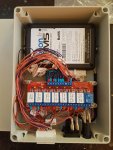
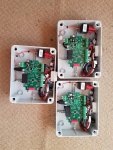
Attached a couple of pictures showing the BMS enclosure with associated control relay board and the enclosure for the alternator regulators I used (no longer available).

I would certainly recommend the Orion in preference to the 123Smart, particularly if you want a fully integrated system with the BMS having the ability to turn off charging / loads according to pre defined conditions. Also you can include warning alarms before the main contactor actually operates so you can do something before all power is turned off (if you are on board!)

As Nordkyn states it is not a case of fitting Lithium batteries - it is a case of designing, installing, commisioning and setting up of a complete integrated system. To be able to do this you must have a very good understanding of electrics and electronics.

The lithium batteries allow you to use about 90% of available capacity without any risk of long term damage to the batteries provided your BMS and associated control systems are properly setup. Proper setup should give you a 7-8% reserve on discharge so that when the low SOC alarm goes off you still have some capacity for essential services if required before total switch off via the main contactor.
 

Attachments

  • 20181225_142516 (960x1280).jpg
    20181225_142516 (960x1280).jpg
    750.6 KB · Views: 33
  • 20181222_161530 (960x1280).jpg
    20181222_161530 (960x1280).jpg
    937.4 KB · Views: 33
Attached a couple of pictures showing the BMS enclosure with associated control relay board and the enclosure for the alternator regulators I used (no longer available).

I would certainly recommend the Orion in preference to the 123Smart, particularly if you want a fully integrated system with the BMS having the ability to turn off charging / loads according to pre defined conditions. Also you can include warning alarms before the main contactor actually operates so you can do something before all power is turned off (if you are on board!)

As Nordkyn states it is not a case of fitting Lithium batteries - it is a case of designing, installing, commisioning and setting up of a complete integrated system. To be able to do this you must have a very good understanding of electrics and electronics.

The lithium batteries allow you to use about 90% of available capacity without any risk of long term damage to the batteries provided your BMS and associated control systems are properly setup. Proper setup should give you a 7-8% reserve on discharge so that when the low SOC alarm goes off you still have some capacity for essential services if required before total switch off via the main contactor.

That's a top job - thanks for sharing it.
 
Was thinking of installing this for when underway: Watt and Sea, hydrogenerator Cruising 300

And some removable solars for when at anchor. Cheap as chips these days.

My main considerations for contemplating switching to lithiums were:
1. limited space available for batteries.
2. would be off-grid for up to 3 months at the time
3. no voltage drop depending on state of charge
4. if need be, ability to use up to 90% of charge without causing harm to the batteries (but maybe between 20 - 85% state of charge on regular basis for long life.
5. Will take all the charging current you can throw at it - with no long absorption phase wasting usable power.
6. Happy at partial states of charge with no sulphating worries.

I added to your list (above). As previously said, there's no point having additional capacity hungry to take your amps if you haven't a good way of replenishing, without turning your boat into a power station, so the hydrogenerator looks sensible, alongside solar and alternator (although plenty to research on that aspect). But, despite the adverts and the YouTube videos, there is not yet a simple solution to LFP - you need to do the homework and be prepared to make a big upfront investment. It's not for someone who wants to keep their boat for a couple of years and sell-on - you'd never get your investment back.
 
I use many different forms of Lithium batterys each day literally ... LiPo, LiFe.

I have special chargers and all the gear .... would I pay the money for them on a boat ... no. There would have to be a really good reason to spend out so much money on batterys with the required charge control systems etc.

I'll stick with my 2nd hand Lead Acids .... which give me years of service. At 20 - 30 Euros a battery (80 - 100A/hr) ... why change ??
Agree, a definite No. For me lead acid is still the best batteries for a boat.
 
Thinking of upgrading the battery bank of the 'new' boat and installing Lithium batteries.

Are they worth the extra cash?
Do they really last longer?

Would love to hear from people with first hand experience.
Ask Boeing
My sealed wet cell are about 7 yrs old, but are on last legs
 
Got this from an E-bike website...

For your LiFePO4 battery to have a long and happy life-

Charge Slowly

The more wear and tear the internal electrodes of the batter see, the faster the battery will fail. Charging slowly places less stress on the battery. Using that 'Quick Charger' when the bike is going to sit overnight anyway will over time reduce cell lifespan. Charging LiFePO4 batteries quickly also places more wear on the BMS. (My own eBike BMS runs 20 deg. C hotter on a 5A 'quick' charger than it does on a 2.5A 'standard' charger.) Batteries charged slowly balance better too.

Do Not Store Fully Charged

If you are storing your bike for an extended period, run the battery down some first. Storing a dead battery can hose it. But Storing a 100% full battery causes internal battery wear also. (The internal electrodes of the battery wear more quickly when more chemically active. And they are at their most active when fully charged.) So before you put your bike away for winter, run it down to around 2/3 of full.

Check Periodically
When storing you should check the battery every couple months. While LiFePO4 cells do not leak or lose charge, the BMS usually steals some . The Signalab V1 BMS steals juice from only the first 4 cells for it's logc/MOSFET buffering. So theoretically over long term storage those cells can imbalance... (You can see this in the included schematic. The line coming from charging circuit #5 to R36 powers the quad NAND gate IC on the back of the BMS.) Newer versions steal equally from all cells. Either way, checking every once in a while to make sure that the BMS has not run the battery down is prudent.

Do NOT Leave On the Charger

This is probably the most important longevity tip and is for the same reason we don't store it fully charged. Keeping a LiFePO4 cell at ~3.5VDC per cell 'top-off' voltage keeps the internal electrodes at their most active and causes unnecessary battery wear. Once the battery is done charging, unplug the charger.


Not trying to be negative. Just be aware they do have some issues and cost a lot of money compared to lead acid. ?
 
No doubt many are interested in the cost.

I installed 400Ah of Winston LiFePo4 cells, 4 cells to give nominal 12V system, including Orion BMS, alternator regulators for 3 alternators, all the required enclosures, relays, fuses, wiring etc etc for the complete system. Total cost was €2600.

I did not have to pay VAT on the majority of the total cost and I got the Orion BMS off Ebay for about 1/3 full price, so realistically you are looking at around €3500 including VAT if you purchase everything new.

Also the above does not include any labour costs since I did all the design and installation myself, probably between 60 and 80hrs work for everything.
 
Top