Lithium and fuses

Love me love I’m thick but I was under the assumption of 4 x 100ah batteries run in parallel were the same as a single 400ah battery.
Except for 4 x the wiring, 4 x fuses, 4 x switches etc. But, as you have what you have...........

Each battery positive connects to a class T or NH fuse, 150/160A. From the fuse to an isolator switch and then to a busbar.

Each battery negative connects to a busbar. If there is a battery monitor (which would be advisable) the batteries all connect to the shunt (if more than 2 connections, fit a busbar), then to the busbar and all loads and chargers connect to this busbar.

The positive cables all need to be exactly the same length between the batteries and the busbar. All negative cables also need to be exactly the same length.

DC-DC charger wiring only needs to be 10mm, with 60A fuses, one close to the starter battery and the other, a T class or NH fuse connected to the Lithium busbar.

The inverter needs to be connected to the busbar and should be wired with cables as specified by the manufacturer, fused at source.
 
Last edited:
MRBF for individual batteries are good. You may be able to mount them directly on the battery terminals, or do what I did and fit one if these:
Blue Sea Systems 5196 MRBF Surface Mount 3-Way Fuse Block - Common Power Input

The AIC rating on the MRBF isn't really high enough for lithium so I have also got a class T master fuse.

It's not the cheapest way to go about things but it's what I was happy with.
Sorry, this isn't good advice. If there is a short before the master fuse the wiring isn't protected by that fuse, it's solely reliant on the MRBF fuse, which isn't the correct type.

This type of installation is what worries insurance companies and could invalidate insurance.
 
Sorry, this isn't good advice. If there is a short before the master fuse the wiring isn't protected by that fuse, it's solely reliant on the MRBF fuse, which isn't the correct type.

This type of installation is what worries insurance companies and could invalidate insurance.
Oh, ok!
Do you think it's necessary to have a class T on each battery?
 
Each battery negative connects to a busbar. If there is a battery monitor (which would be advisable) the batteries all connect to the shunt, then to the busbar and all loads and chargers connect to this busbar.
For ease of wiring it’s quite common to see two bus bars here, either side of the shunt, otherwise you end up with 4 huge cables trying to connect to one bolt.
 
For ease of wiring it’s quite common to see two bus bars here, either side of the shunt, otherwise you end up with 4 huge cables trying to connect to one bolt.
Yes, good point, in the case of more than two batteries a busbar would be good.

Original post duly edited.
 
Last edited:
Except for 4 x the wiring, 4 x fuses, 4 x switches etc. But, as you have what you have...........

Each battery positive connects to a class T or NH fuse, 150/160A. From the fuse to an isolator switch and then to a busbar.

Each battery negative connects to a busbar. If there is a battery monitor (which would be advisable) the batteries all connect to the shunt, then to the busbar and all loads and chargers connect to this busbar.

The positive cables all need to be exactly the same length between the batteries and the busbar. All negative cables also need to be exactly the same length.

DC-DC charger wiring only needs to be 10mm, with 60A fuses, one close to the starter battery and the other, a T class or NH fuse connected to the Lithium busbar.

The inverter needs to be connected to the busbar and should be wired with cables as specified by the manufacturer, fused at source.
Thank you Paul for bearing with me. It is appreciated.

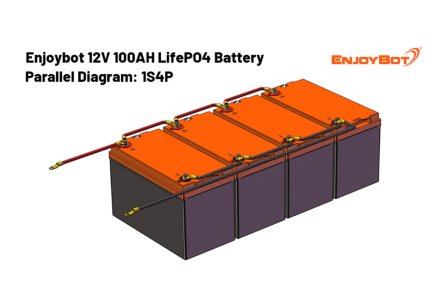
Are you saying that each positive has to go to a busbar directly & separately and not as illustrated?
I understand between the positives there should be a T fuse. But thought it’d be after all had been connected together.
The same being the negative? Yes there will be a shunt.

Understood regarding the DC-DC wiring. The size recommendation from the DC-DC at 3-6m was 10-16mm so I thought better to count higher👍
 

Attachments

  • IMG_4667.jpeg
    IMG_4667.jpeg
    267.8 KB · Views: 8
Thank you Paul for bearing with me. It is appreciated.

Are you saying that each positive has to go to a busbar directly & separately and not as illustrated?
Yes, that's exactly what post #21 says.
I understand between the positives there should be a T fuse. But thought it’d be after all had been connected together.
The same being the negative? Yes there will be a shunt.
No.
Understood regarding the DC-DC wiring. The size recommendation from the DC-DC at 3-6m was 10-16mm so I thought better to count higher👍

The picture you posted is incorrect for Lithium, but common practice with lead acid.

https://www.victronenergy.com/media/pg/The_Wiring_Unlimited_book/en/image/166d18457f0691.png

Ignore that the batteries are connected to an inverter, can just as easily be connected to a set of busbars for the domestic systems.
 
The capacity of the battery is entirely unrelated to fuse sizing. Whether 100 or 400 the current delivery capability might be identical and will probably be more related to BMS than cells.

Depends on the boat. We have 300Ah in a single battery and I’m considering doubling that as well be spending a lot of time on board disconnected. Starlink uses a lot of juice unfortunately so power usage is higher than it used to be.
I was referring to the fact that the batteries are only 100Ah. You don't necessarily need NH fuses for such small batteries. Less capable fuses may suffice
 
I was referring to the fact that the batteries are only 100Ah. You don't necessarily need NH fuses for such small batteries. Less capable fuses may suffice
I don’t see your reasoning. They can deliver the same number of amps as a larger battery and could easily weld an incorrect fuse which is the purpose of these specialist fuses. You still need the protection either way.
 
I don’t see your reasoning. They can deliver the same number of amps as a larger battery and could easily weld an incorrect fuse which is the purpose of these specialist fuses. You still need the protection either way.
AIUI the dead short current is expressed in terms of 'C' so a bigger battery can deliver a bigger dead short current. So battery size matters.
The other factor is voltage. Seeing as AIC is all about arcing, lower voltage systems like 12v are easier to protect than, say, 48v.

I built my system with an individual MRBF on each 280Ah 12v battery, with a class T after that to act as master fuse. From what I had read at the time I thought this was a good design, although PaulRainbow has suggested I should change it to class T throughout (or NH00)
 
AIUI the dead short current is expressed in terms of 'C' so a bigger battery can deliver a bigger dead short current. So battery size matters.
The other factor is voltage. Seeing as AIC is all about arcing, lower voltage systems like 12v are easier to protect than, say, 48v.

I built my system with an individual MRBF on each 280Ah 12v battery, with a class T after that to act as master fuse. From what I had read at the time I thought this was a good design, although PaulRainbow has suggested I should change it to class T throughout (or NH00)
This was my idea too, to the same as you. My reasoning being each battery was “on its own” therefore only 100a, if one were to fail.
That said if, say the 2nd or 3rd fails then there could be the potential of 200 or 300 amps passing through to the 4th battery.
Clearly I’m no electric expert but I thought that would suffice with having the T fuse at the end.

Now for obvious reasons, I’m unsure.

I appreciate all the input I received on here.
 
This was my idea too, to the same as you. My reasoning being each battery was “on its own” therefore only 100a, if one were to fail.
That said if, say the 2nd or 3rd fails then there could be the potential of 200 or 300 amps passing through to the 4th battery.
Clearly I’m no electric expert but I thought that would suffice with having the T fuse at the end.

Now for obvious reasons, I’m unsure.

I appreciate all the input I received on here.
Make and model of batteries ?
Make and model of inverter ?

If you wire as you describe above, what size cables will you use ?
 
I built my system with an individual MRBF on each 280Ah 12v battery, with a class T after that to act as master fuse. From what I had read at the time I thought this was a good design, although PaulRainbow has suggested I should change it to class T throughout (or NH00)
This thread has raised questions for me about my proposed set up.

I was/ am going to go down this route, with two 120 amp lithiums. Have I misunderstood something, Is this now not ok?

I thought I had seen it recommended on here by trusted sources and it ties with what is said elsewhere in terms of MBRFs being just a small step below class Ts, when dealing with 12v systems.

It's the proximity to the cells of the MBRFs that I really like, no way for a loose wire or a dropped tool to cause bedlam... And will be convenient for me to implement given the existing scattered wiring locations.

I'd intended to use 200 amp MBRFs. On each battery except the AGM engine start ( I figure these will allow an emergency engine start or to run the windlass) bow thruster will be separated from the lithiums and even when paralleling to to start the engine the thruster would be disconnected...

A blue sea MRBF has a disconnect rating at 10,000 amps at 12v. Can a 120ah battery overcome that level of protection in the real world? ( I don't know and am genuinely interested)

This is the source I had in mind.

Battery protection fuses for LiFePO4.
 
This thread has raised questions for me about my proposed set up.

I was/ am going to go down this route, with two 120 amp lithiums. Have I misunderstood something, Is this now not ok?

I thought I had seen it recommended on here by trusted sources and it ties with what is said elsewhere in terms of MBRFs being just a small step below class Ts, when dealing with 12v systems.

It's the proximity to the cells of the MBRFs that I really like, no way for a loose wire or a dropped tool to cause bedlam... And will be convenient for me to implement given the existing scattered wiring locations.

I'd intended to use 200 amp MBRFs. On each battery except the AGM engine start ( I figure these will allow an emergency engine start or to run the windlass) bow thruster will be separated from the lithiums and even when paralleling to to start the engine the thruster would be disconnected...

A blue sea MRBF has a disconnect rating at 10,000 amps at 12v. Can a 120ah battery overcome that level of protection in the real world? ( I don't know and am genuinely interested)

This is the source I had in mind.

Battery protection fuses for LiFePO4.
Hopefully Paul will explain in more detail. I was under the same impression as you that MRBF on each battery was a good design. If there is a dead short somewhere, it still has to go through the class T.
 
Hopefully Paul will explain in more detail. I was under the same impression as you that MRBF on each battery was a good design. If there is a dead short somewhere, it still has to go through the class T.
Likewise and what I’m planning. What also confuses me is that the batteries I’ve bought have built in BMS with short circuits protection. Tests show it works in milliseconds so I’m wondering what the fuse will actually do.
 
There is no doubt that for a larger lithium battery, a fuse with a minimum of a 20 kA IC rating is needed. This means a class T or an NH fuse.

The controversy surrounds the smaller and popular 100 Ahr lithium batteries. Are these adequately protected with the convenient MRBF fuses? These fuses have an IC rating of 10 kA. I don’t have a definitive answer, but it raises some interesting practical questions.

If we accept that a battery bank of, for example, 600 AHr would be adequately protected by a single T class fuse with a 20 kA IC rating, would not the same battery bank if it was composed of six 100 AHr batteries be adequately protected with a MRBF fuse on each battery. This gives a total of six fuses in parallel each with a 10 kA IC rating?
 
Last edited:
Likewise and what I’m planning. What also confuses me is that the batteries I’ve bought have built in BMS with short circuits protection. Tests show it works in milliseconds so I’m wondering what the fuse will actually do.
The BMS will offer some protection in the event of a moderately high current being drawn from the battery. Typically they are designed to shut down if more than say 100-200A is drawn from a 100Ahr battery. However, in the event of a short circuit, a very high current of potentially many thousands of amps can briefly flow. The BMS is not designed to protect against these high short circuit currents. A short circuit current will likely destroy the BMS and may weld the internal circuitry closed, preventing the BMS from subsequently interrupting the current.

Thus, a fuse is still needed for adequate protection against a short circuit fault in addition to the BMS which is in every lithium battery. Even some fuses cannot adequately interrupt the very high short circuit currents that lithium batteries can produce. Hence, the need for specialised fuses with a very high IC (interrupt capacity) rating, such as a T class fuse with a 20kA IC rating.
 
Last edited:
The BMS will offer some protection in the event of a moderately high current being drawn from the battery. Typically they are designed to shut down if more than say 100-200A is drawn from a 100Ahr battery. However, in the event of a short circuit, a very high current of potentially many thousands of amps can briefly flow. The BMS is not designed to protect against these high short circuit currents. A short circuit current will likely destroy the BMS and may weld the internal circuitry closed, preventing the BMS from subsequently interrupting the current.

Thus, a fuse is still needed for adequate protection against a short circuit fault in addition to the BMS which is in every lithium battery. Even some fuses cannot adequately interrupt the very high short circuit currents that lithium batteries can produce. Hence, the need for specialised fuses with a very high IC (interrupt capacity) rating, such as a T class fuse with a 20kA IC rating.
Whilst agreeing with what you say about the need for fusing. I do note that JM states that his BMS has built Short Circuit protection :unsure: ;)
 
Problem for me is finding a Class T fuse rated less than 110A – need 40A only.

Looks like I’d have to go with an NH00 fuse. (Wondering why I’ve only just come across this fuse type though, as opposed to a couple of years ago when researching a Lithium swap – have they only just come into prominence?). Also wondering if I’m in a massive minority with my low current needs, if all the talk is about Class T (assuming there aren’t any less than 110A). Do we all have inverters/bow thrusters/windlasses that need big current?

I went with MRBF back then, but now re-thinking. It’s not helping that there’s straight out contradictions cropping up in this thread as to whether MRBF is OK for my 100 Ah LifePO4 setup.

Can’t see any evidence of concrete research and testing backing up the recommendations, so guessing there’s a degree of erring on the side of caution.

Wondering what American Boat & Yacht Council stipulate (as an example standards body). Can anyone create an account with them and look up their standard for free? Has anyone done it that can let us know and save the hassle? Guessing they say 'always Class T'. Is it phrased like this though, or is it more like ‘AIC more than 20,000 A’ (allowing NH)?
 
Top