Light wind sails advice

If your looking for a light wind downwind sail then furling 'cruising' asymetrics are well worth the investment..

A crusing code zero could be worth it, if you supplement it with a spinniker for deeper angles.

Racing code zeros are limited by function of the rating system and are actually quite a lot more limited.

Crusader offer a heavy duty crusing code sail that looks appealing but I haven't tried it!
 
Just look up the Yachting Monthly article on fixed versus spinning.

Complicated because it has moving parts and special anodes not complicated becuae it’s had to operate. Our boat moves ffrom country to country so we never have a known reliable boat yard, quick access to known suppliers snd rarely have the boat out of the water - maybe every 2 to 3 years for a week. So simplicy of maintenance is key.
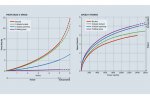
You seem to have misunderstood the findings of the "test". All it shows is that a spinning prop has less drag than a fixed prop but look again at the graph which clearly shows that a feathering (or folding) have substantially LESS drag. It is really a statement of the obvious, 3 large blades in the waterflow whether spinning or fixed will create more drag than folded or feathered blades.

As others have said, the maintenance issues are overstated - plenty of ocean voyagers use feathering props as they value the increased daily runs under sail and the minor matter of inspecting and changing the anode is a small price to pay for the benefits gained. Far and away the most effective way of improving efficiency under sail as the gains require no extra effort on your part - just fit and you get the benefit.
 
We have a gennaker which keeps us moving in very light airs. We can almost get it to hold to 60 Deg apparent but the shape gets a bit ugly, can also get ddw. Have recently been flying the tack off a spinnaker pole to help while sailing angles, although this is much more faff to set up.
We don't have a sock but setting, and dowsing isnt too hard and gybing very easy solo.

Light wind sails really do make the difference between sailing and motoring.
I don't think you will be disappointed.

If we blew ours up I would definitely buy a new one.
There are times when a cruising code zero would also be a really nice addition, although we get by with our 135% Genoa.
If cost is a consideration a code zero will be a lot more expensive by the time you add a furler.
Ideally you would have both. £££
Maybe ask yourself which way you are most often trying to sail relative to the light winds.
 
If cost was no consideration on a modern cruising 30 something footer I would have.
100% blade jib fitted with inhaulers.
"Illegal" code zero reaching sail on a short prodder with a furler
Symmetrical kite.

By illegal I mean cut too flat for the rating rules to count is as a spinnaker. But for cruising it's a way better sail than a "race legal" zero.

This would give you a very flexible set of sails with only fairly minimal sail changes. The 100% jib would be good upwind in the light with the inhaulers, and probably able to hang on to the full sail until about 20 TWS, which would really help your heavy air beating. The furling reaching "zero" would then add the horsepower on a 60-120 angle in light winds, and the kite for deeper than that.

If the boat was more of a lightweight, then swap the symmetrical kite for an A2 flown off a bigger bowsprit.
 
If cost was no consideration on a modern cruising 30 something footer I would have.
100% blade jib fitted with inhaulers.
"Illegal" code zero reaching sail on a short prodder with a furler
Symmetrical kite.

By illegal I mean cut too flat for the rating rules to count is as a spinnaker. But for cruising it's a way better sail than a "race legal" zero.

This would give you a very flexible set of sails with only fairly minimal sail changes. The 100% jib would be good upwind in the light with the inhaulers, and probably able to hang on to the full sail until about 20 TWS, which would really help your heavy air beating. The furling reaching "zero" would then add the horsepower on a 60-120 angle in light winds, and the kite for deeper than that.

If the boat was more of a lightweight, then swap the symmetrical kite for an A2 flown off a bigger bowsprit.
Interesting and some similarity to our setup with 100 percent high cut furling genoa with padded luff and a big masthead asymmetric to reach and (to a certain extent) run.

But I’m intrigued by the inhauler comment as I don’t don’t what those are and wondered if they would help with the pretty awful sheeting angle I get round the out of the spreaders especially when partly furled
 
That is just one of the two graphs in the article. The other shows (I think) that for a fixed power e.g. under sail the actual speed difference between fixed and spinning is large and between spinning and folding is small.
View attachment 141915View attachment 141915
Yes, but the second diagram simply reflects the increase in power required to increase speed at higher speeds when approaching the "hull speed". At low speeds, the difference is quite substantial.
 
Yes, but the second diagram simply reflects the increase in power required to increase speed at higher speeds when approaching the "hull speed". At low speeds, the difference is quite substantial.
Agreed but it does show at normal fast cruising speeds the difference between folding and spinning is very small - but i absolutely agree the first graph shows that at low speeds there is a significant difference.
 
Agreed but it does show at normal fast cruising speeds the difference between folding and spinning is very small - but i absolutely agree the first graph shows that at low speeds there is a significant difference.
Do you really have any data to confirm this? While a spinning prop does create less drag it does not seem to translate into extra speed. Look at the other way. Many people leave fixed props spinning on saildrives because that was the recommendation, but at around 5 knots sailing the noise gets very tiresome so stop the prop by putting in reverse. I did this many times and never noticed any significant change in speed. Your reading of the data does not agree with real world experience.

Suggest you do some tests. Sail in flat conditions at 5 knots with the prop locked, then let it spin. I would be astonished if your speed increased by more than 0.2 of a knot.

The real benefits of folding/feathering props have been well documented and reported by user over the years and the main measures as I said earie are increased speed for given conditions resulting in shorter passage times/greater daily runs or rating penalties reflecting the increased performance under sail.
 
The spinning prop thing, I had previously understood it made just this side of bugger all difference. Has everyone with a folding or feathering prop been had? I can tell you we lose about 1 1/2 kn when we put the outboard in the water in neutral. And the prop makes a horrible noise.
 
Do you really have any data to confirm this? While a spinning prop does create less drag it does not seem to translate into extra speed. Look at the other way. Many people leave fixed props spinning on saildrives because that was the recommendation, but at around 5 knots sailing the noise gets very tiresome so stop the prop by putting in reverse. I did this many times and never noticed any significant change in speed. Your reading of the data does not agree with real world experience.

Suggest you do some tests. Sail in flat conditions at 5 knots with the prop locked, then let it spin. I would be astonished if your speed increased by more than 0.2 of a knot.

The real benefits of folding/feathering props have been well documented and reported by user over the years and the main measures as I said earie are increased speed for given conditions resulting in shorter passage times/greater daily runs or rating penalties reflecting the increased performance under sail.
My own tests really don’t matter compared to the ones done by experts with data gathered and graphed as shown - that’s all the data I’m reading but if you have other actual test data then always happy to learn more.
 
Personally if investing in a cruising chute by say Pete S of Lymington Nice yellow sail bag and a spiqueezer can also help) or say Crusader sails I would factor in costs of a furler ideally so you hoist before going sailing and remove on arrival. It seems that it might get more use that way and would be an easier sail . There seem to be a number of furlers but all very expensive to my mind though.
 
The cost of furlers has put us off that idea, plus the extra drag when not in use might be large on our boat. Another thing up there in the airflow. We had 26kn apparent yesterday, I wouldnt want it up in that
 
our 24' boat came with a 'Light Winds Ghost Sail' though we're still new/learning and haven't got it out to look at it.

Has anyone else used one of those (does attach like a Jib as there is a spare Halliard for hoisting it that is just above the roller furler)?
 
My own tests really don’t matter compared to the ones done by experts with data gathered and graphed as shown - that’s all the data I’m reading but if you have other actual test data then always happy to learn more.
How can you say your own tests don't matter? surely the only thing that matters is whether the strategy you adopt has the desired impact on your boat speed. I was asking if you have data to show the kind of speed increase you claim, not data about the water tank tests for drag. All they do is show what is already known, but do not show the impact on speed of a boat. So can you substantiate your claim of 1 knot additional speed when you allow your prop to spin rather than locked?
 
How can you say your own tests don't matter? surely the only thing that matters is whether the strategy you adopt has the desired impact on your boat speed. I was asking if you have data to show the kind of speed increase you claim, not data about the water tank tests for drag. All they do is show what is already known, but do not show the impact on speed of a boat. So can you substantiate your claim of 1 knot additional speed when you allow your prop to spin rather than locked?
From the long and often heated discussions about drag with prop spinning/ not spinning, it is clear that even such a major thing has different effects on different boats. The fact that autogyros work demonstrates that there are circumstances where a spinning prop generates more drag than a non-spinning one. So tests on a single boat, while generically indicative, may not translate to another, different boat. In the majority of cases, a spinning prop generates less drag than a fixed one, BUT the magnitude of the effect may vary considerably from boat to boat, and in some rare, edge cases the spinning prop can generate more drag. So tests on your own boat are the only way to be sure of the effect on your boat.

A folding prop always generates less drag, by a greater amount than a spinning prop.
 
How can you say your own tests don't matter? surely the only thing that matters is whether the strategy you adopt has the desired impact on your boat speed. I was asking if you have data to show the kind of speed increase you claim, not data about the water tank tests for drag. All they do is show what is already known, but do not show the impact on speed of a boat. So can you substantiate your claim of 1 knot additional speed when you allow your prop to spin rather than locked?
The 1 knot I got when letting it spin compare to fixed was simply observed but is trivial compared the the proper repeated tests done by magazines and experts.

I am simply reading the second graph from YM. If anybody is reading it differently or have other tests on relative speed and drag and power then it would be great to learn more.

It seems counter-intuitive that there is such a tiny advantage to folding rather than spinning but we can only learn from proper tests and it’s great to be surprised in life by unexpected truths - one test doesn’t change conventional opinion but it raises an interesting question.
 
The 1 knot I got when letting it spin compare to fixed was simply observed but is trivial compared the the proper repeated tests done by magazines and experts.

I am simply reading the second graph from YM. If anybody is reading it differently or have other tests on relative speed and drag and power then it would be great to learn more.

It seems counter-intuitive that there is such a tiny advantage to folding rather than spinning but we can only learn from proper tests and it’s great to be surprised in life by unexpected truths - one test doesn’t change conventional opinion but it raises an interesting question.
If you can sleep off watch with your spinning prop all the way across the Atlantic I will be impressed. Those kind of noises have a habit of being very irritating very quickly in my experience.
 
Top