LED lights / Significant energy savings with LED lamps

Skipper Felice

Well-Known Member
Joined
24 Sep 2023
Messages
258
Location
Italy - Switzerland
Visit site
Many older yachts are often equipped with conventional lamps and lights – spotlights with 10/20/50 W.

For example, if all 30 lights with 10/20/30 W are on, this results in a current of approx. 50A at approx. 600W (12V system).
YachtLED_IMG_111233_1.jpg
Go for big energy savings with LED lamps:

Replace all relevant lights with LED lighting:
For example, if all 30 lights with 1/2/3 W LEDs are on, this results in a current of approx. 5A at approx. 60W (12V system).

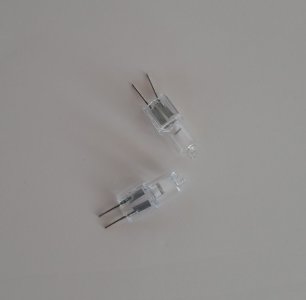
It is easy to replace the old lamps; most of them have GU4 plug sockets and are available in various types from specialist retailers:
IMG_20250802_110538.jpg

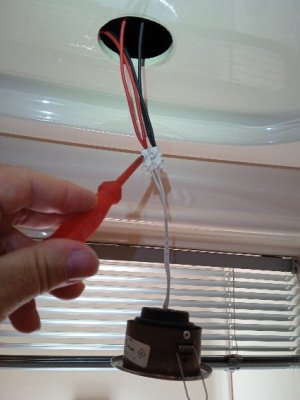
When replacing them, please also check that the wiring is clean and make sure that the connectors are perfectly fitted.
YachtLED_IMG_110927_1.jpg
Have fun with your new lighting

NLi_IMG_LED_110746.jpg
 
For example, if all 30 lights with 1/2/3 W LEDs are on, this results in a current of approx. 5A at approx. 60W (12V system).

It is easy to replace the old lamps; most of them have GU4 plug sockets and are available in various types from specialist retailers:
You missed an important bit of advice. When replacing lamps, it's good practice to buy voltage regulated ones that can cope with 13.6v when a 12v boat is charging. These will run cooler and will last longer. The lamps that @Hurricane recommended are good as are these ones g4 - Aten Lighting.
 
You missed an important bit of advice. When replacing lamps, it's good practice to buy voltage regulated ones that can cope with 13.6v when a 12v boat is charging. These will run cooler and will last longer. The lamps that @Hurricane recommended are good as are these ones g4 - Aten Lighting.
Absolutely or they run hot and don't last long.

Another option is a DC-DC converter for the entire lighting supply, particularly useful with the LED strips on a roll.

My Princess was built with most systems 24V, but the lights were all wired in series pairs, using 12V halogen bulbs, not a nice system IMO. I re-wired everything to parallel, replaced the light with new LEDs throughout and although the new lights are voltage regulated and not polarity dependant i fitted a pair of Victron DC-DC converters, splitting the light circuits into two.
 
Absolutely or they run hot and don't last long.

Another option is a DC-DC converter for the entire lighting supply, particularly useful with the LED strips on a roll.

My Princess was built with most systems 24V, but the lights were all wired in series pairs, using 12V halogen bulbs, not a nice system IMO. I re-wired everything to parallel, replaced the light with new LEDs throughout and although the new lights are voltage regulated and not polarity dependant i fitted a pair of Victron DC-DC converters, splitting the light circuits into two.
Question for you Paul. The original breakers are obviously rated for high current halogen lamps. Should people change breakers when switching to LED's?
 
Personally, I prefer Wago connectors over those old school choc box connectors.
The "old school" connectors are found all over the world - not bad if fitted in a proper way. But yes: there are really more professional connectors like Wago, Woertz, Eaton, etc. And most of them do not need a screwdriver. You have to fit it with the proper cable size.
 
Ok say one catches fire and wago are used, the insurance say the connections are not to original spec , they may not pay out
 
Ok say one catches fire and wago are used, the insurance say the connections are not to original spec , they may not pay out
Yes, because insurance companies are famous for preferring their clients to have vintage electrical systems. They want no truck with these modern standards.
 
One issue to watch out for when switching to LEDs.
On my Princess, we have a mimic that shows what lights are illuminated.
Particularly useful to check if the bulbs are working when the navigation lights are switched on.
I changed my nav lights over to LEDs so now the mimic can't detect (due to lower current flow) whether the lights are on or off.
So the mimic is now not showing the situation correctly.
 
Ok say one catches fire and wago are used, the insurance say the connections are not to original spec , they may not pay out
That's utter bollox.

So that means tinned cable can't be used.
We have to stick with twin and Earth mains cable.
Unfused batteries.
Chock blocks must be used.
Continental fuses are best

etc, etc, etc
 
Last edited:
Personally, I reckon that any of the Wago type connectors are way better than those awful screw choc blocks.
All my life, I've had problems with those little screws not making contact properly and coming loose.
The only problem with these new Wago style connectors is that they can really only hold a single core so you have to have a range of connectors available.
Come on guys, this is progress.
 
I thought Wago used a flat clamp to secure the cable. no risk to thin strands unless you nick them when stripping off the insulation.
Well the video shows well that the spring is like a blade and it is shown on solid copper no stranded , I agree with Paul tinned wire would be fine.
 
The clamping mechanism consists of a flat, fixed, lower plate with the spring loaded upper plate being angled slightly forward. The harder you pull the wire the tighter the top plate grips, up to a point of course. I cannot see any reason why the mechanism should cut through wires "like a blade".

The 221 series are designed and approved for fine-stranded conductors from 0.14 to 4 mm2. Power conductors on boats have to me a minimum of 1mm and i've never seen anything anywhere near as thin as 0.14 mm2

This is a busbar from a 221 series connector, the right side is distorted from being removed, these are as tough as old boots.

20250803_100647.jpg
 
Top