Lassoing a buoy

Here's an easy way to pick up a mooring single-handed:
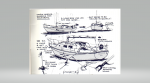
picking up mooring singlehanded.png

From "Boat Owner's Sketch Book - vol.3" by Dick Everitt. Published by Practical Boat Owner. The full set of 5 booklets is packed with all kind of useful hints and tips; well worth buying.
 
Here's an easy way to pick up a mooring single-handed:

View attachment 83191

From "Boat Owner's Sketch Book - vol.3" by Dick Everitt. Published by Practical Boat Owner. The full set of 5 booklets is packed with all kind of useful hints and tips; well worth buying.
Easy in that tiny boat for sure. Where you store the clobber in a tiny boat remains a mystery.
 
Easy in that tiny boat for sure. Where you store the clobber in a tiny boat remains a mystery.
Clobber expands to fill the space available!

But not having a shower, oven, fridge, double beds and other such fripperies means one has plenty of stowage for lengths of rope, an armoury of patent boat hooks, and other such come-in-handy-one-day stuff!
 
Under sail I round up into the direction I expect the boat to lie, aiming to stop with the buoy spang under the bow, or at least within easy boathook range. Pull the buoy up to the bow with the boathook if necessary, thread one end of prepared and secured rope through loop, cleat it off, done. Total elapsed time at buoy five to ten seconds. Can't see how it would take two minutes.

How do you do it, post-lassooing? I suppose the RN method of "four sailors in a RIB" is out of the question ...

The answer to the latter question also addresses the former. If I can't clear up what I perceive is the confusion in understanding what both Elessar and I am trying to convey without someone else offering me basic sailing tips, I'll leave you all to it.

How do you do it, post lassoing? On a boat with high freeboard: awkwardly. Which is why it takes more than 5-10 seconds. If the freeboard is too high to just reach the ring but still low enough to reach at long stretch, it may involve person A holding person B's legs while they do a stretch under the guardrail, thread the rope through the ring and pass it back over their shoulder. We have to use a boathook at full stretch: Hook end of rope over end of boat hook with rope end dangling. Lean out over pulpuit with boathook in one hand and attempt to get end of rope through eye. Use boathook end to push push further through eye then attempt to twizzle the end on the other side and bring back aboard. Which often requires more than one go. If the ring is more than a metre from the boat it's pretty much out of boat hook range (if wondering why my boathook is only a metre long, please consult with Mr. Pythagoras. ).

Or yes: use the dinghy as you would when rafting up on a buoy.

But this takes rather more than 5-10 seconds during which time you don't want to be moving away from the buoy which is where the lasso comes in.

Sure a telescopic patent mooring device would make it easier but I've had to lasso maybe one visitors' mooring in the past 3 years and a boathook is just fine for the pickup buoys I normally encounter with public moorings.

Regarding "pull the buoy up to the bow with the boathook"...assuming you aren't talking about a pickup buoy actually being pulled "up" (I don't think you are) but mean pull boat and buoy closer together with a boathook...See post #48:

3l4dze.jpg

Again...something which is efficient and seamanlike on a small boat but when attempted on a big heavy boat in a breeze or current may result either in loss of the boathook or injury due to limitations in the buoy-boathook-human-boat interface.

I think we all get that posters here don't want others to lasso their moorings. Fine. Per an earlier post I think we all sympathise that it's out of order for the same private mooring to be abused day in day out. Write "Private no mooring" or "No Lassoing Please" on it. Whatever: I'm not going to be picking up your 8m mooring. Promise.

If some posters seriously believes that the owners of chunky public visitors' moorings with "Max 14m" written on them and no pickup buoy do not expect those moorings to be lassoed...call up salcombe harbour master. And if s/he turns out to be shocked and outraged that people do such things, write to Duncan Wells, the RYA and just about every sailing school and author of sailing books to tell them that they're teaching people a technique which should never be used. Do report back.
 
Yes a fair definition. Or gunwhale would be more accurate if the deck is lower.

In the video the effective freeboard at his stern with the gate open is 1 ft. ie from the bit he is standing with no superstructure between him and the water.

Mine is 6 ft and it is equally large on many decent sized yachts.

In the video his solution was a good one. As it would be on many smaller yachts, though probably on the beam rather than on the stern on a yacht.
But the point is every boat is different.

On mine lassoing is the best method.
As it is on just about any boat when coming alongside.
Lassoing is one of the most basic safety skills on a a boat whether or not you need to use it on buoys.

Ah .... I didn't watch the video for long enough so only saw them picking up the buoy from the bow. Sorry.

Richard
 
The answer to the latter question also addresses the former. If I can't clear up what I perceive is the confusion in understanding what both Elessar and I am trying to convey without someone else offering me basic sailing tips, I'll leave you all to it.

How do you do it, post lassoing? On a boat with high freeboard: awkwardly. Which is why it takes more than 5-10 seconds. If the freeboard is too high to just reach the ring but still low enough to reach at long stretch, it may involve person A holding person B's legs while they do a stretch under the guardrail, thread the rope through the ring and pass it back over their shoulder. We have to use a boathook at full stretch: Hook end of rope over end of boat hook with rope end dangling. Lean out over pulpuit with boathook in one hand and attempt to get end of rope through eye. Use boathook end to push push further through eye then attempt to twizzle the end on the other side and bring back aboard. Which often requires more than one go. If the ring is more than a metre from the boat it's pretty much out of boat hook range (if wondering why my boathook is only a metre long, please consult with Mr. Pythagoras. ).

Or yes: use the dinghy as you would when rafting up on a buoy.

But this takes rather more than 5-10 seconds during which time you don't want to be moving away from the buoy which is where the lasso comes in.

Sure a telescopic patent mooring device would make it easier but I've had to lasso maybe one visitors' mooring in the past 3 years and a boathook is just fine for the pickup buoys I normally encounter with public moorings.

Regarding "pull the buoy up to the bow with the boathook"...assuming you aren't talking about a pickup buoy actually being pulled "up" (I don't think you are) but mean pull boat and buoy closer together with a boathook...See post #48:

View attachment 83167

Again...something which is efficient and seamanlike on a small boat but when attempted on a big heavy boat in a breeze or current may result either in loss of the boathook or injury due to limitations in the buoy-boathook-human-boat interface.

I think we all get that posters here don't want others to lasso their moorings. Fine. Per an earlier post I think we all sympathise that it's out of order for the same private mooring to be abused day in day out. Write "Private no mooring" or "No Lassoing Please" on it. Whatever: I'm not going to be picking up your 8m mooring. Promise.

If some posters seriously believes that the owners of chunky public visitors' moorings with "Max 14m" written on them and no pickup buoy do not expect those moorings to be lassoed...call up salcombe harbour master. And if s/he turns out to be shocked and outraged that people do such things, write to Duncan Wells, the RYA and just about every sailing school and author of sailing books to tell them that they're teaching people a technique which should never be used. Do report back.
Best reply yet. My point just better made and expanded.
 
That’s a good question and it varies.
Oftenthe buoy is tall enough for me to reach down and get a line through. I’m usually on the helm so once temporarily secured I can safely lean over the front of the boat. Its a bit precarious and wouldn’t expect a crew to do it especially when still underway.
I did buy one of those pass a line through the loop devices you see people walking around with at boat shows. But it broke and I’ve no desire to replace it as it is cumbersome and fragile.
sometimes I use a boat hook to poke the line through and I could in extremis resort to the dinghy. I don’t recall doing so.

Thanks. I have similar suspicions about mooring gadgets - they seem to come out as frequently as MOB recovery systems and disappear with similar speed. I have two similar and simpler devices on board: a "Mooring Star" (iirc) which is a geet big 'ook which clips to the side of a boathook with a spring latch which closes when it's pulled off and a genuine Davey Grab-It which is so beautiul and would be so expensive to replace (£30 on eBay!) that I daren't use it.

I can see that in your case a lassoo - when the buoy can take it - is probably a useful stage in the process.
 
Sure a telescopic patent mooring device would make it easier but I've had to lasso maybe one visitors' mooring in the past 3 years and a boathook is just fine for the pickup buoys I normally encounter with public moorings.

A couple of years ago I went through the Crinan Canal with someone fussy who used his telescopic boathook to pull his stern warp away from my bow line. The inevitable happened and the clamp in his boathook let go when he was pulling mightily. The pointy end of the boathook completely cleared my boat and sank at the far end of the lock. OK, nothing to do with mooring, but it seemed funny at the time. Still does, actually.

Regarding "pull the buoy up to the bow with the boathook"...assuming you aren't talking about a pickup buoy actually being pulled "up" (I don't think you are) but mean pull boat and buoy closer together with a boathook...

Well, yes, Newton's Third Law and all that. But what I meant was that if I come to a halt with my bow just out of reach of a typical West of Scotland "hippo" visitor buoy (two feet in diameter, galvanised shackle on top) it's fairly easy to hook the shackle and pull the buoy closer. The boat will move too, of course, but since it weighs four tonnes and the buoy, at a guess, about 25kg, it's the buoy which does most of the moving. The point is that the boathook isn't being used to stop the boat moving away, just shift the buoy into a more useful (relative) position. If the boat starts moving we drop the buoy and try again.

If some posters seriously believes that the owners of chunky public visitors' moorings with "Max 14m" written on them and no pickup buoy do not expect those moorings to be lassoed...call up salcombe harbour master. And if s/he turns out to be shocked and outraged that people do such things, write to Duncan Wells, the RYA and just about every sailing school and author of sailing books to tell them that they're teaching people a technique which should never be used. Do report back.

You'll note that I have never said that it's a technique which should never be used, just that it should only be used if you are absolutely sure the buoy can take it (I expect the hippos can) and have permission (which might be implicit). The trouble with the current RYA position seems to be that they are teaching it as a technique which can always be safely used, which I hope you would agree is not the case.
 
Thanks. I have similar suspicions about mooring gadgets - they seem to come out as frequently as MOB recovery systems and disappear with similar speed.

I have two mooring devices which are rarely used as I prefer the boat hook - a plastic Moor Fast which I've never had any luck with and a large carabiner held open by a clip on the boat hook, which works very well.
 
The Moorfast is very easy to use, as this video shows. I bought mine secondhand at a very low price. It is not a 'must have' item by any means but I find it very useful.


It would be even more use to me if the jaws were a bit wider so I could use it on those French catways that just have a horizontal curved bar at the outer end instead of a cleat.
 
The Moorfast is very easy to use, as this video shows. I bought mine secondhand at a very low price. It is not a 'must have' item by any means but I find it very useful.It would be even more use to me if the jaws were a bit wider so I could use it on those French catways that just have a horizontal curved bar at the outer end instead of a cleat.

I well remember the French trampoline-like fingers!
 
Top