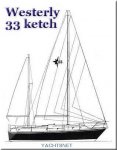
Ketch Rigging (Help)

Brabs

Member
Joined
31 Oct 2020
Messages
39
Visit site
Hello everyone, I recently purchased a Westerly 33 Ketch, and I am pretty sure the main sail and Head sail are not rigged correctly, there is no issue raising and lowering the Main sail, it is only when I look up at the top of the Mast, it certainly doesn’t look correct the way the rigging is running, can anyone tell me we’re I could find a deck plan/diagram of the rigging arrangement, or put me onto someone from the Lincolnshire area who could help sort this
 
Hello and welcome

Pictures would really help. The two masts should be independent of each other.
Hi Sandy
Many thanks for your reply, I am currently offshore working at the moment, I will get the Mrs to pop down to the marina and take a few pictures, then forward them
 
Welcome to the Forum. As dunedin mentioned the Westerly Owners Association, you should join as there are plenty of benefits, especially the group insurance policy that the discount is more than the membership fee. What WOA can do for you If you join the forum, our last commodore has a ketch rigged boat and regularly contributes and will certainly be able to advise. As a member you will also have access to the BoatLine members for the W33 who can give you specific information on this model.

Have a look at this google search and this should help you sort out your rig problems. westerly 33 ketch - Google Search Basically any sailor should be able to give your rig a quick scan and tell you if there is anything wrong.
 
I don't know the particular vessel, but they may not be quite independent - there could be a triatic stay.
A triatic stay between the masts is not fashionable at present with modern materials holding both masts up but no doubt gave rigidity in the days of hemp. It risks main mast dismasting immediately putting mizzen mask at risk and not usual therefore on westerlies
 
Brabs

my westerly rigging was in a muddle when I got her as with my previous boat. The issue usually comes from raising mast without making sure things dont rub and snag when in raised working mode. Sorting out involved dancing round the maypole as it were, as we untwisted everything and moved halliards and topping lift from side to side. Unless some terrible knot up there you should not need to go up the mast and indeed until its sorted going up in a bosuns chair might be fraught.

If you are in a boat yard over winter the staff should be happy to advise and if worse comes to worse they may well have a cherry picker or similar to get them up the top for a moderate fee
 
Afternoon
Many thanks for your reply, I think I will ask around at the Yacht club, due to working away from home, I haven’t had as much time sorting little issues like this out, I will upload some pictures later this week when the Mrs gets to the boat and manages to take some
 
I understand a head sail to be a fore sail off the bow, like a jib or genoa.
Do you mean the main and mizzen sails?
The arrangement usual on westerly is for there to be a rotating cuff on the genoa furler, hauled aloft by a halliard going to top of main mast. The foresail raising halliard can tangle with steaming light and radar reflector or even be brought back around the wrong side of side stay on its way to mast winch and cleat. Worse still if sail is raised to too high due to stretching or misadjustment the rotating cuff can get wrapped around by the spinnaker/cruising shoot halliard. The Op doesnt state if he has furler the so last possibility might not be relevant but the others still are with hanked on sails

I actually prefer furlers with inbuilt halliard and block
 
Many westerly ketches do appear to have triatic stays, although laurent giles did not design them with triatics, so god knows why. I have one and I want rid of it.
The main mast on westerly ketches are adequately restrained by substantial twinned back stays and wont benefit from triatic from the weaker mizzen. The mizzens are only stressed against the mizzen mainsheet and dont need forward support from a triatic. The rigging points and wheels are there but not purposeful.

The only time staying on a mizzen is an issue is when using staysail between mizzen and main and a triatic wont help that either. As for mizzen spinnaker, well thats beyond me and only seen on old records so I dont know how it hangs together or indeed if it was actually helpful in forward progress
 
I will happily dump my triatic as soon as I can convince myself the spreaders and stays on the mizzen are enough on their own. I have a copy of giles’ original rigging drawings from the archive and there is definitely no Triatic.
As I said the triatic only stops the mizzen falling over backwards, and the only force making it do that is the mizzen main sheet when taut. The forward pair of mizzen side stays should be more than enough for that with a relatively small mizzen sail and short boom.

Brigantines with large mizzen sail and often clew on boom behind boat, had a much greater loading, and thus often a triatic.

Some folk used triatic aerials, but thats not really load bearing
 
Top