Keeping an unused lead battery good condition for a long period of time?

Minerva

Well-Known Member
Joined
16 Oct 2019
Messages
1,781
Visit site
At the end of last season, my engine was a bit slow to start after being left longer a week or two, so spring this year I bought a new engine start battery.

Before I fitted it though, I changed a few fuel hoses and added a racor. Long story short, engine now starts immediately so I think I had a very small air leak somewhere which was causing hesitance to start, not a dying battery.

So I now have a new, surplus to requirements battery to keep in my garage for a year or two ‘till it’s needed. What’s the best way to do so keeping it best condition possible?

Thanks
 
Following much experience of short battery life aboard I was advised to disconnect them completely from each other and the boat when leaving it over winter. Which we did in 2019 not knowing that covid was over the horizon and it would be three years before we returned. On reconnecting we had 12.4 volts, quickly charged to a healthy figure well over 12.6. that bank, already a couple of years old, lasted another three years.
 
I would use the new battery on the boat because it will deteriorate if not used .
The removed battery could be given away if not required.
 
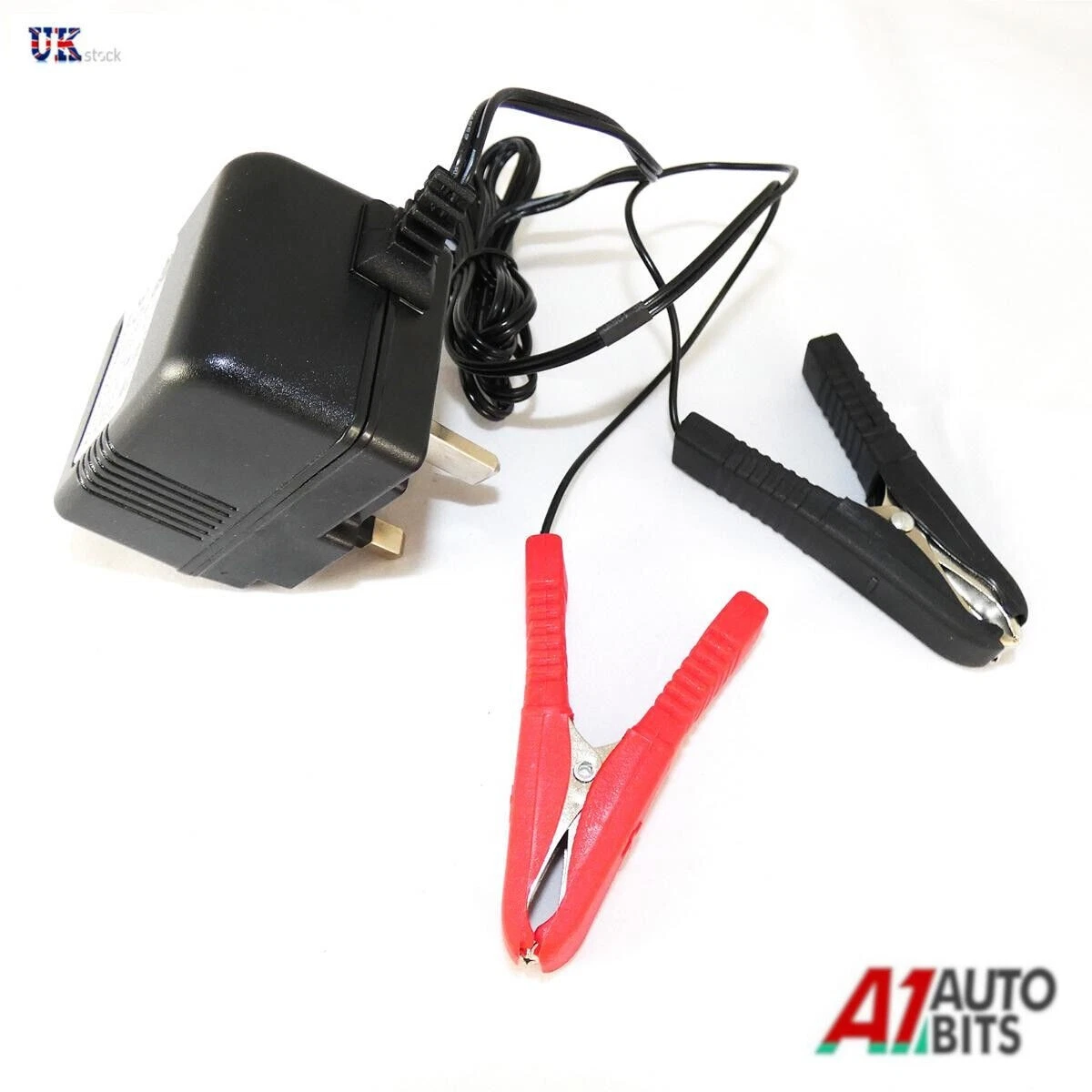
There are plenty of low power maintenance chargers on eBay etc ... designed to be fit and forget ......

Pardon our interruption...

s-l1600.webp


Usual charge rate about 1.0A .. which is sufficient to maintain the battery .....

1. Charge battery to full with your normal charger.
2. Disconnect battery completely.
3. Place in quiet cool corner
4. Plug and connect maintenance charger.

Periodically check voltage of battery to be sure its maintained.

Main points :

1. Do not let it drop below a reasonable charged level
2. Do not have a level of charge banging away at it higher than 1.0A or so
3. If storage position is subject to freezing in winter - make sure battery is fully charged.
4. Try to avoid hot area of garage ..... cool is good.

You can also use a small Solar Cell .... 10 - 20W can be connected without need for Solar Controller ... I have a 90 AH battery in my speedboat with a 10W Solar panel ... it keeps that battery topped up to run the auto bilge pump / nav lights. If I was add gear to the boat then I would up the Solar to a 20W panel ... or if higher rated panel - get a panel with controller ... about 40 - 50W.
 
5 years ago I retired my batteries after 5 years on the boat. The old ones were loaned to the local Lions club to power the lights and sound on Santas sleigh at Xmas. 5 years later the old ones are kept in my garage and are still going strong. All I do is plug them in to an old battery charger for a few hours every 3 months dust them ready for xmas
Moral of the story
Don’t rush to change them and just a little attention is required to keep them in storage
 
Get a cheap 50W(?) solar panel with controller for it for less than £20 and attach it to the sunny outside of the garage. I run the cheap LED lighting in my three sheds with such a set
I keep a spare 12 volt battery on my boat charging via a separate 5 watt solar panel. No need for a charge controller and it is always fully charged. £5-£10 for the panel from Ebay.
 
Following much experience of short battery life aboard I was advised to disconnect them completely from each other and the boat when leaving it over winter. Which we did in 2019 not knowing that covid was over the horizon and it would be three years before we returned. On reconnecting we had 12.4 volts, quickly charged to a healthy figure well over 12.6. that bank, already a couple of years old, lasted another three years.
Spot on. We have 4 large 12V house batteries delivering 24v and 400AH that, even though isolated over winter, kept going flat. After spending a fortune on new batteries we discovered a very slight slight "leak" (still don't know what it is) that was consuming 0.07ah. So we disconnect the batteries physically now and the problem is solved.
 
That is only relevant if the temperature drops. A garage floor in winter (UK) gets extremely cold. A concrete floor on its own won't do any harm.;)

Correct ... and second - do not let charge level drop low in winter ... the more charged - the less liable to 'freeze' ....

I had a battery freeze on my boat one winter ... what a mess to clear up ...

2 batts together ... one drained down charge level and froze - split the case. The other stayed charged and still good. Checking with battery guys - the first comment was - KEEP EM CHARGED !!
 
There are plenty of low power maintenance chargers on eBay etc ... designed to be fit and forget ......

Pardon our interruption...

s-l1600.webp


Usual charge rate about 1.0A .. which is sufficient to maintain the battery .....

1. Charge battery to full with your normal charger.
2. Disconnect battery completely.
3. Place in quiet cool corner
4. Plug and connect maintenance charger.

Periodically check voltage of battery to be sure its maintained.

Main points :

1. Do not let it drop below a reasonable charged level
2. Do not have a level of charge banging away at it higher than 1.0A or so
3. If storage position is subject to freezing in winter - make sure battery is fully charged.
4. Try to avoid hot area of garage ..... cool is good.

You can also use a small Solar Cell .... 10 - 20W can be connected without need for Solar Controller ... I have a 90 AH battery in my speedboat with a 10W Solar panel ... it keeps that battery topped up to run the auto bilge pump / nav lights. If I was add gear to the boat then I would up the Solar to a 20W panel ... or if higher rated panel - get a panel with controller ... about 40 - 50W.
That link is for a 230v AC to 12v DC 0.5A adaptor. It is not a trickle charger and is only current limited by it's own design limitation. The float voltage of a lead acid cell is 13.8v which I doubt this adaptor will provide. My guess is it will sit doing nothing until the battery voltage drops below 12v and then it won't have sufficient clout to top the battery up anyway.

The seller has just bought cheap AC adaptors that happen to be fitted with battery charger croc clips. Don't waste your money.

I just fact checked myself using Google's AI ..

leadacid.jpg
 
Last edited:
That link is for a 230v AC to 12v DC 0.5A adaptor. It is not a trickle charger and is only current limited by it's own design limitation. The float voltage of a lead acid cell is 13.8v which I doubt this adaptor will provide. My guess is it will sit doing nothing until the battery voltage drops below 12v and then it won't have sufficient clout to top the battery up anyway.

The seller has just bought cheap AC adaptors that happen to be fitted with battery charger croc clips. Don't waste your money.

I have been using these as maintainers for years and they have been good.

If you have never used - I suggest you test before making such sweeping statement. They are purpose designed as maintainers ... by virtue of low current supply.

What I found was that they kept the batterys to sufficient level such that later when battery was to be used - a quick charge with a full rate charger to top off was more than sufficient.

OP was asking how to keep a battery for long period ... these do just that ...
 
I have been using these as maintainers for years and they have been good.

If you have never used - I suggest you test before making such sweeping statement. They are purpose designed as maintainers ... by virtue of low current supply.

What I found was that they kept the batterys to sufficient level such that later when battery was to be used - a quick charge with a full rate charger to top off was more than sufficient.

OP was asking how to keep a battery for long period ... these do just that ...
I am a qualified electronics engineer. I can guarantee that a cheap 12v adaptor will not maintain a battery or supply any current if the battery is healthy when connected to it. I don't need to try it because I know it won't work. It may be your batteries would have done just as well with nothing connected to them and the effect you witnessed was confirmation bias that the things were doing a good job.

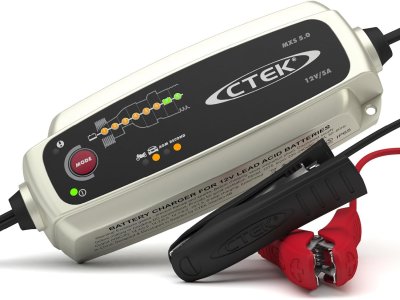
On the other hand my CTEK MXS 5.0 does a perfect job as it was designed to do, but then again, it costs £75.

Edited to add, I just went to check a couple of things. I have a 12v 1.0A ac adaptor. I measured the open circuit voltage at 12.2v then loaded it up to it's rated power (12 watts) using a 12 ohm resistor. Under full load the voltage dropped to 11.9v (top marks for the adaptor working as it should). I then connected the CTEK to my car and the open circuit voltage was zero (the charger needs to detect a load before it works). Connected to my fully charged car battery, I saw it delivering 12.8v to the terminals.

ctek.jpg
 
Last edited:
I would fit the new battery now, leaving it sitting in the shed for years is counter productive.

If i did want to "store" a battery for a while, such as over Wintering a jetski, motor cycle, quad etc i would use a proper maintenance charger, such as an Optimate. But, again, for the OP it's counter productive, a decent charger will cost 2/3 of the battery.
 
As Paul - fit the new battery - enjoy its newness.

Relegate the old to stby storage. There are plenty of smart chargers in Aldi ... Tesco ... Lidl .... Halfords etc etc .. if you want to pay a bit more.

I have a CTek smart charger in my workshop ... given me by a pal who had it maintaining his batterys on his B31 ... cost him two new batterys and a charger ... the CTek while still under a year old fried his batterys ..... I was interested to see inside ...... opening it alongside a Lidl similar unit of about 1/3rd the price ... difference ? Near enough same crap.

I shall now try to erase the years of my Lawn Tractors and various other gear sitting on those budget maintainers .. I need to tell them they are not supposed to work ..... please refer to my post #15 .. paragraphs 3 and 4.
 
Is it better to leave them charging 24/7 on a suitable charger or just pop them on for an overnight charge every 3-6 months? I note that my local motor factors don't charge every battery on their shelf but have a cycle through their stock (I think charging a different battery each day), but the chandlery don't seem to charge them at all and probably have a lower stock turnover...
 
I have always found leaving a charged battery isolated (and not too cold!) is fine for a month or two at a time. Then a refresh charge and same again. Letting them go flat and leaving them like that for even a short time kills them.
 
Top