
You are using an out of date browser. It may not display this or other websites correctly.
You should upgrade or use an alternative browser.
You should upgrade or use an alternative browser.
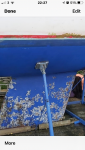
Keel damage gk29 only one side
- Thread starter Weypuss
- Start date
Lucy52
Well-Known Member
From the photo that looks to me like the pattern of marine growth. May be that was the sunny side of the keel.

Concerto
Well-Known Member
I agree that is marine life on the sunny side of the keel.
Weypuss
New Member
Thanks for your replies, is there something specific I need to do to it before it goes back in the water?I agree that is marine life on the sunny side of the keel.

vyv_cox
Well-Known Member
I cannot tell very much from your photo, something closer in would help. I tend to agree with other posters that it looks like fouling in the photo.Thanks for your replies, is there something specific I need to do to it before it goes back in the water?
However, Westerly (or whoever they bought them from) cast their keels lying on their sides. In some cases the dross that floated to the top was not cleaned off properly, or in some cases gas cavities that were beneath the surface, led to corrosion or similar problems on one side of the keel only. There is a photo of one like this, a Fulmar, on this page Corrosion. We really need a close-up photo of the problem to give better advice.
Concerto
Well-Known Member
Westerly bought their keels from Iron Brothers in Cornwall, as do many of the current yacht builders today. Production Keels Vyv are you sure thet were cast on their side as I have never heard of this before. The holes are drilled into the casting and these are used for lifting the keels, which also makes the lift more stable. Yes, cast iron keels do tend to be porous and tend to rust. It is possible that some of the dross in the molten iron stuck to the mould side due to the fast cooling along the aft edge of the keel in the photo on your web site.
vyv_cox
Well-Known Member
I looked into it at the time the Fulmar keel problem occurred. The damage is definitely gas cavities, not dross. I was told then about casting on their side. These keels were cast a long time ago, so quite likely not current practice.Westerly bought their keels from Iron Brothers in Cornwall, as do many of the current yacht builders today. Production Keels Vyv are you sure thet were cast on their side as I have never heard of this before. The holes are drilled into the casting and these are used for lifting the keels, which also makes the lift more stable. Yes, cast iron keels do tend to be porous and tend to rust. It is possible that some of the dross in the molten iron stuck to the mould side due to the fast cooling along the aft edge of the keel in the photo on your web site.

stuartwineberg
Well-Known Member
The idea of adding anything to a post by Vyv on metals terrifies me but I have a late 90s fin keel Moody with the same thing, smooth keel one side, rough the other and the surveyor who used to work at Moody said exactly the same thing.I cannot tell very much from your photo, something closer in would help. I tend to agree with other posters that it looks like fouling in the photo.
However, Westerly (or whoever they bought them from) cast their keels lying on their sides. In some cases the dross that floated to the top was not cleaned off properly, or in some cases gas cavities that were beneath the surface, led to corrosion or similar problems on one side of the keel only. There is a photo of one like this, a Fulmar, on this page Corrosion. We really need a close-up photo of the problem to give better advice.
vyv_cox
Well-Known Member
You are most welcome, I don't pretend to know everything!The idea of adding anything to a post by Vyv on metals terrifies me but I have a late 90s fin keel Moody with the same thing, smooth keel one side, rough the other and the surveyor who used to work at Moody said exactly the same thing.
I suspect my Sadler may be the same, a lot rougher on one side than the other.

sgr143
Well-Known Member
Thanks for this Vyv - I hadn't thought about how Westerly cast their keels (I have a Merlin), or had them cast, but now you've prompted the question, I guess it would be easier to make the mould horizontally. I guess they were sand-cast, maybe with an open surface, or would it have been a two-part mould? I wonder if Westerly troubled to have the more porous surfaces specifically on the inside or outside for bilge-keelers, or whether it was pot-luck.
My university metallurgy course had a casting practical, but using aluminium LM25 ( I think), with the aim of comparing strength of unmodified castings with those with the refining agent added. We also got to cast a souvenir university shield - I still have it. I think that was the same practical where we got to have a go with an oxygen lance cutter, which was highly entertaining. Probably off-limits these days.
My university metallurgy course had a casting practical, but using aluminium LM25 ( I think), with the aim of comparing strength of unmodified castings with those with the refining agent added. We also got to cast a souvenir university shield - I still have it. I think that was the same practical where we got to have a go with an oxygen lance cutter, which was highly entertaining. Probably off-limits these days.
Weypuss
New Member
We bought a gk 29 in December, and finally got her out of the water. She has marks only on the starboard side of the keel Anyone have an idea why it’s only one sided?
Attachments



V1701
Well-Known Member
Thanks for your replies, is there something specific I need to do to it before it goes back in the water?
People go to all sorts of lengths to treat their keels but the concensus seems to be that doing anything more than removing loose stuff, treating any rusty areas, priming and antifouling and the amount of time/money becomes disproportionate to the gain...
Edit - should add to have a look at the state of the keel bolts under the cabin sole, you might find they're painted or even glassed over but look for any signs of rust, also check the keel/hull join - that might need scraping out and resealing...
vyv_cox
Well-Known Member
My most exciting moment in metallurgy took place when I was working as a student in the metal melt shop at the Electricity Council Research Centre. This was the production of spheroidal graphite iron (SG iron), made by plunging magnesium into a ladle of molten grey iron. Like every bonfire night fireworks display you have ever seen rolled into one!Thanks for this Vyv - I hadn't thought about how Westerly cast their keels (I have a Merlin), or had them cast, but now you've prompted the question, I guess it would be easier to make the mould horizontally. I guess they were sand-cast, maybe with an open surface, or would it have been a two-part mould? I wonder if Westerly troubled to have the more porous surfaces specifically on the inside or outside for bilge-keelers, or whether it was pot-luck.
My university metallurgy course had a casting practical, but using aluminium LM25 ( I think), with the aim of comparing strength of unmodified castings with those with the refining agent added. We also got to cast a souvenir university shield - I still have it. I think that was the same practical where we got to have a go with an oxygen lance cutter, which was highly entertaining. Probably off-limits these days.
James_Calvert
Well-Known Member
Re keel treatment before relaunching it is entirely possible that the previous owner set about his chosen method on one side and ran out of enthusiasm, time, daylight or simply failed to beat a dew point on the other side.
sgr143
Well-Known Member
Good point ! It's all too easy to focus on the technical side, and neglect the "operational" issues. Someone I knew at the US National Bureau of Standards (as it then was) led a project on whether poor steel or poor welding was behind the Titanic disaster. He had access to recovered materials from the wreck. He gave a very good talk on it at a conference I went to, with all kinds of technical details about the metallurgy of the Titanic and its sister ship. The talk was called something like "Why did the Titanic sink?". His concluding statement was "because somebody ran it into an iceberg".Re keel treatment before relaunching it is entirely possible that the previous owner set about his chosen method on one side and ran out of enthusiasm, time, daylight or simply failed to beat a dew point on the other side.

dgadee
Well-Known Member
After my boat was left afloat for a month in a Portuguese marina (tied to a pontoon), one side was pitted with rust. I suspect something to do with either another boat or faulty pontoon electrics. But my keel doesn't look like yours.
sgr143
Well-Known Member
... the production of spheroidal graphite iron (SG iron), made by plunging magnesium into a ladle of molten grey iron. Like every bonfire night fireworks display you have ever seen rolled into one!
Blimey. I confess that although I was taught about adding magnesium to produce SG iron, and in my turn then passed this information on to successive years of less-than-riveted undergraduates, it never occurred to me to question just how the Mg was added. But I suppose chucking lumps of it into the melt is as good a way as any. It's very pretty stuff, viewed in section under a microscope.
lw395
Well-Known Member
I was thinking at some point in the past, the keel had a sunny side and a damp side.Re keel treatment before relaunching it is entirely possible that the previous owner set about his chosen method on one side and ran out of enthusiasm, time, daylight or simply failed to beat a dew point on the other side.
forelle541
Well-Known Member
My fin keel Sadler 29 should sail in circles by the state of the keel, one side perfect the other lumpy.You are most welcome, I don't pretend to know everything!
I suspect my Sadler may be the same, a lot rougher on one side than the other.
Lucy52
Well-Known Member
I suppose that with a split mold there is less chance of it splitting or falling over if you cast it horizontally, with less pressure along the joint.
Other threads that may be of interest
- Replies
- 71
- Views
- 2K


- Replies
- 8
- Views
- 299