
Hadenough
Well-Known Member
Is yours a sealed filling system?
Richard
Nope.

Is yours a sealed filling system?
Richard
But in the cases being reported in this thread the problem is not that water (or fuel) blows back on deck. What is happening is that the tank itself if expanding fit to burst.
I've never heard of anything like it unless the filling system is sealed.
Richard

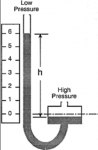
Yes the filler pipe can put hydrostatic pressure on the tank.
Yes that is one ton per sq m, for every metre of standpipe height.
Yes a flat top tank will bow.
That is why tanks are made from strong materials like stainless. And why well designed boats mount the tanks with space to distort.
And maybe have baffles which hold the tank in shape.
Some boats have the breather lower to avoid issues. One of my boats had it over the sink.
Point I am making is that it creates a pressure of sorts

I've not checked your calc but 1 ton per sq metre is around 1.5 psi so a trivial pressure above atmospheric.
Richard
I've not checked your calc but 1 ton per sq metre is around 1.5 psi so a trivial pressure above atmospheric.
Richard

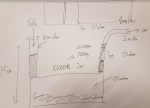

1.5psi is trivial until you've got a few thousand square inches. Then it packs a punch.
I'm not really sure how that is relevant to the subject under discussion .... but it's perhaps worth remembering that 1.5 psi above atm is about what a human can blow from their diaphragm/lungs. I've you've done any pressure work you'll know that human beings are pathetic in this regard and can barely blow up a balloon sometimes. :ambivalence:
There is absolutely no chance that this pressure will do anything to a water tank, unless its walls are as thin as a balloon.
Richard
What part of force = pressure times area do you not understand?
A water tank with flat, unstiffened sides in say 2mm stainless does not take much force to bow the sides out of shape.
Absolutely so but that is nothing to do with atmospheric pressure if there is an unobstructed breather pipe while it was being filled. The pressure is due to the weight of the fluid being constrained by the size of the tank and the tiny weight of the fluid in a full breather pipe adds nothing noticeable to that pressure.

Absolutely so but that is nothing to do with atmospheric pressure if there is an unobstructed breather pipe while it was being filled. The pressure is due to the weight of the fluid being constrained by the size of the tank and the tiny weight of the fluid in a full breather pipe adds nothing noticeable to that pressure.
Perhaps the simplest answer is to repeat - pull the system apart until you find the blockage
The pressure is the same whether it comes from a full breather pipe or the full filler pipe.