How secure is your prop!

seafox67

Well-Known Member
Joined
14 Apr 2017
Messages
281
Location
Greenock
Visit site
I'm in the process of replacing my oversized prop. Being a bit of a DIY'er, I thought it would be 'Fun' for have a go myself... it can't be that hard surely as only one nut to remove!
So, everyone can stop laughing now :)

I have a shaft drive (25 mm) with a tapered end and key to stop the prop spinning on it. The nut removed quite easily with a bit of WD-40 and a block of wood to lock the prop. However, pulling the prop off... one and half days into it and it's still stuck fast! I think i'm going to need a man with a puller!

Anyway, back to my question...whilst having a walk around the yard (to calm myself down), I noticed all the shaft drive boats had a little hole through the shaft at the threaded end with a split pin through. I guess to stop the big nut from working loose.

Mine does not have this! Is this normal? Has someone in the past forgot to drill the hole for a pin?

I'm a bit worried now that when I eventually replace the prop, it is going to fall off at some point down the clyde

Paul
 
Get yourself down to Screwfix and get yourself one of these bearing pullers https://www.screwfix.com/p/bearing-separator-puller/19315 Much easier to use than the ones with legs (you might need to get some screwed rod if the ones supplied isn’t long enough.

Is your prop nut castleated? Most are, so a split pin can be fitted through a hole in the shaft. The nut should be brass, not stainless, not bronze.
 
You need a good gear puller on the prop, 2 legged for 2 blades and maybe a big jubilee clip to prevent it from jumping off. Tighten as hard as you can, then whack the end of the puller screw with a heavy hammer. Don't try hitting the prop to get it off, you will damage it. There are various ways of securing the nut, but the most common as you have seen is to drill and pin it. Because it is out of sight it must not be able to work itself free. Rather literally here the ship can be lost for want of a split pin! Is there any other means of securing it on yours?
 
Get yourself down to Screwfix and get yourself one of these bearing pullers https://www.screwfix.com/p/bearing-separator-puller/19315 Much easier to use than the ones with legs (you might need to get some screwed rod if the ones supplied isn’t long enough.

Is your prop nut castleated? Most are, so a split pin can be fitted through a hole in the shaft. The nut should be brass, not stainless, not bronze.

Brass? Mine have always had stainless, as supplied from new by experts like Lancing Marine, T Norris etc, including my fleet of trip boats.
 
Thanks for the feedback guys...

The nut looks very much like brass. It also had a 'copper like' oversized washer that bent around the nut. It did come off quite easily!

I tried the screw fix puller... however, not with a big jubilee clip. Thanks for the tip.

The nut is not castleated :(
 
Paul

I just went out and looked at the propeller on the boat I am building but can't see anything because of the sacrificial anode.

To remove a tapered shaft from a taper I have used heavy hammers: place one firmly behind the propeller boss and give the propeller boss a heavy welt on the opposite side. That seems to work like squeezing an orange seed between your thumb and forefinger.

The experts say:

The Correct Order

From an engineering perspective, there is only one correct order for installing these nuts. An analysis based on mechanics-of-material dictates the thin ‘jam’ nut should be installed first and then torqued. Then the thicker nut should be installed. When the thicker nut is torqued, the load is transferred from the threads of the thin nut to the threads of the thicker nut. That spreads the load over a greater number of threads and helps develop full preload. Having the two nuts jammed against each other also helps to resist vibration. Then that assembly is locked in place by a cotter pin, as a backup.

View attachment 70889

https://beaconmarineservices.com/2017/11/11/propeller-retaining-nuts-order/

Clive
 
Last edited:
Agree the nut should be held on positively. Locking two nuts not enough. Castleated plus split pin (like on old wheel nuts), tab washer or other method. Never quite understood how bending a washer over works - surely the washer is free to move unless it engages with a slot in the shaft. I wouldn't rely on loctite either.
Wouldn't bronze be better than brass?
 
Agree the nut should be held on positively. Locking two nuts not enough. Castleated plus split pin (like on old wheel nuts), tab washer or other method. Never quite understood how bending a washer over works - surely the washer is free to move unless it engages with a slot in the shaft. I wouldn't rely on loctite either.
Wouldn't bronze be better than brass?

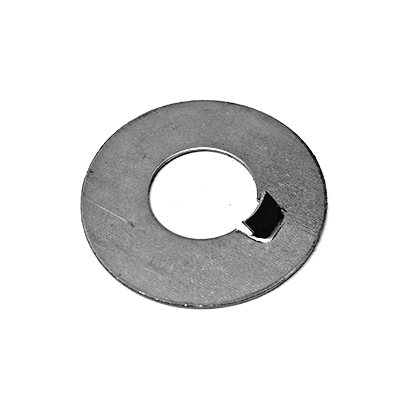
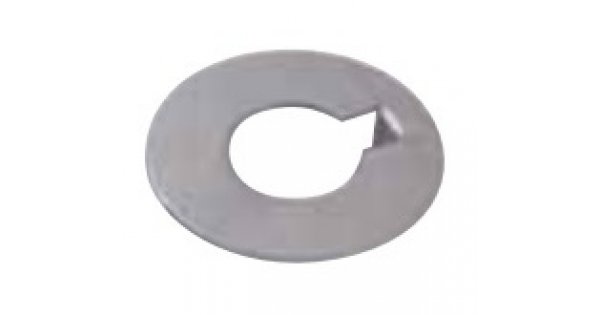
Tab washers for locking props nuts.

Vetus
SN04.png

Beneteau Propeller Washer
11%20BENETEAU%20WASHER-600x315.jpg


lock-washers-250x250.jpg


My prop is locked on place with a RH machine screw in a tapped hole in the end of the shaft locking a LH prop nut holding the prop on the taper.

To remove a prop from the taper I use a home made puller putting some tension on the prop / shaft then give the prop a tap with a hammer and the prop springs off.
 
Make sure if you use a puller that you leave the nut on the end of the shaft otherwise when the taper does break the whole lot could go flying across the yard.

You may also find once you get the puller tightened up some heat on the prop boss may help.
 
Thanks for all the feedback.

I definitely feel a lot more comfortable now doing something about locking the nut when the new prop goes on. There is about 20mm of thread showing when the nut is tightened up against the prop so I am thinking maybe the best thing it to just drill a hole through the threaded end of the shaft for a split pin. And order up a castellated nut with the new prop.

Cheers

Paul
 
What's wrong with using a "nyloc" type nut on yacht propshafts? I've had Volvo Penta duoprop outdrives for some 17 years now. They use such nuts and I've never lost a prop, The nuts are still tight at the end of every season ( set with with a torque wrench and checked as a matter of interest with the same torque wrench at the end of each season). Is this too high tech an approach?

OK, nyloc nuts are expensive but in reality they can be reused very many times; a centre punch deforming the insert will effectively restore the locking ability of even a very old nut. The nylon locking ring can be removed, "turned inside out" and re-inserted as well so the thread on the shaft "sees" new plastic. It works, I have done it.
 
Tab washer, Nyloc s/s nut..... and Loctite on the threads, both to resist rotation and prevent 'galling'.
 
What's wrong with using a "nyloc" type nut on yacht propshafts? I've had Volvo Penta duoprop outdrives for some 17 years now. They use such nuts and I've never lost a prop, The nuts are still tight at the end of every season ( set with with a torque wrench and checked as a matter of interest with the same torque wrench at the end of each season). Is this too high tech an approach?

OK, nyloc nuts are expensive but in reality they can be reused very many times; a centre punch deforming the insert will effectively restore the locking ability of even a very old nut. The nylon locking ring can be removed, "turned inside out" and re-inserted as well so the thread on the shaft "sees" new plastic. It works, I have done it.

I've used a Nyloc stainless steel nut with a thinner stainless steel nut on a stainless steel shaft (2 actually) for years without any problems whatsoever. The props come off every year and stay on in the intervening period. One would have to be terminally unlucky for that lot to let you down. :)

Richard
 
Top