How much is a brand new traditional steel boat?

Greenheart

Well-Known Member
Joined
29 Dec 2010
Messages
10,384
Visit site
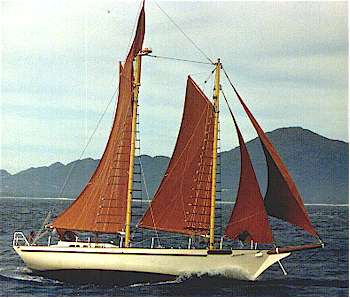
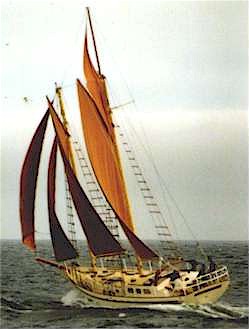
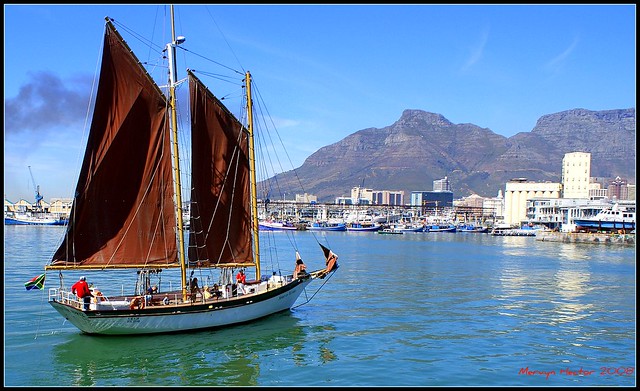
Not sure how I came to find the photo but it's such a good one, I had to post it here. The boat looks like an oldie, but it's actually a Dudley Dix Hout Bay 50ft, given the 50-passenger day-excursion treatment. She could alternatively be built with comfortable, even luxurious accommodation for up to eight without diminishing the traditional appeal...so I wondered how costly such authentically rugged construction must be, if a buyer chose not to specify a lot of modern electric gadgetry.

The website was last updated five years ago, so the yard may not be in business...but plans needn't go out of date... http://www.dixdesign.com/hb50.htm

Spirit%2Bof%2BVictoria%2BTable%2BBay.jpg


I latterly found a blog written by someone apparently just as keen in the idea as me: http://sayachts.blogspot.co.uk/2014/08/hout-bay-30-33-40-50.html
 
Last edited:
There is a lot on the Site about the building of his steel designs, mostly DIY in South Africa and OZ. Rather gone out of fashion now so not surprised little recent stuff. Dix now lives in USA.
 
I went out for a few days on Annabel J, a modern steel large pilot cutter replica, and the skipper reckoned a million quid to make a very basic sailaway one.
That boat is for sale now (stiff competition in the world of replica pilot cutters ;)) for a good price, no connection etc. cheers Jerry
 
I asked the question because the Hout Bay 50 seemed to be a versatile design, even adaptable for commercial trading, assuming one can corner the market in something found in the South Pacific, for which Californians will pay a fat mark-up...:rolleyes:

...my point being that a sailboat built as a tool rather than a play-thing, is likely to be tough and practical and good value, rather than just a pretty thing needing lots of maintenance for aesthetic effect.

The idea of a hefty, sturdy hull with a durable, relatively low-aspect rig, is for me a liveaboard dream-yacht, much more so than any plastic race-derived hull and rig. I was vaguely hopeful that the non-yachty style and materials might escape the enormity of cost which more fashionable designs carry.
 
There have been several attempts at making sailing cargo boats pay of the ones I heard of they all faded away, the economics work against it plus the health and safety angle.
 
She's not as tough as she looks. The hull plating is only 5mm on the commercial version (4mm topsides on the yachty version), with 3mm deck plating, which is very light for a vessel of that size.
 
But presumably if she's rated as seaworthy with ten tonnes of cargo aboard, thicker hull plating could be used for a version which wouldn't carry cargo, without being overweight?

My liking for this particular design isn't related to her commercial possibilities, but to the fact that steel can evidently be used to create rugged, beautiful vessels, built to wholly bespoke specification, and which needn't be vast to justify the trouble & cost involved in construction. (I'm only inferring, and dreaming.) Nobody builds a one-off 50ft schooner from GRP, because justifying construction of the moulds would require enthusiastic, repeated uptake of what will only ultimately be a rather eccentric product...

...meanwhile building a 50ft gaff schooner from timber will (I suspect) be a very long and involved journey, and owning the vessel will carry the love-it/loathe-it commitment to maintenance which, I'm guessing, needn't be a fraction as time-consuming with a steel hull.

Admittedly the photo I posted above doesn't show much of the schooner's topsides. But I thought steel construction at this scale necessarily required acceptance of rather plain, angular lines, caused by the two-dimensional chine-configuration of a hull built from plate steel. This design looks much prettier than that - so I'm excited by what's possible.

hb504.jpg
hb501.jpg


2869343749_dbf22db0fe_z.jpg
 
The problem with building in steel is that it attracts DIYers who make a bad job of it or do not finish at all. One construction costs are high whatever the hull material as the hull is often less than 20% of total cost. Good steel hulls can be built using laser cut steel from digital plans as they do in Holland. However the investment in design and need for good welding mean it is no longer a cheap backyard job.

The material of choice for one off schooner building is wood epoxy. Many have been built this way, particularly in the far estate but tend to end up as rich kids toys rather than basic boats.
 
The problem with building in steel is that it attracts DIYers who make a bad job of it or do not finish at all. One construction costs are high whatever the hull material as the hull is often less than 20% of total cost. Good steel hulls can be built using laser cut steel from digital plans as they do in Holland. However the investment in design and need for good welding mean it is no longer a cheap backyard job.

The material of choice for one off schooner building is wood epoxy. Many have been built this way, particularly in the far estate but tend to end up as rich kids toys rather than basic boats.


Just as as a rough quide Dutch steel yards charge about £1k/ft for a fully finished and primed shell, or about the same price as a GRP moulding!

fantastic value, and the price of Steel is at a all time low at the moment so prices might drop further.
 
Just as as a rough quide Dutch steel yards charge about £1k/ft for a fully finished and primed shell, or about the same price as a GRP moulding!

fantastic value, and the price of Steel is at a all time low at the moment so prices might drop further.

Interesting. It must depend on the complexity of the shape though. A blunt barge, or a very curvaceous schooner?
 
I agree with the sentiments of the op, It's all about authenticity and material choice. A plastic gaffer is a plastic gaffer. My thoughts are that forget wood, it's just not possible in the modern world. Ferro-cement is a bad joke.

so you are left with steel and aluminium. A finished alloy hull will cost twice as much as steel. The only solution is to learn how to weld alloy if you want a reasonably priced project, but a alloy welding course is 18 months!!!

I inquired how easy it would be to convert from steel welding to alloy; I was informed that they didn't like steel welders, and preferred to start from scratch with a total learner: that put me in my place!

why is alloy hard to weld? Temperature control of the weld, if you over heat it the weld will be brittle.
...and mending cracked alloy welds is a nightmare, very hard to get the surfaces clean enough get a good weld.

is a strip planked boat covered with epoxy wood or GRP?
 
Last edited:
I found those basic hull statistics and prices for Bonito boats, very encouraging. I expect it's possible to request variations to the builders' particular plans, for this or that purpose.

I still find the idea of a new steel hull, fitted out for my eccentric but not extravagant preferences, infinitely more appealing than any standard finished boat available today.

Not to say there aren't some very fine ones out there - though the nicest all seem to be Scandinavian, fearfully pricey, far from bespoke, and require care in ownership equivalent to a new Rolls Royce. Slick, quick, slippery and guaranteed to impress the unimaginitive...

...I'd far rather have a unique, tough new cruiser with a layout I'd devised myself and a rig more Edwardian than modern. I'm just glad there are yards which still do it.
 
Astrip planned hull is an epoxy composite. There are variations on the theme, some using just strip and epoxy, others using thinner strip and 2 or 3 layers of hardwood veneer. Usually then sheathed in epoxy glass. AsSaid the construction method of choice for many traditional style one offs. Mostly built in low labour cost countries like Turkey, Thailand and Burma where cheap skilled labour is available. Not cheap compared with a production boat of similar size.
 
I found those basic hull statistics and prices for Bonito boats, very encouraging. I expect it's possible to request variations to the builders' particular plans, for this or that purpose.

I still find the idea of a new steel hull, fitted out for my eccentric but not extravagant preferences, infinitely more appealing than any standard finished boat available today.

Not to say there aren't some very fine ones out there - though the nicest all seem to be Scandinavian, fearfully pricey, far from bespoke, and require care in ownership equivalent to a new Rolls Royce. Slick, quick, slippery and guaranteed to impress the unimaginitive...

...I'd far rather have a unique, tough new cruiser with a layout I'd devised myself and a rig more Edwardian than modern. I'm just glad there are yards which still do it.

Im interested in work boats and trawlers, and I totally understand the concept of the steel sailing boat you've illustrated. When I look in a marina full of horrid plastic boats my heart sinks.

When you realise that the fit out of some modern boats costs more than the construction of the hull and superstructure; but who wants to live in a leather and chrome floating 'hotel room.'

my plan would be to get the hull fabricated and launched in Holland at £1k/ft, and go for a working boat Matt paint finish which is relatively cheap. Then once you get the boat launched you can live on board as you fit it out.

imo pine is the nicest interior finish, not mahogany or teak; fits the work boat look.

i think it's all possible on a realistic budget.
 
Astrip planned hull is an epoxy composite. There are variations on the theme, some using just strip and epoxy, others using thinner strip and 2 or 3 layers of hardwood veneer. Usually then sheathed in epoxy glass. AsSaid the construction method of choice for many traditional style one offs. Mostly built in low labour cost countries like Turkey, Thailand and Burma where cheap skilled labour is available. Not cheap compared with a production boat of similar size.

I got a quote for a 38' catamaran in kit form designed by schionning in NZ; the price was £60k with pre cut pieces ready to glue together, balsa sandwich construction, plus of course shipping etc etc...

....for that you could get a steel 60' boat fabricated in a Holland!
 
I've had the honor of speaking to Dudley Dix on two occasions at the Woodenboat Show in Mystic, Connecticut, USA. He is a fascinating fellow. I'm sure if you contacted him he would answer any questions you might have and he has a wealth of experience in guiding those bringing his designs to fruition.
 
For anyone interested in wood epoxy schooners fushionschooner.blogspot.co.uk is well worth a look. chronicles the building of a Nigel Irens designed 50' in the Phillipines. Boat now for sale, but probably needs deep pockets and a willingness to go to the other side of the world.
 
For anyone interested in wood epoxy schooners fushionschooner.blogspot.co.uk is well worth a look. chronicles the building of a Nigel Irens designed 50' in the Phillipines. Boat now for sale, but probably needs deep pockets and a willingness to go to the other side of the world.

The Dudley Dix Hout Bay 50ft is a beautiful boat and is totally authentic in steel. I've seen a j class yacht which was also constructed in steel, and I was blown away with the Beauty of the boat; of course it was on a much much larger scale. I seem to remember a write up in a magazine that an amateur boat builder bought an old rusted out j class hull for £20k and spent a couple of years totally rebuilding the hull with new steel plating for very little cost.....he then sold it for hundreds of thousands to an American who then Spent $ millions.

so looking at the Hout bay design would seem to be relatively simple to build for a professional Dutch yard who are the supreme steel builders in the world bar none; a budget of £50-60k for a finished fabricated hull would be douable. They have the rolling equipment to cheaply form any shape in steel, and more than a century of experience.

... Done in GRP would it have the same charisma?
 
Top