
Fr J Hackett
Well-Known Member
I have to say I agree with him on many points and after looking at the Pure 42 a supposedly high latitude cruising ( expedition ) yacht I am more so in agreement.



Was that torn panties?Oh ! dear, there will be tears and damp panties now. Who allowed that old Geezer speak...
That old geezer put his money where his opinions are, unlike you i assume - unless you correct me.Oh ! dear, there will be tears and damp panties now. Who allowed that old Geezer to speak...
unlike you i assumeThat old geezer put his money where his opinions are, unlike you i assume - unless you correct me.
He is managing to do what many struggle to do, which is run a business making yachts.
I have run a business importing yachts and employing people so yes.unlike you i assume
You're 180 degrees off course mate. You assume wrong.
Unfortunately he had to do it in Turkey and not the UK.That old geezer put his money where his opinions are, unlike you i assume - unless you correct me.
He is managing to do what many struggle to do, which is run a business making yachts.
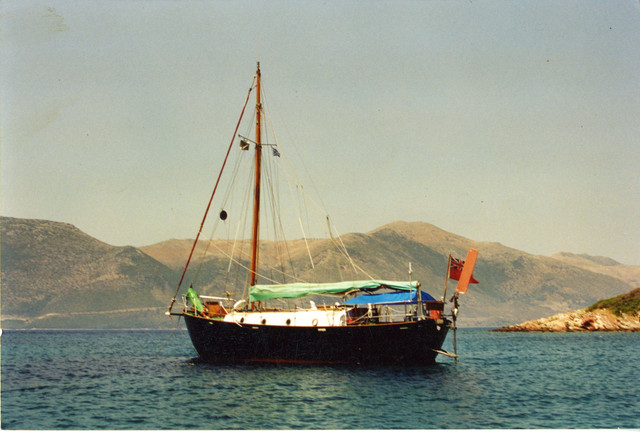
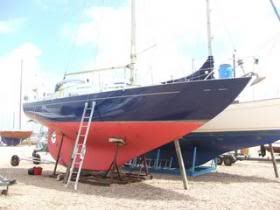
Problem is that almost nobody else in the current boat designing/building/buying of bluewater yachts scene agrees with him. The test of robustness of a proposition (hesitate to call it a theory) is whether it can be disproved and on this score there is plenty of evidence in the form of maybe hundreds of boats with the characteristics he disapproves of are successfully sailing around the world. Almost none of them have had a keel drop off and of those tiny numbers that have there is usually a very sound explanation that has little to do with the fact that the keel was bolted on. He claims such boats are prone to broaching - again without any evidence. Surely people who spend somewhere between half a million and a million on such a boat for their round the world trip will have convinced themselves it will do the job and maybe make a bit of a stink if it did not. You never or rarely hear through magazine articles, forums, youtubes etc owners of such boats bitching about how conned they were - only non owners saying how awful boats that they don't actually own are in this respect.
I have to say I agree with him on many points and after looking at the Pure 42 a supposedly high latitude cruising ( expedition ) yacht I am more so in agreement.
I agree with nearly all the points you make except the issue of wide sterns and broaching. Fat wide sterned boats are demonstrably more prone to broaching than more conservative sterned ones.The problem can be mitigated with twin rudders but that has its own problems in boat handling at slow speeds. Maybe not a problem when crossing oceans but so called blue water yachts spend a tiny proportion of their life actually crossing oceans!Problem is that almost nobody else in the current boat designing/building/buying of bluewater yachts scene agrees with him. The test of robustness of a proposition (hesitate to call it a theory) is whether it can be disproved and on this score there is plenty of evidence in the form of maybe hundreds of boats with the characteristics he disapproves of are successfully sailing around the world. Almost none of them have had a keel drop off and of those tiny numbers that have there is usually a very sound explanation that has little to do with the fact that the keel was bolted on. He claims such boats are prone to broaching - again without any evidence. Surely people who spend somewhere between half a million and a million on such a boat for their round the world trip will have convinced themselves it will do the job and maybe make a bit of a stink if it did not. You never or rarely hear through magazine articles, forums, youtubes etc owners of such boats bitching about how conned they were - only non owners saying how awful boats that they don't actually own are in this respect.
He would be in good company on this forum because as we know there are several contributors who think the same as him, and in just the same way are unable to support their criticism with actual facts.
He does however have a point about T keels, but they are unusual on most boats aimed at the offshore market. He simplifies the issue of catching ropes and nets etc. Having spent 30 years involved with that issue I can say that all boats whatever the underwater arrangements are vulnerable in some way or another, including long keel and propellers in protected apertures. In fact what got me engaged in the subject was picking up a piece of net which hooked round the propeller of my long keel boat filled the aperture jammed the rudder and stopped the engine.. While pots are increasingly being used in deeper water, they are predominantly a coastal phenomenon and not high risk for world girdlers. Incidentally many (most) of the serious bluewater builders fit rope cutters to their boats to minimise the consequence of picking up a rope. Not foolproof - indeed did not help the second time I picked up a line between pots which wrapped around the keel, missed the saildrive and crossed over around the rudder. That was a relatively long fin keel with raked leading edge and a spade rudder, but a skeg would not have helped.
Telling that he suggests buying older boats rather than the latest designs because they conform to his prejudices, just as many poster here suggest. If that were indeed the way to go then none of these newer designs would exist and the old ones would still hold sway - but they don't and no matter how many scare stories people like him trot out the reality is that buyers/owners consider the new designs superior for their needs.
Actually there is a lot of evidence that wide sterned twin rudder boats are much less prone to broaching than old narrow sterned IOR boats with rudders further forward.I agree with nearly all the points you make except the issue of wide sterns and broaching. Fat wide sterned boats are demonstrably more prone to broaching than more conservative sterned ones.The problem can be mitigated with twin rudders but that has its own problems in boat handling at slow speeds. Maybe not a problem when crossing oceans but so called blue water yachts spend a tiny proportion of their life actually crossing oceans!
His dismissal of all bolt on keels is nonsensical.
That may be true. However the average blue water boat crew might not be as skilled at keeping the boat under the sails as some of those racing crews. Using narrow sterned boats with the rudder set forward isn’t a killer argument either?Actually there is a lot of evidence that wide sterned twin rudder boats are much less prone to broaching than old narrow sterned IOR boats with rudders further forward.
The Beken of Cowes and even early Rick Tomlinson calendars were full of pictures of spectacular spinnaker breaches, often death roll to windward.
Rock steady twin rudders and asymmetrics going at twice the speed downwind have forced them to look at more artistic photos instead.
Surely nobody hand steers offshore in cruising boats. And the wide stern twin rudders have proven superbly stable under autopilot.That may be true. However the average blue water boat crew might not be as skilled at keeping the boat under the sails as some of those racing crews. Using narrow sterned boats with the rudder set forward isn’t a killer argument either?

Surely that’s because they all died in horrific falls due to a “lack of handholds” belowYou never or rarely hear through magazine articles, forums, youtubes etc owners of such boats bitching about how conned they were
Things have moved on with fat sterned boats. subject was sprt of discussed in the thread below that atsrted comparing mass production boats with up market ones. I have some sympathy with your view from my first Bavaria which (particularly with its shallow keel was a bit of a handful in a breeze. However much of that can be mitigated by reducing sail such as having a 115% genoa rather than 135%. Not suffesting the boat is a good choice for bluewater, although many of the same basic design are in use for that. Now though such features as chines and fuller forward sections have led to better balanced heeled waterplanes and fractional rigs with smaller headsails have led to reductions in in the shift of CE and CLR when heeled.I agree with nearly all the points you make except the issue of wide sterns and broaching. Fat wide sterned boats are demonstrably more prone to broaching than more conservative sterned ones.The problem can be mitigated with twin rudders but that has its own problems in boat handling at slow speeds. Maybe not a problem when crossing oceans but so called blue water yachts spend a tiny proportion of their life actually crossing oceans!
His dismissal of all bolt on keels is nonsensical.

Yep, why go and look at videos somewhere else, the forum already offers plenty different ''definitive views'' to choose from. Whatever the opinions of course.Lots of people with firm views -