Graham_Wright
Well-Known Member
IDEAS!
The stern cabin heater (Chinaspascher) exhausts through the transom and I am happy with it. It is easy to check and the exhaust is well lagged. The heater baseplate is well separated from the hull.
The fore cabin is a different kettle of fish. The baseplate is not very well insulated from the hull but can be spaced further away.
In a good blow, we can dip the lee rail. I considered positioning the exhaust in the coaming but it would dangerously hot for "passers by".
In the hull, it is vulnerable to water ingress.
There is a little space to allow an upwards loop or a "there and back" silencer before the outlet proper from the hull.
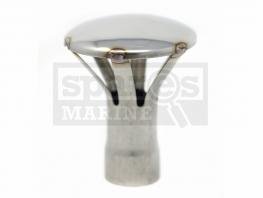
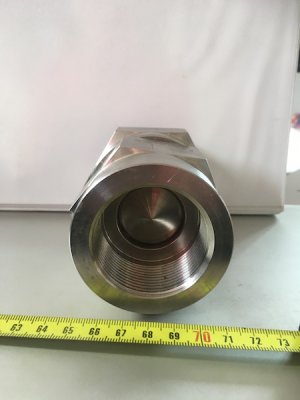
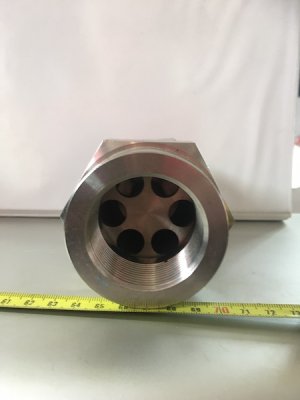
I do wonder if a non return valve would be possible or even an electric shut off valve. With a one inch exhaust pipe, a solenoid operated one would be heavy on the juice. I wonder if there is such a variety as those found in central heating zone valves (which are mains operated and still take current even when fully open.
Ideas and opinions please.
The stern cabin heater (Chinaspascher) exhausts through the transom and I am happy with it. It is easy to check and the exhaust is well lagged. The heater baseplate is well separated from the hull.
The fore cabin is a different kettle of fish. The baseplate is not very well insulated from the hull but can be spaced further away.
In a good blow, we can dip the lee rail. I considered positioning the exhaust in the coaming but it would dangerously hot for "passers by".
In the hull, it is vulnerable to water ingress.
There is a little space to allow an upwards loop or a "there and back" silencer before the outlet proper from the hull.
I do wonder if a non return valve would be possible or even an electric shut off valve. With a one inch exhaust pipe, a solenoid operated one would be heavy on the juice. I wonder if there is such a variety as those found in central heating zone valves (which are mains operated and still take current even when fully open.
Ideas and opinions please.
Last edited: