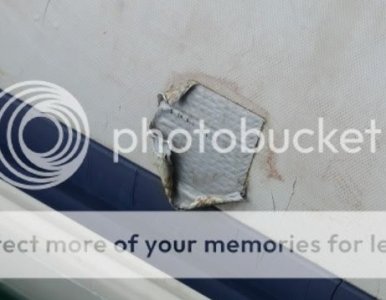
Glue for patching a tender, one part or two part adhesive, v small repair

FairweatherDave

Well-Known Member
Joined
28 Sep 2009
Messages
2,089
Location
Solent
Visit site
This isn't quite such a dumb question as it appears :).....
The marketing for adhesive for patching an inflatable dinghy indicates one part or two part adhesives... one part for quick temporary repairs, two part for permanent repairs. You can buy a repair kit including the patches, that only comes with one part adhesive. But why would I want to repair a dinghy with a "temporary" repair? Obviously it is quicker and easier but to have to redo it does not appeal. So I am curious about the definition of "temporary". My hole is small, perhaps a millimetre. My instinct is to use a one part adhesive, (I already have patches from old repair kits without the glue), I'm worrying too much, but really, I don't want to repatch in 12 months time. So who has used what glue and were you satisfied with the results. Are there cheap alternative glues that work just as well. Two part glue states a shelf life of two years and then there's the primer stuff too. Costly. So, what to do?
(PS Obviously if I needed to do a much more structural repair on a big hole the two part adhesive would be a no brainer)
 
I have an old Inflatable which is like a patchwork quilt underneath. Previous owner and I have used the similar one part adhesive kits and I can honestly say that despite this rubby being decades old and patched - only one or two patches have lifted and they are very very old patches from over 20yrs ago ....

The last kit I bought and still have is literally the same as the original Avon pack I have.

The secret to success of course is preparing the patch and surface .. avoid sharp square corners to the patch .... make sure glue is properly left to go tacky before applying patch ... and I also add a serious weight on top to make sure its pressed fully in place. I do like also to add a patch both sides as insurance.

To give an idea how old the rubby is ... the seat still has that terrible black press in rubber bung with two prong pin for the air valve ...

The beauty of the inflatable of course is that even if a patch does fail - it will still float ! I know - something to avoid ..
 
I have an old Avon dinghy too with the same bungs as you. But that is hypalon. Love it. Long may it last.
This dinghy needing a repair is a cheaper newer small PVC one.
 
I have an old Avon dinghy too with the same bungs as you. But that is hypalon. Love it. Long may it last.
This dinghy needing a repair is a cheaper newer small PVC one.

I had a Narwhal before the Avon Redstart ..... was a very nice looking dinghy with a transom board for outboard instead of the metal frame as with the Avon.
Great until seams started leaking. Took it to an Inflatable Service Centre ... they looked at it ... pumped it up ... condemned it. Their comment - not mine - the adhesives and material used in it would not give reliable repair and they would not put their name to it.

So I bought a tube of sealant recc'd for Inflatables ..... Did exactly as stated in the instructions. That service centre was dead right !! Within one day - the seams let go even more as the original adhesive gave out and the sealant was unable to do its job.
 
pvc is gerally 1 part glue, but 2 layers on both sides. It probably wont matter that much for a small dot patch, but doing the repair in the clean, warm, dry and applying pressure to the patch for a period of hours will matter more if its to stay stuck.
Over the years like many I have repaired many inflatables, on one occasion I have used sika flex on Hypalon which has held for 8 years so far!, and last year I repaired a PVC inflatable SUP which had burst a seam in the midday heat in Italy about 20 cm long but easy to clamp along the seem, which seems to be fine 6 months later, and contains 25bar of pressure!
 
Last edited:
If you had a tube of CT1 grey to hand I'd use that, probably without even a patch. Tiny dab into the hole, when dry mask up a two-3 inch square round it with duct tape then smear CT1 evenly. Lay sheet of greaseproof paper on top and gently spread out CT1 into thinn layer. Peel off paper and masking tape. Leave to dry.

I discovered this when I ran out of two-part PVC glue (which works well too with patches), and had one hole left to fix. Didn't want to buy another £15 tin of Polymarine PVC glue.

I wouldn't buy CT1 or similar just for this but if you have some it works really well
 
pvc is gerally 1 part glue, but 2 layers on both sides. It probably wont matter that much for a small dot patch, but doing the repair in the clean, warm, dry and applying pressure to the patch for a period of hours will matter more if its to stay stuck.
Over the years like many I have repaired many inflatables, on one occasion I have used sika flex on Hypalon which has held for 8 years so far!, and last year I repaired a PVC inflatable SUP which had burst a seam in the midday heat in Italy about 20 cm long but easy to clamp along the seem, which seems to be fine 6 months later, and contains 25bar of pressure!


25bar ?????? Are you sure about that ? That's actually over 360 psi ...... or about 25.5 kg/cm2

A normal car tyre is in region of 2.5bar ......

No wonder your seams gave out !! ;)
 
This isn't quite such a dumb question as it appears :).....
The marketing for adhesive for patching an inflatable dinghy indicates one part or two part adhesives... one part for quick temporary repairs, two part for permanent repairs. You can buy a repair kit including the patches, that only comes with one part adhesive. But why would I want to repair a dinghy with a "temporary" repair? Obviously it is quicker and easier but to have to redo it does not appeal. So I am curious about the definition of "temporary". My hole is small, perhaps a millimetre. My instinct is to use a one part adhesive, (I already have patches from old repair kits without the glue), I'm worrying too much, but really, I don't want to repatch in 12 months time. So who has used what glue and were you satisfied with the results. Are there cheap alternative glues that work just as well. Two part glue states a shelf life of two years and then there's the primer stuff too. Costly. So, what to do?
(PS Obviously if I needed to do a much more structural repair on a big hole the two part adhesive would be a no brainer)
For small repairs on my Seago 260 I used Superglue and old bicycle inner tube rubber, total cost about £2. this is also the emergency kit I have onboard.

Some of the patches have lasted over 5 years. The dinghy is now over 15 years old and the valves are going so I’m replacing but was happy as a seasonal fix which lasted longer than I expected.
 
pvc is gerally 1 part glue, but 2 layers on both sides. It probably wont matter that much for a small dot patch, but doing the repair in the clean, warm, dry and applying pressure to the patch for a period of hours will matter more if its to stay stuck.
Over the years like many I have repaired many inflatables, on one occasion I have used sika flex on Hypalon which has held for 8 years so far!, and last year I repaired a PVC inflatable SUP which had burst a seam in the midday heat in Italy about 20 cm long but easy to clamp along the seem, which seems to be fine 6 months later, and contains 25bar of pressure!
25 bar is 375 psi! oops, some got there first!
 
For small repairs on my Seago 260 I used Superglue and old bicycle inner tube rubber, total cost about £2. this is also the emergency kit I have onboard.

Some of the patches have lasted over 5 years. The dinghy is now over 15 years old and the valves are going so I’m replacing but was happy as a seasonal fix which lasted longer than I expected.


I would generally advise against use of CA (superglue) for anything that is subject to water immersion / frequent ... water is one of the ways to break down CA ... albeit slowly.

But I know the cheap 'eBay' inflatables advise CA patches.
 
This isn't quite such a dumb question as it appears :).....
The marketing for adhesive for patching an inflatable dinghy indicates one part or two part adhesives... one part for quick temporary repairs, two part for permanent repairs. You can buy a repair kit including the patches, that only comes with one part adhesive. But why would I want to repair a dinghy with a "temporary" repair? Obviously it is quicker and easier but to have to redo it does not appeal. So I am curious about the definition of "temporary". My hole is small, perhaps a millimetre. My instinct is to use a one part adhesive, (I already have patches from old repair kits without the glue), I'm worrying too much, but really, I don't want to repatch in 12 months time. So who has used what glue and were you satisfied with the results. Are there cheap alternative glues that work just as well. Two part glue states a shelf life of two years and then there's the primer stuff too. Costly. So, what to do?
(PS Obviously if I needed to do a much more structural repair on a big hole the two part adhesive would be a no brainer)
Bostik 1782 is the one to use.
 
Thats made me feel better reading the posts. I have bought some 1 part pvc glue for my dinghy from amazon. It has a very small puncture hardly even noticable.
 
Old thread but you can buy a tube of polymarine adhesive for repairs that does not require a patch, just the glue itself. Ideal for pin holes or awkward seams.
PVC Adhesive 1-Part 70ml
1-Part adhesive for PVC fabric.
- Solvent based polyurethane adhesive giving excellent adhesion to both plasticised and unplasticised PVC nylon fabric, polyurethane fabric and foam. Suitable for use on all PVC inflatable dinghies.
• Easy to use
• Contact bonds in 10-15 minutes
• Full cure in 48 hours
• Size: 70ml tube
 
Top