Gas Supply

Wandering Star

Well-Known Member
Joined
8 Feb 2009
Messages
5,545
Location
Dorset
Visit site
Just removed a totally rusted Flavell Vanessa cooker (no, you really don’t want it for spare parts) from my project boat. I was thinking of replacing the gas supply from the Camping Gaz cylinder all the way to the new cooker with one length of rubber hose - is that sensible? Should I reuse the copper pipe? I don’t want to make the job harder than I need to but I also don’t want to blow my boat up mid ocean either not that I suppose it matter much if I do because it’s an unsinkable Sadler 29 so the only inconvenience would be singed eyebrows.
 
Just removed a totally rusted Flavell Vanessa cooker (no, you really don’t want it for spare parts) from my project boat. I was thinking of replacing the gas supply from the Camping Gaz cylinder all the way to the new cooker with one length of rubber hose - is that sensible? Should I reuse the copper pipe? I don’t want to make the job harder than I need to but I also don’t want to blow my boat up mid ocean either not that I suppose it matter much if I do because it’s an unsinkable Sadler 29 so the only inconvenience would be singed eyebrows.
I think you will find there is a recommended max length for rubber hose.
1 metre from memory, but of course that's from the Boat Safety Scheme for inland waterways craft. You can do what you like on the ocean but the BSS is a useful guide to what is generally sensible and acceptable
 
Last edited:
Yes that’s what I thought. The existing copper pipe looks in good condition but the fittings at either end are seized on, I’m frightened if I try to detach the 2 flexible ends which definitely both need replacing, I’ll twist and crush the copper pipe. Probably best to install the physical cooker myself but get the gas connection done by a pro.
 
Yes that’s what I thought. The existing copper pipe looks in good condition but the fittings at either end are seized on, I’m frightened if I try to detach the 2 flexible ends which definitely both need replacing, I’ll twist and crush the copper pipe. Probably best to install the physical cooker myself but get the gas connection done by a pro.

Can you not just cut the seized fitting off the ends op the pipe (with Junior Hacksaw, Multitool, Dremel or whatever) and replace with compression fittings?
 
Reading your post I would highly recommend replacing the lot which I did on my own boat.
Fit approved orange gas hose from approved gas bottle valve then a shut off valve then into a gas bubble leak detector, from that 8 mm dia copper pipe all the way to back of oven then connect to approved gas braided hose to oven
Note 'if' you have to go around or through a bulkhead first cover the copper hose with some thick rubber hose to prevent any chaffing
I bought all my fittings from :-

8mm Alde Marine/Boat Gas Leak Detector (Bubble Tester)

LPG High Pressure Galv. Braided Gas Hose - 8mm Copper Standpipe x 1M
1751985739826.jpeg
 
Reading your post I would highly recommend replacing the lot which I did on my own boat.
Fit approved orange gas hose from approved gas bottle valve then a shut off valve then into a gas bubble leak detector, from that 8 mm dia copper pipe all the way to back of oven then connect to approved gas braided hose to oven
Note 'if' you have to go around or through a bulkhead first cover the copper hose with some thick rubber hose to prevent any chaffing
That's an "interesting" gas installation, particularly from a surveyor.
 
Reading your post I would highly recommend replacing the lot which I did on my own boat.
Fit approved orange gas hose from approved gas bottle valve then a shut off valve then into a gas bubble leak detector, from that 8 mm dia copper pipe all the way to back of oven then connect to approved gas braided hose to oven
Note 'if' you have to go around or through a bulkhead first cover the copper hose with some thick rubber hose to prevent any chaffing
I bought all my fittings from :-

8mm Alde Marine/Boat Gas Leak Detector (Bubble Tester)

LPG High Pressure Galv. Braided Gas Hose - 8mm Copper Standpipe x 1M
View attachment 195877
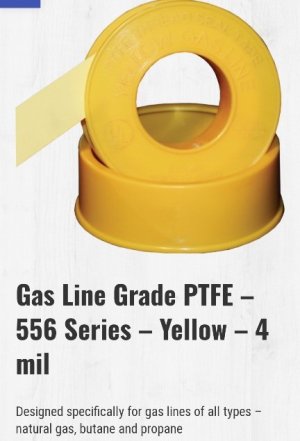
I didn't think it advisable to use white ptfe on gas, thort it should be yellow...
 
I didn't think it advisable to use white ptfe on gas, thort it should be yellow...
The old proper British Gas issued white PTFE tape though you shouldn't need it on a compression fitting. A tip I did learn, was to make the compression joint so the olive was just nipped up, undo and put a smear of jointing compound over the olive and then make the joint up.
 
Reading your post I would highly recommend replacing the lot which I did on my own boat.
Fit approved orange gas hose from approved gas bottle valve then a shut off valve then into a gas bubble leak detector, from that 8 mm dia copper pipe all the way to back of oven then connect to approved gas braided hose to oven
Note 'if' you have to go around or through a bulkhead first cover the copper hose with some thick rubber hose to prevent any chaffing
I bought all my fittings from :-

8mm Alde Marine/Boat Gas Leak Detector (Bubble Tester)

LPG High Pressure Galv. Braided Gas Hose - 8mm Copper Standpipe x 1M
View attachment 195877
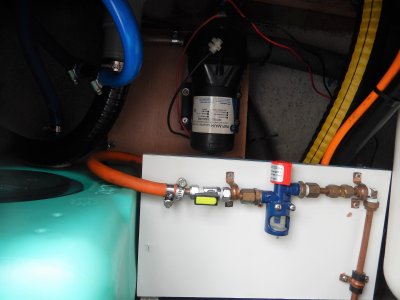
Is this an example of how never to do a gas installation?
Over long flexible rubber hose.
No security or support or strain relief for hose.
Unsupported gas tap.
Over large Bolivar clip not supporting pipe.
PTFE tape used on the outside of compression fittings threads, totally unnecessary.
Additional compression coupler doing nothing but introducing 2 extra leakage points.
More PTFE tape incorrectly used on compression elbow.
Bolivar pipe clip used on the nut of a compression fitting, inability to correctly tighten.
None approved packing used in oversize Bolivar pipe clip.

A very poor example for unskilled unapproved gas fitters to be exposed to.
 
Is this an example of how never to do a gas installation?
Over long flexible rubber hose.
No security or support or strain relief for hose.
Unsupported gas tap.
Over large Bolivar clip not supporting pipe.
PTFE tape used on the outside of compression fittings threads, totally unnecessary.
Additional compression coupler doing nothing but introducing 2 extra leakage points.
More PTFE tape incorrectly used on compression elbow.
Bolivar pipe clip used on the nut of a compression fitting, inability to correctly tighten.
None approved packing used in oversize Bolivar pipe clip.

A very poor example for unskilled unapproved gas fitters to be exposed to.
You missed that it's all mounted on what looks like plastic coated MDF. Not a gas safety issues, but even so! 😝
 
If the gas bottle is immediately upstream of the tap, why the tap? Just close the regulator. The bubble gauge should be immediately after the regulator so as to test all downstream connections. You'd be safer just running a pink hose all the way from the regulator to the cooker rather than that lot.
 
Is this an example of how never to do a gas installation?
Over long flexible rubber hose.
No security or support or strain relief for hose.
Unsupported gas tap.
Over large Bolivar clip not supporting pipe.
PTFE tape used on the outside of compression fittings threads, totally unnecessary.
Additional compression coupler doing nothing but introducing 2 extra leakage points.
More PTFE tape incorrectly used on compression elbow.
Bolivar pipe clip used on the nut of a compression fitting, inability to correctly tighten.
None approved packing used in oversize Bolivar pipe clip.

A very poor example for unskilled unapproved gas fitters to be exposed to.
Simple pipe bender would get rid of the elbow and a load of joints.
 
Just removed a totally rusted Flavell Vanessa cooker (no, you really don’t want it for spare parts) from my project boat. I was thinking of replacing the gas supply from the Camping Gaz cylinder all the way to the new cooker with one length of rubber hose - is that sensible? Should I reuse the copper pipe? I don’t want to make the job harder than I need to but I also don’t want to blow my boat up mid ocean either not that I suppose it matter much if I do because it’s an unsinkable Sadler 29 so the only inconvenience would be singed eyebrows.

Probably safe enough on your own boat if you have a mind.

Regulations come about because they have to cater for the lowest denominator, it has to be safe for those that don't understand the system or anything about gas, or even anything about boats full stop. For the untutored sailor or someone who has hired the boat for the day.

There are advantages in having one run, with no joints except at the ends. Very easy to inspect and easy to replace the lot when the time comes. You would need to run it at high level through lockers, support carefully and watch for chafe points in your design. Not saying I would do it though, when it comes to resale there would be a lot of moaning, just as well bite the bullet now.

One tip, terminate with barbed fittings to flexi hoses - makes it easy work to fit new.

.
 
Isn't it white tape on a yellow reel? Thicker than the standard plumbing ptfe. Whatever, agreed it shouldn't be on the thread of a compression fitting.
I have never seen yellow PTFE, yellow plastic reel, yes but the tape is always white, just thicker than water plumbing tape. You are only supposed to wrap one and a third turns onto a thread, certainly not on the outside of a compression fitting.
 
Top