
Gas oven thermocouple

TwoHooter

Well-Known Member
Joined
6 Sep 2014
Messages
1,005
Location
marinetraffic.com MMSI 235116115
Visit site
We have an obsolete Seaward cooker. The oven burner thermocouple (I hope that's the right word) has failed. We can light the oven pilot light but when we turn the knob to operating temperature a small additional amount of gas passes through, enough to get the metal around the pilot light (bimetallic strip?) red hot, but the burner itself doesn't get any gas. No point trying to buy an original part, I needed new knobs for the cooker last year and they had to come from the USA. I'm hoping someone might know how I can specify either a new thermocouple or complete new burner unit for the cooker.
We wanted to replace the whole cooker but nobody makes one that size any more and it would require major surgery to fit a different size.
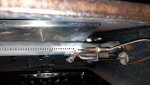
Oven burner 20201227_132147 resized.jpg
 
We have an obsolete Seaward cooker. The oven burner thermocouple (I hope that's the right word) has failed. We can light the oven pilot light but when we turn the knob to operating temperature a small additional amount of gas passes through, enough to get the metal around the pilot light (bimetallic strip?) red hot, but the burner itself doesn't get any gas. No point trying to buy an original part, I needed new knobs for the cooker last year and they had to come from the USA. I'm hoping someone might know how I can specify either a new thermocouple or complete new burner unit for the cooker.
We wanted to replace the whole cooker but nobody makes one that size any more and it would require major surgery to fit a different size.
View attachment 105743
The thermo couples are usualluy generic, go to your local plumber supplier, they sell them of different lengths and with different thread adapters, having said that it sounds as ifyour burner jet is blocked, they unscrew and you can clean them with a pice of fuse wire
 
The thermocouple looks fairly standard from what I remember of them. They used to come with different length connectors, etc so you would be to get a few pictures of the connection into the gas valve and the length and then visit a local plumbers merchant.

Beaten to it. But both replies the same by forum standards!
 
Yep the thermo-switch looks like a standard part. I have the same on an old French cooker. I think that they actually work on pressure building in the tube as the head is heated. I thought that I had an issue with one of my thermo-switches a few years ago. I was able to get a replacement in UShip in France . I suspect that most Chandlers will have a replacement.
What I found in the end was that my problem was not the thermo-Switch itself. The end of the switch has a little button that presses onto the gas valve to open it (The valve that on/off knob fits to at the front of the cooker) the nut that held the end of the thermo-switch into the Valve had come just a little loose. The actuatator at the end of the therm-switch was no longer exerting enough pressure to open the valve. I was surprised at how a small amount of adjustment had it working again. No problem with it since. Its worth checking that the actuator is properly secured into the valve.
From memory the On off button has to be securely fitted also or the unit wont work.
You could transfer thermo-switch from one of the rings if you want to use it to troubleshoot , without buying a spare.
Good luck with it , Kinsale 373
 
Thanks both. I've never handled gas fittings before, always delegated that. This time it will have to be me.
The connection at the gas valve end is not a gas connection so no worries about making a gas tight connection.

Last time I replaced a thermocouple ( on a gas boiler) the new "universal" replacement came with a choice of two slotted retaining nuts for the gas valve en,d neither of which was the correct thread. I had to cut the old thermocouple, remove the nut and cut a slot in it so that it could be fitted to the new thermocouple. A fit of a fiddle but no problem.

But makesure your pilot jet flme is playing on the end of the thermocouple. They often play onto a deflector wich diredts the flame on to the thermocouple. Things look a bit " not quite right" in your photo
 
Last edited:
Yep the thermo-switch looks like a standard part. I have the same on an old French cooker. I think that they actually work on pressure building in the tube as the head is heated. I thought that I had an issue with one of my thermo-switches a few years ago. I was able to get a replacement in UShip in France . I suspect that most Chandlers will have a replacement.
What I found in the end was that my problem was not the thermo-Switch itself. The end of the switch has a little button that presses onto the gas valve to open it (The valve that on/off knob fits to at the front of the cooker) the nut that held the end of the thermo-switch into the Valve had come just a little loose. The actuatator at the end of the therm-switch was no longer exerting enough pressure to open the valve. I was surprised at how a small amount of adjustment had it working again. No problem with it since. Its worth checking that the actuator is properly secured into the valve.
From memory the On off button has to be securely fitted also or the unit wont work.
You could transfer thermo-switch from one of the rings if you want to use it to troubleshoot , without buying a spare.
Good luck with it , Kinsale 373
They are in fact thermocouples . The button on the end is an electrical contact.
I thought like you until I performed the surgery mentioned above
 
Last edited:
Wot Vic says. Recently looked at a boat stove with apparently failed thermo-couple. Loosening the nut that held the end in the valve, then retightened it. Cured the prob. I expect a little restance had built up on the faces. Internet came up with choice of spares from €6. Some with several nuts as Vic found.

Kinsale's post is a bit miss-leading....
 
There is a little contradiction in the OP. If the pilot light stays on, then the thermocouple must be working. The whole point of the thermocouple is as a flame supervision device. To test the thermocouple light the pilot. Provided it stays on, then blow it out.....then listen......within 1 minute there should be a just audible click as the thermocouple cools and the gas valve switches off. If you get the click within one minute then that part of the system is working. If the thermocouple is ancient then I'd probably change it by way of elimination anyway.

As it is an oven there is a second device which is the oven stat, and these can fail too. Normally what happens when they fail is that the burner lights on low, but the flame does not increase when you turn the oven up.

If the pilot is lighting , but the unit fails to light the burner and goes out then that is either a gas pressure or gas supply issue, or a blocked or impeded gas jet. It's impossible to tell from here obviously.

I have to say also that if compatible legitimate spares are not available, then it's scrap. The best way to source a new thermocouple is to remove the old one as intact as possible and take it into a gas merchant. They usually try their best to help.
 
Yep the thermo-switch looks like a standard part. I have the same on an old French cooker. I think that they actually work on pressure building in the tube as the head is heated. I thought that I had an issue with one of my thermo-switches a few years ago. I was able to get a replacement in UShip in France . I suspect that most Chandlers will have a replacement.
What I found in the end was that my problem was not the thermo-Switch itself. The end of the switch has a little button that presses onto the gas valve to open it (The valve that on/off knob fits to at the front of the cooker) the nut that held the end of the thermo-switch into the Valve had come just a little loose. The actuatator at the end of the therm-switch was no longer exerting enough pressure to open the valve. I was surprised at how a small amount of adjustment had it working again. No problem with it since. Its worth checking that the actuator is properly secured into the valve.
From memory the On off button has to be securely fitted also or the unit wont work.
You could transfer thermo-switch from one of the rings if you want to use it to troubleshoot , without buying a spare.
Good luck with it , Kinsale 373


Thermocouples actually generate a current that holds the solenoid in the gas valve in the open position to allow gas to the main burner. Its a coaxial electric cable not a pipe.


The connection at the gas valve end is not a gas connection so no worries about making a gas tight connection.

Last time I replaced a thermocouple ( on a gas boiler) the new "universal" replacement came with a choice of two slotted retaining nuts for the gas valve en,d neither of which was the correct thread. I had to cut the old thermocouple, remove the nut and cut a slot in it so that it could be fitted to the new thermocouple. A fit of a fiddle but no problem.

But makesure your pilot jet flme is playing on the end of the thermocouple. They often play onto a deflector wich diredts the flame on to the thermocouple. Things look a bit " not quite right" in your photo


Looking at your photo, the pilot deflector shield is facing the wrong way, it should direct the pilot flame onto the thermocouple.


There is a little contradiction in the OP. If the pilot light stays on, then the thermocouple must be working. The whole point of the thermocouple is as a flame supervision device. To test the thermocouple light the pilot. Provided it stays on, then blow it out.....then listen......within 1 minute there should be a just audible click as the thermocouple cools and the gas valve switches off. If you get the click within one minute then that part of the system is working. If the thermocouple is ancient then I'd probably change it by way of elimination anyway.

As it is an oven there is a second device which is the oven stat, and these can fail too. Normally what happens when they fail is that the burner lights on low, but the flame does not increase when you turn the oven up.

If the pilot is lighting , but the unit fails to light the burner and goes out then that is either a gas pressure or gas supply issue, or a blocked or impeded gas jet. It's impossible to tell from here obviously.

I have to say also that if compatible legitimate spares are not available, then it's scrap. The best way to source a new thermocouple is to remove the old one as intact as possible and take it into a gas merchant. They usually try their best to help.
If the pilot stays lit when you let go of the knob, the thermocouple is OK.

If it goes out when you let go, make sure that the knob is going in far enough and that the knob is not hitting the facia before it is fully depressed.

If the pilot stays lit with the knob released, then I suspect you have a blocked burner jet or gas valve.
 
I need to correct Boater Sam. Whilst a thermocouple does indeed generate a voltage of between 25 and 35 millivolts. It is not a coaxial cable by any stretch of imagination. It is two dissimilar metals, which when heated generate a potential.
 
I had a similar problem with my oven and assumed a gas supply issue. The rings were fine so thought it must by in the pipes to/in the oven. I tried taking the oven apart but this defeated me. I then connected a bicycle pump to the pipe into the cooker, got my wife to hold the oven control in and gave a quick pump. It has been fine since and that was about 4 years ago.
 
Some good stuff here, thanks everyone, and as soon as I can get back to the boat with a pair of specs I will dig deeper and report back. You never know, this might help someone else one day.

Scrapping the cooker is not a option. It is built in to a luxury galley with granite worktops and its dimensions are no longer standard.. The granite is of course not something you can match by popping in to your local B&Q or anywhere else in fact. I and subsequent owners of the boat must keep this cooker going on the grandfather's hammer principle. Gas is one of the many things I know nothing about; I anticipate that I will know more when I have fixed this cooker :(.
 
Yep the thermo-switch looks like a standard part. I have the same on an old French cooker. I think that they actually work on pressure building in the tube as the head is heated. I thought that I had an issue with one of my thermo-switches a few years ago. I was able to get a replacement in UShip in France . I suspect that most Chandlers will have a replacement.
What I found in the end was that my problem was not the thermo-Switch itself. The end of the switch has a little button that presses onto the gas valve to open it (The valve that on/off knob fits to at the front of the cooker) the nut that held the end of the thermo-switch into the Valve had come just a little loose. The actuatator at the end of the therm-switch was no longer exerting enough pressure to open the valve. I was surprised at how a small amount of adjustment had it working again. No problem with it since. Its worth checking that the actuator is properly secured into the valve.
From memory the On off button has to be securely fitted also or the unit wont work.
You could transfer thermo-switch from one of the rings if you want to use it to troubleshoot , without buying a spare.
Good luck with it , Kinsale 373
Wow this is interesting to know , I’ve got the same problem with my oven ( plastimo Neptune 2500) I’ll definitely be looking at this today
 
I need to correct Boater Sam. Whilst a thermocouple does indeed generate a voltage of between 25 and 35 millivolts. It is not a coaxial cable by any stretch of imagination. It is two dissimilar metals, which when heated generate a potential.
Well I was telling the OP that the copper "lead" was a coaxial not a pipe. I know very well that the welded tip of a thermocouple is a two dissimilar metals junction usually nickel/alloy in the case of gas safety devices . I was a registered gas fitter for 30 years+!
 
They are in fact thermocouples . The button on the end is an electrical contact.
I thought like you until I performed the surgery mentioned above
+1. One of the many useful things I have learned on here. I really didn't think a thermocouple would generate enough to keep a solenoid latched, but I was wrong.
 
+1. One of the many useful things I have learned on here. I really didn't think a thermocouple would generate enough to keep a solenoid latched, but I was wrong.
Its only a small solenoid, it has a spring loaded rubber plug on the end of the armature which blocks the gas feed to the main burner until the solenoid is energised. It is a hold in only solenoid, pushing the control shaft in connects the armature to the shaft manually, the current from the thermocouple then holds it "stuck" to the shaft. Letting go of the knob retracts the shaft, and armature, opening the main gas port to the burner.
The pilot flame is fed by a small drilling from the main burner port and also by a tiny bypass that opens when you hold the knob in whilst lighting the pilot. Once the solenoid energises the pilot stays lit when you release the knob. If the knob is not pushed far enough the solenoid armature will not be attracted to the shaft. That is why the knob has to be fully pushed into the valve and not foul on the facia.

Not the same sort of valve in this link but the principle is the same. See

http://www.rses.org/assets/serviceapplicationmanual/630-108.pdf

its well down the article.


The OP pilot shield is definitely facing the wrong way. The pilot flame should envelope the thermocouple tip.

See Gas Flame Thermocouple Sensors Troubleshooting & Replacement
 
Last edited:
I said I would report back. I forgot, but have now remembered.
The thermocouple had become dislodged and was not detecting the heat of the pilot light reliably.
I found its proper location and eased the tip back in.
The oven now works perfectly.... until the next time!

Hi there, having similar issue with same oven. Can you provide a picture of correct installation? My thermocouple and pilot including the deflector slooks the same as your OP photo.
What did you mean by proper location? Was this at the burner end or other end of thermocouple?

Thanks in advance
 
Top