Full house

There's clearly some A grade morons in Killarney. House Sparrows are only found in close association with human occupation. Where I usually go birding there's a farm complex and a house opposite which hosts a population of House Sparrows.
I will not comment on the first sentance as Killarney is in Ireland. We may have some Irish forumites who may wish to discuss further. I would not like to be involved in that chat.
As for Sparrows - I bow to your better knowledge. However, I was under the impression that in the Uk there were 2 main species of sparrow. The house sparrow, which you mentioned earlier & the tree sparrow. All I know is that the trees in & around the the town ( which in those days was quite small) was absolutely full of sparrows at night & lesser so during the day. I have never seen so many sparrows in one area. This was 65 years ago.
The only time I have seen any trees a bit like it is when starlings arrive & decide to spend the night in some of my trees at my last house. The racket was unbelievable, but seemed to turn off like a switch at night, then on again in the morning just before they left for work
 
I have a little bird in our rural garden, grey head and underbody, mid brown specked wings, smaller than a robin, not a sparrow, robin keeps chasing it off, not sure what it is, any ideas.
 
Have tried to take pictures today of the Wren(s). Lovely birds that hide in the Ilex and never linger so I can focus. Our wren's are very brown and not a grey hair. Did think I saw a Blue Tit this morning which looked grey on head and underneath. The technical term is 'Little brown jobbies'! Little brown bird - Wikipedia

Could be a Dunnock. Has more of the shape of a Robin than a Sparrow but is smaller. My neighbour and I could never agree but the drink was good.
 
I have a little bird in our rural garden, grey head and underbody, mid brown specked wings, smaller than a robin, not a sparrow, robin keeps chasing it off, not sure what it is, any ideas.
Sounds like a Dunnock, also used to be called a Hedge Sparrow.
 
Sounds like a Dunnock, also used to be called a Hedge Sparrow.
My thought too. They are actually very different except in approximate size. A dunnock is mostly a boring brown when seen at a distance but has a narrow beak, while a sparrow, especially male shows some markings and has a typical seed-eater’s thick beak and is more often seen in flocks. Tree sparrows are quite pretty little birds in a sparrow is sort of way.
 
Wren / Dunnock - Probably a wren if no other thoughts . My visitor is probably smaller than a Dunnock and slimmer than example photos. I'll have a good look at head beak body and tail shape in the morning, Message was partly to see if there were any other thoughts with the evenly grey head neck and underbody - not quite as photos of the usual suspects, hence have puzzled for a while. Wouldn't stay still long enough for a photo. Whatever it is it is happy here. Thank you.
 
Last edited:
Back to sea birds for a tic.
I'm pretty sure I saw a Gannet on a crossing from Holland to Harwich. I did not sea it diving but was on the water for a while doing something. Certainly had a yellowness about it. Anyone else ?

Yet to see an Arctic Tern . A very high mileage bird doing about 50,000 miles each year. Just wondering if anyone else has seen one. I would find it difficult to spot from our usual Tern visitors.
 
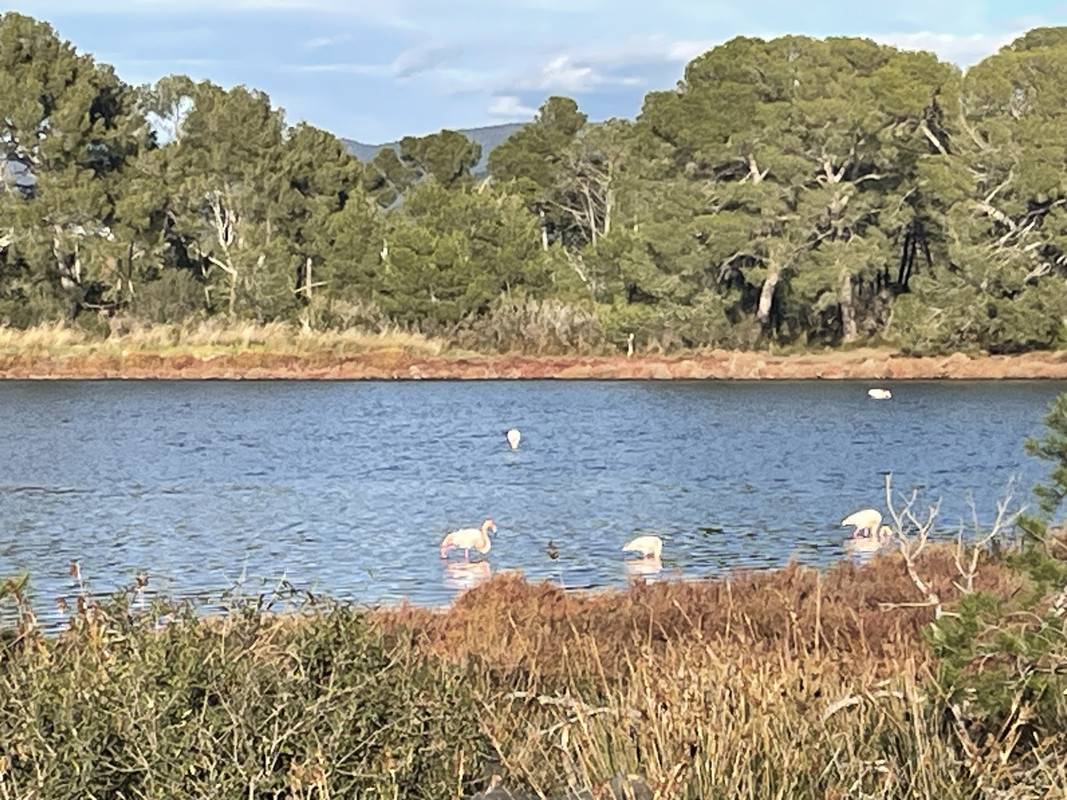
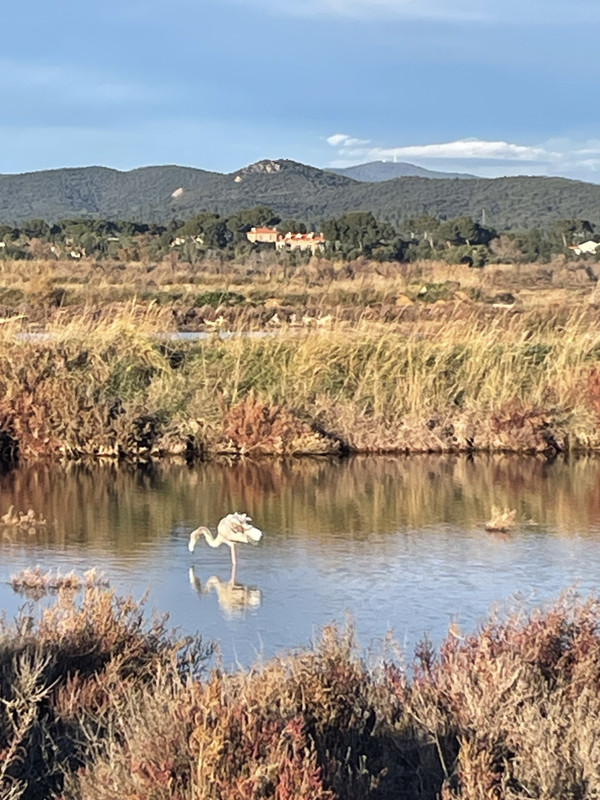
Today’s dog walk …,pink flamingos

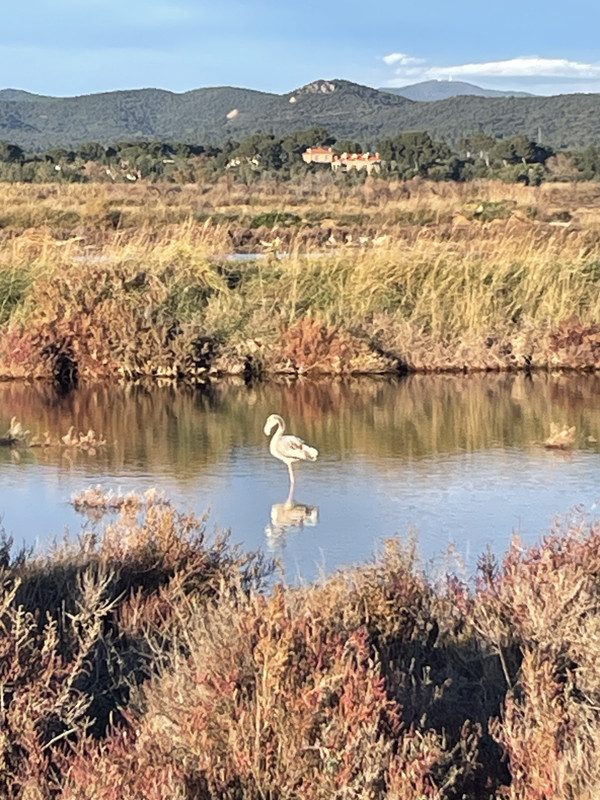
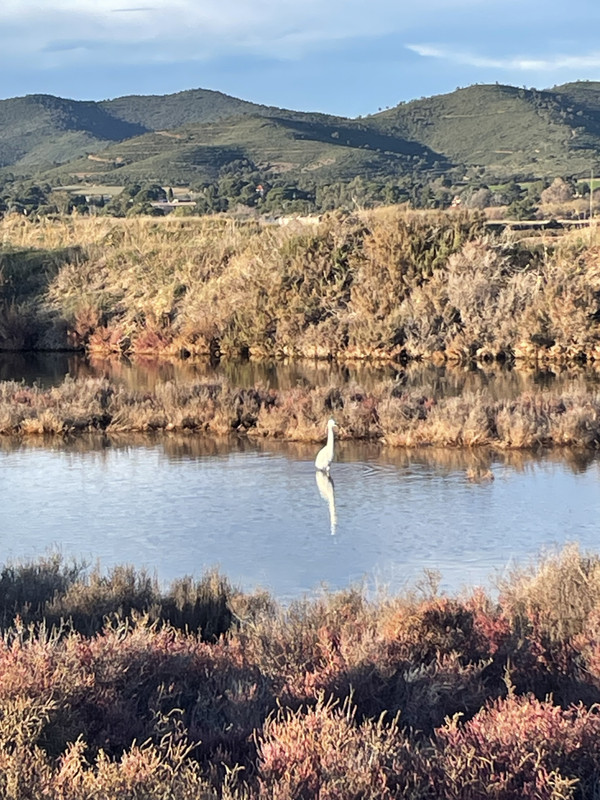
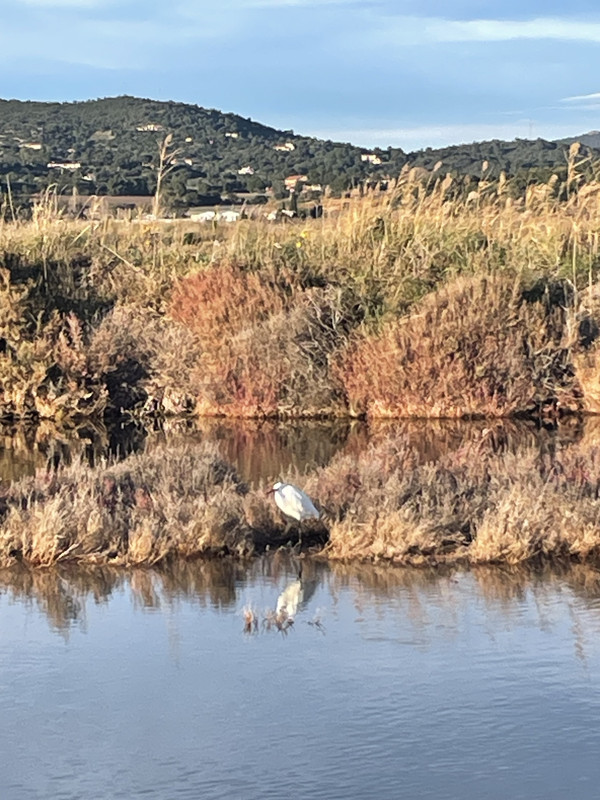
On an average dog walking day I expect to see, flamingos, egrets, the occasional kingfisher, cormorants….and several others including those I can’t identify, like these we saw today


like a flamingo of the wrong colour
And this with its stretchy neck


Back to sea birds for a tic.
I'm pretty sure I saw a Gannet on a crossing from Holland to Harwich. I did not sea it diving but was on the water for a while doing something. Certainly had a yellowness about it. Anyone else ?

Yet to see an Arctic Tern . A very high mileage bird doing about 50,000 miles each year. Just wondering if anyone else has seen one. I would find it difficult to spot from our usual Tern visitors.
Not unlikely. I have seen gannets while out in the Thames Estuary, and we saw quite a few going past when I was with a group at Thorpeness a year or two ago.

I don't think I have seen an arctic tern either. a very birdy acquaintance used to refer to them as 'comic terns' because hybrids with common terns were sometimes seen. I believe they hold the record for the longest migration route. Although we are mostly used to seeing the standard range of birds for our area, odd strays are not uncommon but it sometimes takes an expert eye to pick them out. I think the most stray bird that I have myself identified was a common skua, twice in the Channel.
 
Something that I saw, about 10 years ago, when on the dutch canals was some very large flocks of migrating birds. It really took my attention due to the amount of birds & the simularity in flight path. About 4 or 5 groups. The air was black with them there were so many in each flock.
The fascinating thing was that as each flock passed (about .25 KM away) at a particular point they all made a near 60 degree angled turn. Then as they were nearly out of sight they made another fairly sharp turn.
An examination of the chart of the canals shows that it was possible that they were following the path of one of the canals in the system
 
I will not comment on the first sentance as Killarney is in Ireland. We may have some Irish forumites who may wish to discuss further. I would not like to be involved in that chat.
As for Sparrows - I bow to your better knowledge. However, I was under the impression that in the Uk there were 2 main species of sparrow. The house sparrow, which you mentioned earlier & the tree sparrow. All I know is that the trees in & around the the town ( which in those days was quite small) was absolutely full of sparrows at night & lesser so during the day. I have never seen so many sparrows in one area. This was 65 years ago.
The only time I have seen any trees a bit like it is when starlings arrive & decide to spend the night in some of my trees at my last house. The racket was unbelievable, but seemed to turn off like a switch at night, then on again in the morning just before they left for work

Tree Sparrows in Ireland are only really found in the East.
 
Something that I saw, about 10 years ago, when on the dutch canals was some very large flocks of migrating birds. It really took my attention due to the amount of birds & the simularity in flight path. About 4 or 5 groups. The air was black with them there were so many in each flock.
The fascinating thing was that as each flock passed (about .25 KM away) at a particular point they all made a near 60 degree angled turn. Then as they were nearly out of sight they made another fairly sharp turn.
An examination of the chart of the canals shows that it was possible that they were following the path of one of the canals in the system
That might have been Brent geese on their way from Russia.

Flocks turning can appear strange. I remember watching a flock of dunlin flying past through binoculars at Stone Point. One moment they were flying past and a second later they seemed to have disappeared as they suddenly wheeled away from me and became effectively invisible.
 
While on the subject of birds, I saw something unusual today. I was driving down the A10 and saw a heron on the roadside. It was poised as if ready to strike, but there was no water nearby. I presume it was after frogs ot similar, but there was heavy frost so I'm not sure - surely all such small game is hibernating now? It was just north of the junction with the road to Welney and Wisbech.
 
While on the subject of birds, I saw something unusual today. I was driving down the A10 and saw a heron on the roadside. It was poised as if ready to strike, but there was no water nearby. I presume it was after frogs ot similar, but there was heavy frost so I'm not sure - surely all such small game is hibernating now? It was just north of the junction with the road to Welney and Wisbech.

They'll take small mammals too. I once saw one take a Short-tailed Vole.
 
Top