petem
Well-Known Member
Does anyone know if Flexiteak have the CNC drawings for popular boats (Fairline Targa's) or do they need to come out and template every installation?



OK, I know the guys at Elite Teak travel, they were doing a boat in Monaco at the time they were doing mine. Could you template it yourself, I watched them do mine and it was pretty simple?Thanks. The complication is that the boat is abroad.
I actually prefer Permateak and have a call in with the chap who runs it to let me know if they have the patters for the boat I'm interested in.OK, I know the guys at Elite Teak travel, they were doing a boat in Monaco at the time they were doing mine. Could you template it yourself, I watched them do mine and it was pretty simple?


Coulda been worse: if they’d charged you for snapping your bent davits.I actually prefer Permateak and have a call in with the chap who runs it to let me know if they have the patters for the boat I'm interested in.
Failing that, I do have some people who could template for me in Spain. Unfortunately one of them is the local shipyard who I'm boycotting after they stung me for €450 for straightening my snap davits!


Not sure if this guy covers all Ireland but i have seen his work on boats in my marina and it is superb,Watching with interest. Need to replace the teak on my platform (Cranchi Smeraldo 37) ... I'm in Ireland.
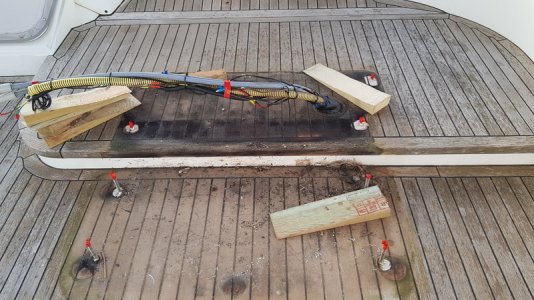
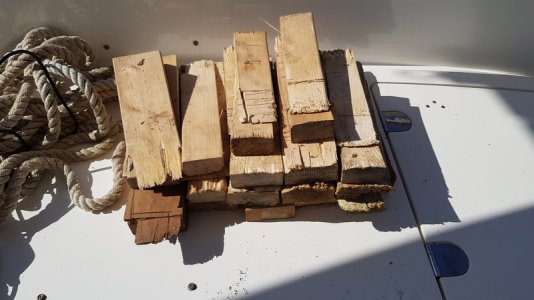
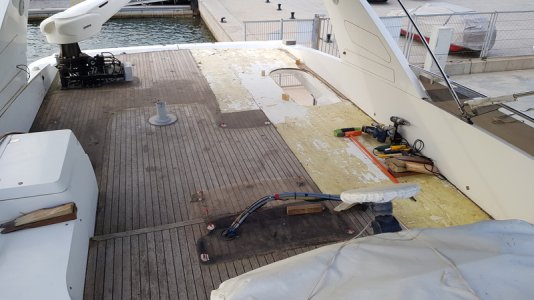
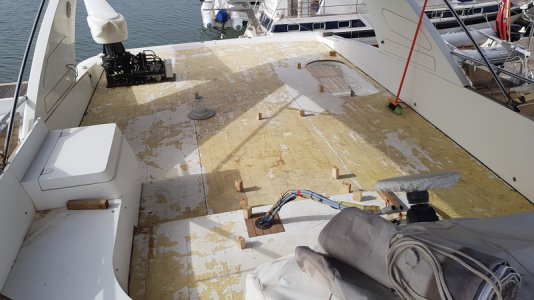
No issue removing the old stuff myself over the winter (that'll be fun).
I know if I make a template myself i'll make a balls of it!
Out of interest, when you're making a template yourself... do you leave 1-2mm around the outer edges for caulking? Or should the new product be pushing up against the recessed 'wall' (And just to confirm, my platform has a recess for the teak to sit 'in' so that the edges of the platform are flush with the teak).
Also, does it come in different thicknesses? OR would manufacturers generally have a standard 'recess' knowing what the average thickness would be? (I know no one is going to notice a 1-2mm difference between the teak / recess wall).
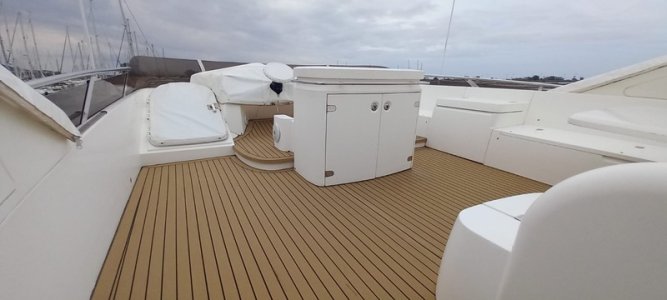
It may have been you that recommended the router method to remove the old teak.I put flexi teak onto the bathing platform of a Targa 43. The flexiteak panel was premade from a template the boatyoard had done.
Getting the old teak off is really easy if you use a router set to the existing teak thickness and just liquidise it. Dont go too close to the edges, get the last bit out with a sharp chisel. Sticking the new stuff down is also pretty easy. Use the correct glue and spreader, loads of weighs ready to hand. Put the new flexi panel on the glue and smooth it out. Use a roller of some sort preferably working from the centre to the edges. cover in weighs leave for 48 hours. Then use quality masking tape around the edges, squirt in the correct caulking and smooth it flush without getting any on the gel coat or flexiteak. leave it 24 hours. Peel off the masking tape carefully.
I put flexi teak onto the bathing platform of a Targa 43. The flexiteak panel was premade from a template the boatyoard had done.
Getting the old teak off is really easy if you use a router set to the existing teak thickness and just liquidise it. Dont go too close to the edges, get the last bit out with a sharp chisel. Sticking the new stuff down is also pretty easy. Use the correct glue and spreader, loads of weighs ready to hand. Put the new flexi panel on the glue and smooth it out. Use a roller of some sort preferably working from the centre to the edges. cover in weighs leave for 48 hours. Then use quality masking tape around the edges, squirt in the correct caulking and smooth it flush without getting any on the gel coat or flexiteak. leave it 24 hours. Peel off the masking tape carefully.
I enjoyed your videos on the process, but - off the top of my head - can’t remember how you did remove your old teak. I wouldn’t fancy routering for the very reasons you mention.It may have been you that recommended the router method to remove the old teak.
We had a go but it just wasn't precise enough.
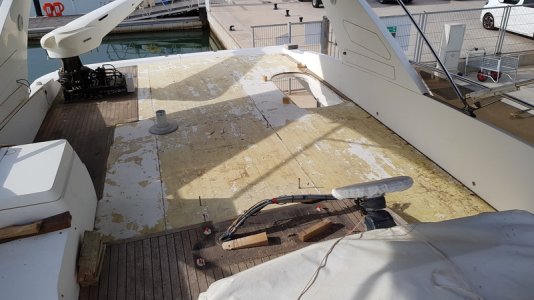
It was important to me to remove all the old teak including the mesh carrier that it was originally supplied on.
Then to remove all the old glue.
Using a router wouldn't remove the mesh carrier unless the router was set deeper - then it dug into the gelcoat surface.
I'm afraid that makes the job really hard work - well it was hard work for me anyway.
Final cutting and shaping of the pre-made synthetic panel is important as well - in most cases leaving a small groove at the edges for the caulking.
Yep - it was ?loody hard work.I enjoyed your videos on the process, but - off the top of my head - can’t remember how you did remove your old teak. I wouldn’t fancy routering for the very reasons you mention.
A chisel might be slow but you’re always attacking the material from an angle that’s relatively sympathetic to the gelcoat. Of course, with a router you would be cutting away the waste from a theoretically better angle - except where the teak is a bit thinner than you expect.