First time boat owner Antifoul question

BossaNova

Member
Joined
7 Dec 2012
Messages
35
Location
London, UK
Visit site
Hi all,

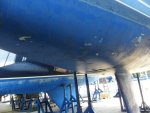
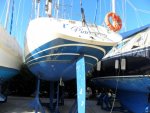
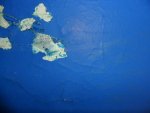
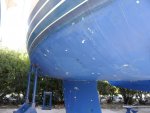
There is so much information about this topic that I am finding it difficult to make a decision about it. This is the issue, the previous owner has applied several layers of selfpolish antifoul on top of each other over the past 5 or 6 years. The boat has been on the hard since October last year and the antifoul is flaking off and cracking as shown in the pictures.

The yard suggests to "remove all antifouling and primer, then sand bottom to smooth surface and after
check with moisture instrument is surface dry completely to avoid osmosis and apply four coat of epoxy primer and 2 coat of antifouling". The quote for this work is 4k euros, not including hoisting and launching which is already paid for.

Hence, my questions are:

Is this work necessary? urgent?
what is the minimum work necessary now?
is it fairly priced?

Please bear in mind that If possible I would rather wait next winter when the boat will be at a boatyard I am more confident with.

Thanks in advance for the help.
 

Attachments

  • 1.jpg
    1.jpg
    58 KB · Views: 1
  • 2.jpg
    2.jpg
    79.9 KB · Views: 1
  • 3.jpg
    3.jpg
    77.9 KB · Views: 1
  • 4.jpg
    4.jpg
    87.6 KB · Views: 1
Well the yard would say that! Minimum scrape off all the loose stuff, antifoul again & off you go...

Agree. I would scrape off the flaky paint, wet sand the rest with 120 grit, wash it all down, prime the bare areas with a couple of coats of Primocon or similar then antifoul. Do you know which type of antifouling the previous owner used? It would be a good idea to check that the new paint is compatible or use a barrier coat of primer between old and new. You can always dry her out mid season for a quick check and touch up then think about epoxy treatment next winter.
 
sounds as though they are trying to protect your boat from osmosis even though it might not have it

I assume there was none mentioned in the survey when you bought it

scrape off the loose bits with a spatula

slap some self polishing antifoul on


go sailing

enjoy your boat

Dylan
 
Last edited:
Sounds like a reasonable price for the work listed - provided it is done properly. The question is whether or not it is necessary!

From your pictures and description, it is getting round to time to strip back, prime and start from scratch. Assuming that the boat is an X-412 as mentioned in your signature line, then this will cost you a few bob to have done professionally. X-yachts are well respected designs - does that particular design suffer from osmosis?

Even if it does, it is something that happens quite slowly - provided you get a decent coat of primer and a couple of coats of antifouling onto it, it is unlikely to get noticeably worse before next winter. If you are planning on keeping the boat for a reasonably long period, it probably makes sense to have this level of treatment done on it. I suspect a British yard would charge more for the work - at least one down in the expensive south - but if you don't have much confidence in the current yard, just get it scraped off a bit, a coat of ordinary primer applied plus a couple of coats of cheap AF, then get it done properly next winter.
 
My yard used to tell me that every year and ONE day it will actually be required.
As the boat is new to you I,m guessing you will already have shelled out enough money for one year. This can wait - scrape off loose old and slap on some new. Review next year - there's nothing spoiling
 
Thanks for all the replies.

The survey report showed no sign of osmosis, although this model can suffer from it. The antifoul used was International self-polish.
 
Thanks for all the replies.

The survey report showed no sign of osmosis, although this model can suffer from it. The antifoul used was International self-polish.

In that case, give it a good clean up and slap some more primer and International over the top. Get it somewhere you trust, let the bank balace recover a bit, then do it properly next year.
 
Agree. I would scrape off the flaky paint, wet sand the rest with 120 grit, wash it all down, prime the bare areas with a couple of coats of Primocon or similar then antifoul. Do you know which type of antifouling the previous owner used? It would be a good idea to check that the new paint is compatible or use a barrier coat of primer between old and new. You can always dry her out mid season for a quick check and touch up then think about epoxy treatment next winter.
+1
 
Hi all,

There is so much information about this topic that I am finding it difficult to make a decision about it. This is the issue, the previous owner has applied several layers of selfpolish antifoul on top of each other over the past 5 or 6 years. The boat has been on the hard since October last year and the antifoul is flaking off and cracking as shown in the pictures.

The yard suggests to "remove all antifouling and primer, then sand bottom to smooth surface and after
check with moisture instrument is surface dry completely to avoid osmosis and apply four coat of epoxy primer and 2 coat of antifouling". The quote for this work is 4k euros, not including hoisting and launching which is already paid for.

Hence, my questions are:

Is this work necessary? urgent?
what is the minimum work necessary now?
is it fairly priced?

Please bear in mind that If possible I would rather wait next winter when the boat will be at a boatyard I am more confident with.

Thanks in advance for the help.

What the yard is suggesting is a complete osmosis protection job followed by antifouling. Only agre to that if you want to do the epoxy osmosis protection thing.

Other wise scrape off all flaking antifouling and slap on a coat or two of new but be thorough with the scraping or you will find the new antifouling will lift off any that is unsound. Then you end up with a mixture of new paint and flakes of old!
Bare GRP perhaps best primed with Primocon unless you intend doing something more through in a year or two's time
 
I agree with those suggesting making do this year. Nothing you do will harm the boat and you will have learned a lot more by next season. In the long run, a full strip and start again will give you many years of trouble-free sailing.
 
No boat ever sank from minor osmosis, nor did it lose any races. In other words, if it aint broke, dont fix it.

Osmosis MAY develop later on, but the boat will be no worse, and the job no bigger if you leave it now, and only do it when its needed.

Scrape off any loose paint, prime the bare areas, and recoat. You know what is on it already, so you can check whether what yoyu plan to use is compatible. If it's not the makers will tell you what to do by way of insulating coats.


.
 
Agree with the majority view, scrape off flakes, rub down a bit (wet sanding) prime the local area, then re-antifoul. Just as a tip - rub the whole antifoul surface over with a wet nylon scourer to fine scratch and key the surface, then wipe the whole thing over with a cloth and thinners to get rid of any dust/deposits and really clean the surface to gain the best bond for new paint. Do this 30 mins or so before you paint the first AF coat on.
 

Other threads that may be of interest

Top