
First 6 months with no gas onboard

As one who also has 'deep sixed' his antiquated and highly-suspect gas system for the advanced delights of 'alcool a bruler' I follow the 'mine is bigger than yours' PV panels competition - NoElectrics, CiaoSlave, Short Change et al - with some passing interest.

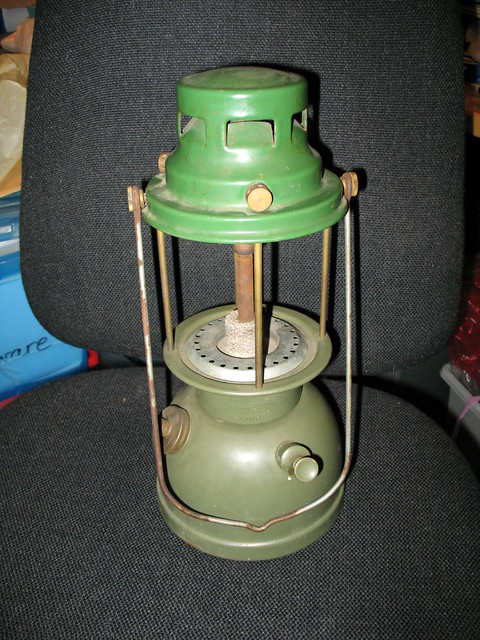
In the interim, I'm sorting out provision of reliable 'reversionary' nav lights for next season....
55027390601_83dd680ee1_z.jpg


I have a couple of these from a previous incarnation. D'you think it'll be all right if I paint one of them Postbox Red, for the lefthand side?

:cool:
 
Oops, yes I meant Ahr not Whr.
No probs. On our home system, we have all electric cooking, with a 5 ring induction hob, a fan oven and a combi oven, for normal use. In fact we have another double oven and a microwave in the utility room, but they’re not regularly used. We have a 16kwh battery, and even on days with effectively zero solar, the battery won’t reach 20% til about now, 22.30, after an overnight charge to 80%. No sail cruiser is going to use more than us at home, our heating uses about 350w to run the pump and boiler, the IT systems another 250, plus lights, cooking and TV. All with about 9kwh really. I reckon 4kwh would be generous for a 45ft boat. So 7 or 8kwh of battery for long life, if you want 24 hrs of power with zero charging. Make it 12 for 2 days. Sounds like an excuse for only sailing on sunny days, you need much less battery with regular charging. UK winter, even in the south you get no more than 4 hours of decent solar around the Solstice time. But in summer ypu may well generate for 12 hours or more. A difficult balance. Fill in with shore charging?
 
Fill in with shore charging?
Yes, the frequent connection to shore power was the reason for recommending the largest battery bank MoodySailor can fit.

The energy stored from the shore power can be gradually depleted during the days away from the marina and therefore contributes to overall energy balance.

For a boat such as ours, that never plugs into shore power, this philosophy does not work. A large battery bank still has some advantages in that it allows us to average good and bad solar days, but unlike MoodySailor we still have to average more energy from solar than we consume so the benefits are somewhat less.
 
Yes, the frequent connection to shore power was the reason for recommending the largest battery bank MoodySailor can fit.

The energy stored from the shore power can be gradually depleted during the days away from the marina and therefore contributes to overall energy balance.

For a boat such as ours, that never plugs into shore power, this philosophy does not work. A large battery bank still has some advantages in that it allows us to average good and bad solar days, but unlike MoodySailor we still have to average more energy from solar than we consume so the benefits are somewhat less.
We could just about do 2 days on our home battery. But there’s no point in trying, in winter. By March, we’ll be fine without our ‘shore power’, unless it’s really dull. We have no electricity on our mooring, Chiara is a fully off grid boat. Going to electric cooking is a big step, therefore. Usually though, she’s just parked up there between trips. I think balancing up our power needs will be trial and error. I suppose there's always a tuna salad, but if she has no tea in the morning, Mrs C will divorce me. Tricky time of day for solar…..
 
No probs. On our home system, we have all electric cooking, with a 5 ring induction hob, a fan oven and a combi oven, for normal use. In fact we have another double oven and a microwave in the utility room, but they’re not regularly used. We have a 16kwh battery, and even on days with effectively zero solar, the battery won’t reach 20% til about now, 22.30, after an overnight charge to 80%. No sail cruiser is going to use more than us at home, our heating uses about 350w to run the pump and boiler, the IT systems another 250, plus lights, cooking and TV. All with about 9kwh really. I reckon 4kwh would be generous for a 45ft boat. So 7 or 8kwh of battery for long life, if you want 24 hrs of power with zero charging. Make it 12 for 2 days. Sounds like an excuse for only sailing on sunny days, you need much less battery with regular charging. UK winter, even in the south you get no more than 4 hours of decent solar around the Solstice time. But in summer ypu may well generate for 12 hours or more. A difficult balance. Fill in with shore charging?
We're a 45ft motorboat, no gas, 280Ah @24V, 900W solar. Heating is blown air diesel, hot water is heated directly from shore power or generator, not the inverter, everything else i via the inverter.

Last 30 days, shore power = 154Kwh, solar = 17.3Kwh. So with no solar it's 5.7Kwh per day, excluding hot water.
 
It is possible to cruise full time in winter in the UK using primarily solar power without a generator or shore power, but you need efficient systems and, of course, no electric cooking is possible.
You'd need a massive amount of solar to do that, or run the main engine a lot. In the last 30 days we've averaged 0.576 Kwh per day, with 900W of solar.
 
You'd need a massive amount of solar to do that, or run the main engine a lot. In the last 30 days we've averaged 0.576 Kwh per day, with 900W of solar.
We managed with just over 1000W (albeit in a very shade-free location which is particularly important in winter when the sun angle is low), but you do need to design a very efficient electrical system. Parasitic loads and running devices from the inverter rather than directly from DC, heating that requires electrical energy, etc., etc., adds up when little power is available.
 
You'd need a massive amount of solar to do that, or run the main engine a lot. In the last 30 days we've averaged 0.576 Kwh per day, with 900W of solar.
Not saying one way or the other but we have done just over 30kw solar production in the last 30 days - but because we were on shore power and had guests etc and I wanted full batteries for the inevitable power cuts at the marina - we didn't move the boom to sunshade the panels . Normally we tie it of at one side of the boat and the way we're oriented means two panels got almost no sun at all (600w of panels) so my guess is we would have done 40kw if we'd been trying to live on them.

No that's not enough for your needs in winter but maybe 1.4kw per day for a fridge, freezer, induction hob etc might just do some...

I think that where we are on the South Coast, this winter a decent wind gen would have actually added at least 1 kw per day too - though it has been unusually windy for the area and given the cost of a decent one I might add more to my 2.5kw solar array first

I had toyed with several foldable suitcase panels as a winter back up that I could set up on the side deck angled at the low sun. These on my boat, could add 800w and with the angle near vertical , probably out perform the flat roof top stuff.

We're supposed to be leaving the UK in April but there is a potential family drama that may mean my wife insists on coming back for the winter so if that happens I'll get the suitcase panels and keep some very accurate figures next winter...
 
We managed with just over 1000W (albeit in a very shade-free location which is particularly important in winter when the sun angle is low), but you do need to design a very efficient electrical system. Parasitic loads and running devices from the inverter rather than directly from DC, heating that requires electrical energy, etc., etc., adds up when little power is available.
I'll ask around and see if i can fine a marine electrician to sort it all out for me. How are you fixed ?
 
We managed with just over 1000W (albeit in a very shade-free location which is particularly important in winter when the sun angle is low), but you do need to design a very efficient electrical system. Parasitic loads and running devices from the inverter rather than directly from DC, heating that requires electrical energy, etc., etc., adds up when little power is available.
How do you run an all electric galley from DC without an inverter ? Also, not too many options for heating a 45ft boat with something that does not require any electrical energy.
 
We are averaging about 5kWh of solar production per day at the moment. Of that, 0.5kWh goes on the watermaker, 0.5kWh on the immersion heater and the majority of the rest goes on electric kettle, induction hob, oven, microwave, fridge and freezer. The fridge and freezer loads are tiny compared to the cooking loads on electric.
 
How do you run an all electric galley from DC without an inverter ? Also, not too many options for heating a 45ft boat with something that does not require any electrical energy.

We have a large inverter to run our electric cooking, but as most other things such as computers, movie screens, phones, etc., run directly from DC.

Even a small amount of electric cooking or water heating is out of the question during winter in the UK, so the inverter rarely needs to be powered up. Therefore there is no parasitic consumption.

Also, not too many options for heating a 45ft boat with something that does not require any electrical energy

Our Reflex heater (drip fed so no electricity consumption) did a fine job on our 49-foot yacht during a couple of winters in the Hebrides, but our yacht is an open-plan layout. You can spread the heat around with one of thermoelectric fans (no power consumption) if you have any cold spots, but we have never bothered.
 
Last edited:
We have a large inverter to run our electric cooking, but as most other things such as computers, movie screens, phones, etc., run directly from DC.
Well, we obviously don't run DC equipment, like phones etc from the inverter, they wouldn't like being plugged into 240V.
Even a small amount of electric cooking or water heating is out of the question during winter in the UK, so the inverter rarely needs to be powered up. Therefore there is no parasitic consumption.
So how do you cook your food then ?
Our Reflex heater (drip fed so no electricity consumption) did a fine job on our 49-foot yacht during a couple of winters in the Hebrides, but our yacht is an open-plan layout. You can spread the heat around with one of thermoelectric fans (no power consumption) if you have any cold spots, but we have never bothered.
Zero chance of heating ours with a Reflex heater, we have 2x4Kw blown air diesel heaters. A 49ft yacht is nothing like a 45ft motor boat,
 
Well, we obviously don't run DC equipment, like phones etc from the inverter, they wouldn't like being plugged into 240V.
Well that is relief :).

Many boats run devices such as computers and TVs from the inverter via the supplied wall wart. It is more efficient to run these devices via DC to DC converters, and these types of energy savings make a difference in areas of poor solar insolation.

So how do you cook your food then ?
We normally use all-electric cooking, but when cruising areas of very poor solar insolation, we switch to a mixture of diesel (the Reflex) and gas.

Zero chance of heating ours with a Reflex heater, we have 2x4Kw blown air diesel heaters. A 49ft yacht is nothing like a 45ft motor boat,
Fair enough. I have no experience trying to heat your boat or even any powerboat, so I would not make any claims about what heating source you need. I can only point out what has worked for us on our yacht.
 
Last edited:
Well that is relief :).

Many boats run devices such as computers and TVs from the inverter via the supplied wall wart. It is more efficient to run these devices via DC to DC converters, and these types of energy savings make a difference in areas of poor solar insolation.


We normally use all-electric cooking, but when cruising areas of very poor solar insolation, we switch to a mixture of diesel (the Reflex) and gas.
From my earlier post "How do you run an all electric galley from DC without an inverter ?"

And the thread is entitled "First 6 months with no gas onboard"
 
From my earlier post "How do you run an all electric galley from DC without an inverter ?"

And the thread is entitled "First 6 months with no gas onboard"
I don’t think it too much of a thread drift to consider some of the limitations of having no gas onboard. Electric cooking is great, but you do need to consider how you will supply enough electrical energy.
 
There is a big question as to how one chooses to cook too. Is it every meal in an over, lots of microwave meals, salads?

At home, or on the boat we generally have a light supper that is uncooked 70% of the time - bread and cheese or pate etc
Lunch is our main meal and always cooked but rarely for long - we make every meal from scratch and normally this may take 20 minutes on an induction hob or 30 minutes in an oven or 20 minutes in an air fryer etc - either way lunch is rarely 1Kwh
Christmas lunch used 90 minutes in an over and 60 in an air fryer for about 3kwh total but that is highly unusual
Breakfast is in the coffee machine and toaster or once a week a big stack of homemade American pancakes - again 5 minutes at 1200w for the coffee filter machine, 2 minutes of toaster or 20 minutes of one induction hob for a stack of pancakes.

So an average day is 1.5kwh in cooking - not beyond even winter time solar on many days .. though impossible in the odd weeks of grey gloom we now get
 
There is a big question as to how one chooses to cook too. Is it every meal in an over, lots of microwave meals, salads?

At home, or on the boat we generally have a light supper that is uncooked 70% of the time - bread and cheese or pate etc
Lunch is our main meal and always cooked but rarely for long - we make every meal from scratch and normally this may take 20 minutes on an induction hob or 30 minutes in an oven or 20 minutes in an air fryer etc - either way lunch is rarely 1Kwh
Christmas lunch used 90 minutes in an over and 60 in an air fryer for about 3kwh total but that is highly unusual
Breakfast is in the coffee machine and toaster or once a week a big stack of homemade American pancakes - again 5 minutes at 1200w for the coffee filter machine, 2 minutes of toaster or 20 minutes of one induction hob for a stack of pancakes.

So an average day is 1.5kwh in cooking - not beyond even winter time solar on many days .. though impossible in the odd weeks of grey gloom we now get
I think we are on the heavy side of power use for cooking. My wife has been making sour dough bread, cakes, and banana pancakes on a regular basis.
Now the oven isn't heating the whole boat up like it used to do with gas, she has got more into baking.
Cabin temperature is 28.5degC this afternoon without the oven on. We really don't need the additional heating
 

Other threads that may be of interest

Top