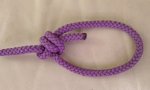
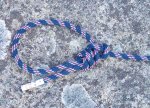
Figure 8 loop Vs bowline

I'm going to search for that now .... interested as I spent all my years at sea with Bosuns Chairs using bowline for attaching chair to the standing line and a Bosuns Chair Hitch for raising / lowering .... would like to compare 'solutions' ...........

Edit : https://www.harkencanvas.com/uploadedFiles/Product_Support/PDF/4790.pdf

Interesting ..... I think like Kukri ... a bowline (I usually add a locking half hitch as security when my life hangs on it !) ... will still be my goto.

You will be as dismayed as I was, should you open a current copy of the COSWOP (“the Code of Safe Working Practices for Merchant Seamen”) and find that all the drawings have gone, including the ones on bosuns chairs and stagings - no more bosun’s chair hitch!

But lots of toolbox talks and safety committee minutes!
 
You will be as dismayed as I was, should you open a current copy of the COSWOP (“the Code of Safe Working Practices for Merchant Seamen”) and find that all the drawings have gone, including the ones on bosuns chairs and stagings - no more bosun’s chair hitch!

But lots of toolbox talks and safety committee minutes!

When I do visit ships - and those quiet times sitting at back of bridge ... I often pick up the Safety at Sea magazine that often laying about ... I am totally gobsmacked by the lack of real seamanship matters ..

I have often considered writing in to the editors to ask if they really are on same planet.
 
I climb as well as sail and use the figure of 8 for climbing. The reason isn't necessarily that I don't trust a bowline, and one can always put an extra half-high on the loose end anyway, but a figure of 8 is easier to inspect and, critically, it's obvious wrong when it's wrong; no debate.

My climbing and sailing partner very often gets a bowline inverted (with the loose end pointing out along the standing part) but gets into a right sulk when and if if I point it out. And in climbing each party has to show their knot to the other, so I prefer not to start a session with the two partners disagreeing and angry and upset with each other! On the boat I let it go when it doesn't matter and quietly some time later just remake the knot.
 
Must admit that I'd never heard of the Yosemite stuff in either the sailing or climbing that I have done. I go on the principal of keeping it simple be it a bowline or fig8 with a stopper not if I feel appropriate.
 
The figure of 8 is much stronger,(about 80% of rope strength as against 65%) but hard to undo. I use the figure of 8 when my life depends on it (Im a climber). However a halliard coming undone is less of an issue so use bowline as easier to undo when I swap sails. If I use bowline for fixed mooring lines I back tie the end. I admire the Yosemitie tie off of the bowling for neatness as loose end chases back up the working rope, but understand it is harder to visually inspect, so I do simple and half turn of the free end
 
I notice from stuff I see in the web that climbers seem to use a loop created with a figure eight knot to attach a line to a harness rather than a bowline which would be the go-to knot for sailors. Is there a reason why this is preferred by climbers?
Thanks
Thought bowlines were banned thesedays for climbing, because of slippery ropes.
 
Thought bowlines were banned thesedays for climbing, because of slippery ropes.

Bowlines are not banned out in the wild but folk fell to their death using them, one in a climbing wall where they may be locally banned. Newer skinnier lighter ropes are more vulnerable to slip and the BMC and others review continuously unlike our venerable or even moribund sailing organisations. Many climbers are techies. The Yosemitie hitch was developed to enable bowline to be used on light ropes on long climbs . If done right its fairly fool proof but I would not bother myself as figure of 8 instinctive to most modern climbers
 
Bowlines are not banned out in the wild but folk fell to their death using them,

Really? Any reports of that?

The Fig 8 gained traction for a number of reasons - it was easy to tie onto the end of a rope and be switched from harness to harness with a karabiner when beginner's top roping sessions started to be popular in outdoor education. It was then extended and promoted as the only knot you need. It still has merit especially with people new to climbing. Some walls like it as their (young) floor walkers are more accustomed to visually checking it, but I have been to the Kendal wall, Awsome wall in Liverpool, Ingleton wall and the Icefactor in Kinlockleve in the last month and there's been no objection to the wide variety of bolwines used amongst my friends.

Interestingly, the UIAA's working group is studying the incidents of climbers falling off the rope either when leading/top roping at walls or when retying at the chains on sports routes. The initial data I've seen has been that the Fig 8 knot was being used in every incident. Very careful analysis is being done to discover why, including correlating knot use against climbing experience, in that bowlines are more commonly used by those who do more sports climbing.

The other avenue being investigated, is that because the first part of the Fig 8 stays in the end of the rope, people who are distracted during the re-threading phase, fail to complete the tying of the knot but it still looks 'sort of complete'. There's been a suspicion about this for a decade at least and the 'stopper knot' use with a Fig 8 has been encouraged not because it is strictly necessary, but to signify the tying of the knot has been completed. Not being distracted whilst tying on has been the main theme of the BMC's "Check it - don' deck it' campaign for a while.

The merits of various knots are immaterial in isolation - the one that is tied properly every time is the one that is safest to use.
 
  • Like
Reactions: jdc
The figure of 8 is much stronger,(about 80% of rope strength as against 65%) but hard to undo. I use the figure of 8 when my life depends on it (Im a climber). However a halliard coming undone is less of an issue so use bowline as easier to undo when I swap sails. If I use bowline for fixed mooring lines I back tie the end. I admire the Yosemitie tie off of the bowling for neatness as loose end chases back up the working rope, but understand it is harder to visually inspect, so I do simple and half turn of the free end
Really? Any reports of that?

The Fig 8 gained traction for a number of reasons - it was easy to tie onto the end of a rope and be switched from harness to harness with a karabiner when beginner's top roping sessions started to be popular in outdoor education. It was then extended and promoted as the only knot you need. It still has merit especially with people new to climbing. Some walls like it as their (young) floor walkers are more accustomed to visually checking it, but I have been to the Kendal wall, Awsome wall in Liverpool, Ingleton wall and the Icefactor in Kinlockleve in the last month and there's been no objection to the wide variety of bolwines used amongst my friends.

Interestingly, the UIAA's working group is studying the incidents of climbers falling off the rope either when leading/top roping at walls or when retying at the chains on sports routes. The initial data I've seen has been that the Fig 8 knot was being used in every incident. Very careful analysis is being done to discover why, including correlating knot use against climbing experience, in that bowlines are more commonly used by those who do more sports climbing.

The other avenue being investigated, is that because the first part of the Fig 8 stays in the end of the rope, people who are distracted during the re-threading phase, fail to complete the tying of the knot but it still looks 'sort of complete'. There's been a suspicion about this for a decade at least and the 'stopper knot' use with a Fig 8 has been encouraged not because it is strictly necessary, but to signify the tying of the knot has been completed. Not being distracted whilst tying on has been the main theme of the BMC's "Check it - don' deck it' campaign for a while.

The merits of various knots are immaterial in isolation - the one that is tied properly every time is the one that is safest to use.
 
Really? Any reports of that?

Gloucester climbing wall where he didnt tie in properly perhaps 10 years ago. Similar on sports climb more recently. Full details not given in press but climbing wall then went around checking our knots as we stood around. Hard to mis tie a figure 8 if its complete and he was old school so an ancestral bowline user. So generally believed by locals to be bowline that was the issue. He had been warned in the past.

I always use a stopper on all climbing knots

Climbing sites give cautionary details of bowlines slipping amongst other arcania. As a professional safety specialist albeit in a different field I read them for elucidation and amusement
 
" . . . .where he didnt tie in properly . . . " And that's the fault of the knot?

I'm sure you'll be interested when the report is published into the incidents of climbers decking it. But as I said, from what I've seen of the raw data, very nearly every incident is where the climber was using a Fig 8. As there's no suggestion the Fig 8 is not an unsafe knot, the work continues as to why the correlation.

Climbing wall death due to knot failure
 
The real advantage of a Yosemite finish, for my climbing, is that it makes a more compact knot, does not require an overhand back-up on the tail, and redirects the tail back to my belt. This makes less bulk, less chance of jamming in running belay carabiners, and a smoother pull-up when clipping gear. A back-up knot is really inconvenient when leading. Long tails are OK, but the Yosemite finish is better, for me.

A figure 8 absorbs a measurable amount of energy in the process of tightening, should you take a short, hard fall against the anchor with little rope out. In fact, the UIAA and ISO drop tests for climbing and sailing gear specify figure 8 knots. Of course, you untie it with a knife after a set of drop tests.

If you can't untie the figure 8 after a fall, you know you've taken a good whipper and should inspect the rope right now. If not, it wasn't much of a fall as far as the rope is concerned. You may have felt differently.

But the main thing, as many have stated, is that you can't get a basic figure 8 wrong, and that's important for something so vital. Few things on a boat will absolutely kill you the first time.
 
The real advantage of a Yosemite finish, for my climbing, is that it makes a more compact knot, does not require an overhand back-up on the tail, and redirects the tail back to my belt. This makes less bulk, less chance of jamming in running belay carabiners, and a smoother pull-up when clipping gear. A back-up knot is really inconvenient when leading. Long tails are OK, but the Yosemite finish is better, for me.

A figure 8 absorbs a measurable amount of energy in the process of tightening, should you take a short, hard fall against the anchor with little rope out. In fact, the UIAA and ISO drop tests for climbing and sailing gear specify figure 8 knots. Of course, you untie it with a knife after a set of drop tests.

If you can't untie the figure 8 after a fall, you know you've taken a good whipper and should inspect the rope right now. If not, it wasn't much of a fall as far as the rope is concerned. You may have felt differently.

But the main thing, as many have stated, is that you can't get a basic figure 8 wrong, and that's important for something so vital. Few things on a boat will absolutely kill you the first time.
Easier cutting the knot with a knife after dropping into a rope than scraping you off the rocks - I have done both and the latter is a lot less appetizing.

We used to retire a rope after a couple of good drops at the latest.

My last boat had an 18.5m mast - it does give you a couple of seconds to think things over before you hit the deck.
 
Easier cutting the knot with a knife after dropping into a rope than scraping you off the rocks - I have done both and the latter is a lot less appetizing.

We used to retire a rope after a couple of good drops at the latest.

My last boat had an 18.5m mast - it does give you a couple of seconds to think things over before you hit the deck.

I heard (did not watch) a guy auger in from about 180 feet up once, just 20 feet away. Someone yelled "rock" and I ducked under a ledge. His harness was still on the rope (not doubled back).
 
I want to spring to the defence of the bowline. I first learnt it as a climbing attachment knot 55 years ago and it has served me well since then, including 35 years as a professional mountaineer. However, the stopper knot isn't optional - it is essential in a tie in knot. Without it the bowline can work loose during, for instance, a struggle in an off-width crack.

In my opinion the optimum tie-on knot is the bowline combined with the half double fisherman (aka grapevine bend). This is elegant, quick to tie and completely secure when properly tied. If you can't be bothered to tie it properly you have no place to be on a mountain or in the middle of an ocean....

L1005900.jpg

Note: The knot is snuggly tied - needs care if the rope is stiff
The stopper sits snuggly and comfortably against the shoulder of the knot
A decent length of tail remains

The Fig 8 is certainly more idiot proof and equally secure but is slow to tie (when re-threaded) and rather industrial. If you only tie on once a year to go to the masthead then the Fig 8 is the better choice; otherwise the stoppered bowline rules.

I can see from the above that there are a few on this forum who, like me, have done a Tilman and migrated from mountains to the sea....
 
When your life depends on it, always a fig 8. Can't capsize, easy to adjust without untying, easy to visually identify being correct and simple to tie.

Also, although marginal, the strength of the 8 will be better as each strand is turned over two strands and not one as in a bowline.

Every parachute I ever used had bowlines everywhere. I suspect my life depended on them quite a lot. :)
 
Every parachute I ever used had bowlines everywhere. I suspect my life depended on them quite a lot. :)

Users of badly packed parachutes rarely go back to complain!

More seriously the bowline is fine if pulled really tight to snug it, which is obviously easier on the individual light lines of a parachute, where each is also loaded in use at much much less than whole body weight
 
Top