FAME Diesel and small fuel lines?

EMMMM!
because diesel is wrecking heaters because of FAME!
Do you have any evidence to support that statement?

One post on a forum does not mean that diesel is 'wrecking heaters' because of FAME. It means that one boat has a problem which may or may not be because of FAME; only a forensic examination of the entire system will establish what the problem is/was. There are many thousands of boats in the UK who run on diesel and not reporting a problem. The OP was wondering is waxing was the problem. He would need to 'pull through' all the pipework and inspect any residue that he found. Then we could start asking a whole raft of ' hairy engineer type questions' about the age and condition of the fuel/pipes.

Personally, I find having three types of fuel: petrol, diesel and gas on board a pain. Adding a fourth would further complicate the mix, but type of sailing is often going off on multi week trips often to remote parts where the collection of fuel is 'challenging'.

Hopefully, @Ian_Edwards tests with his fresh diesel will give us some clues.
 
Don't forget you'll lose your 60/40 split when using a separate tank. In theory the cheaper heating fuel will offset this, but £2/litre is a bitter pill to swallow!

I have a feeling I read somewhere that Eber prefer kerosene anyway, I think it's in their docs somewhere but could well have been speculation on this forum too!
 
Don't forget you'll lose your 60/40 split when using a separate tank. In theory the cheaper heating fuel will offset this, but £2/litre is a bitter pill to swallow!

I have a feeling I read somewhere that Eber prefer kerosene anyway, I think it's in their docs somewhere but could well have been speculation on this forum too!
I will stick with kerosene for this heater. Wont do any harm and wont have FAME that could possibly have a detrimental affect in future.
 
What are the heater fuel pipes made of. If synthetic, are they Fame proof or could there be internal degradation or slightly porous in the suction line
 
Last edited:
Do you have any evidence to support that statement?

One post on a forum does not mean that diesel is 'wrecking heaters' because of FAME. It means that one boat has a problem which may or may not be because of FAME; only a forensic examination of the entire system will establish what the problem is/was. There are many thousands of boats in the UK who run on diesel and not reporting a problem. The OP was wondering is waxing was the problem. He would need to 'pull through' all the pipework and inspect any residue that he found. Then we could start asking a whole raft of ' hairy engineer type questions' about the age and condition of the fuel/pipes.

Personally, I find having three types of fuel: petrol, diesel and gas on board a pain. Adding a fourth would further complicate the mix, but type of sailing is often going off on multi week trips often to remote parts where the collection of fuel is 'challenging'.

Hopefully, @Ian_Edwards tests with his fresh diesel will give us some clues.

No I don't. So "wrecking" maybe not the right comment, point taken.

What I do have is concerns that fame is doing harm, (or potential harm) in diesel engines, go to any other motor boating forum and see the disaster's some have had with fatty deposits dropping out of fame fuel and collecting in tanks like marmalade, clogging filters, pumps and injector's, costing thousands to put right.
This has made me wonder if the same harm ( or potential) is now happening to heaters, albeit in small number but I don't want to be one of those statistics. I've spent a lot of money on this heating system and putting in fuel that "might" cause issues opposed to one that won't , I will err on the side of the on the latter.

Totally agree adding extra fuel types is a pain although not a game changer for me any way with only diesel and gas onboard so far.
Cheers
 
EMMMM!
because diesel is wrecking heaters because of FAME!

I rather doubt it given that there are many times more diesel fired heaters running on forecourt diesel out there than thre are boats! (Most HGVs, many motor homes, etc)

Degradation of diesel, whether due to or exacerbated by the presence of FAME or not, is a problem specific to leisure use where diesel sits unused in the vehicle or vessel tank(s) for long periods, especially over winter

Don't forget you'll lose your 60/40 split when using a separate tank.

Er, why? In fact you gain 100% duty relief on the fuel for the heater (if purchashing gas oil) as the entire purchase is for domestic use!

You don't lose the 60/40 split on the fuel for your main tanks. Boats without diesel fired heaters are still entitled to claim the split so why shouldn't a boat with a seperate tank for the heater?
 
Do you have any evidence to support that statement?

One post on a forum does not mean that diesel is 'wrecking heaters' because of FAME. It means that one boat has a problem which may or may not be because of FAME; only a forensic examination of the entire system will establish what the problem is/was. There are many thousands of boats in the UK who run on diesel and not reporting a problem. The OP was wondering is waxing was the problem. He would need to 'pull through' all the pipework and inspect any residue that he found. Then we could start asking a whole raft of ' hairy engineer type questions' about the age and condition of the fuel/pipes.

Personally, I find having three types of fuel: petrol, diesel and gas on board a pain. Adding a fourth would further complicate the mix, but type of sailing is often going off on multi week trips often to remote parts where the collection of fuel is 'challenging'.

Hopefully, @Ian_Edwards tests with his fresh diesel will give us some clues.
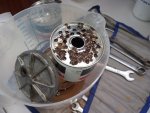
I suppose that excluding food and water, we have four types of fuel aboard, and manage fine.
One 5 litre petrol container for the outboard lasts a whole summer.
Boat's fuel tanks are big enough to last a whole summer.
7kg Calor gas cylinder, with spare cylinder, lasts whole summer.
20 litre kerosene tank has changeover cock, so can revert to diesel if required, although when we set off this weekend for a long cruise, we'll take probably three X 5 litre extra containers with us, in case of unseasonably cold weather.
 
You don't lose the 60/40 split on the fuel for your main tanks. Boats without diesel fired heaters are still entitled to claim the split so why shouldn't a boat with a seperate tank for the heater?
No, if the diesel in your tank is for propulsion only you are required to declare it as such. 60/40 is a suggested figure but if you're using the diesel for 100% heating you claim full relief, if 100% propulsion you claim no relief. Doing otherwise is tax evasion.
 
No I don't. So "wrecking" maybe not the right comment, point taken.

What I do have is concerns that fame is doing harm, (or potential harm) in diesel engines, go to any other motor boating forum and see the disaster's some have had with fatty deposits dropping out of fame fuel and collecting in tanks like marmalade, clogging filters, pumps and injector's, costing thousands to put right.

This has made me wonder if the same harm ( or potential) is now happening to heaters, albeit in small number but I don't want to be one of those statistics. I've spent a lot of money on this heating system and putting in fuel that "might" cause issues opposed to one that won't , I will err on the side of the on the latter.

Totally agree adding extra fuel types is a pain although not a game changer for me any way with only diesel and gas onboard so far.
Cheers
Before retiring I spent some time with some really, really good diesel mechanics who look after a large fleet of lorries. They had no issues with 'fatty deposits', but were concerned about the diesel bug. I wonder if we are talking about the same stuff.

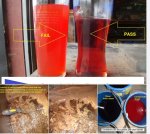
This is my experience of the bug, is that your 'fatty deposits'?

bug.jpg
 
I suppose that excluding food and water, we have four types of fuel aboard, and manage fine.
One 5 litre petrol container for the outboard lasts a whole summer.
Boat's fuel tanks are big enough to last a whole summer.
7kg Calor gas cylinder, with spare cylinder, lasts whole summer.
20 litre kerosene tank has changeover cock, so can revert to diesel if required, although when we set off this weekend for a long cruise, we'll take probably three X 5 litre extra containers with us, in case of unseasonably cold weather.
You have far more storage capacity than me. ?
 
No, if the diesel in your tank is for propulsion only you are required to declare it as such. 60/40 is a suggested figure but if you're using the diesel for 100% heating you claim full relief, if 100% propulsion you claim no relief. Doing otherwise is tax evasion.

Yes and then again no!

You are still entitled to claim a proportion of the fuel is used for power generation (via the engine alternator)

You can, if you like, work out exactly what proportion

Or you can do what everybody else does and assume it's 40% which the HMRC has always said and (effectively) continues to say it will accept without quibbling*

See Fuel used in private pleasure craft and for private pleasure flying (Excise Notice 554) - GOV.UK (www.gov.uk)

*This may change in due course but we seem to have dodged yet another red diesel bullet, surpirsingly, as we haven't been included in the categories no longer allowed to use red at all. And HMRC may yet change it's policy on how duty should be applied to leisure use of red diesel in boats but they have shown no inclination to do so as yet
 
*This may change in due course but we seem to have dodged yet another red diesel bullet
Given the current cost of red, and the hassle it causes I don't agree we've dodged any bullets at all. Quite the contrary, I would love to see us move to white at the pumps to make boating simpler. The retail cost is unlikely to rise, just the base price will become more realistic.
 
Given the current cost of red, and the hassle it causes I don't agree we've dodged any bullets at all. Quite the contrary, I would love to see us move to white at the pumps to make boating simpler. The retail cost is unlikely to rise, just the base price will become more realistic.
This may be the case for South Coast sailors, but for many of us in the more far-flung parts of the country, red diesel is all that is, and will be for the foreseeable future, the only kind available. Simpler for you, maybe, but for many of us, impossible.
 
Before retiring I spent some time with some really, really good diesel mechanics who look after a large fleet of lorries. They had no issues with 'fatty deposits', but were concerned about the diesel bug. I wonder if we are talking about the same stuff.

This is my experience of the bug, is that your 'fatty deposits'?

View attachment 135839
looks like bug to me. I think the issue with fame in fuel is the fatty material drops out of the fuel when left standing for a long time and in cold weather, this fatty material does not dissolve back into the fuel even when the temperature rises.

This is what it looks like;
(taken from a facebook page from a very respected marine engineer of many years on the erne Shannon water way)

I have no experience of this just reading what others are saying and posting on most boating sites, but it is concerning.

HVO diesel is the cleanest form of heavy fuel there is, does not drop deposits into tank no matter the temperature and starts easier in cold climates. apparently.
Yet its more expensive, demand low i suppose, but if the emissions are so much lower than standard diesel why is there no tax duty relief for it, being that the govt always tell us the environment is so important? If the Green fact i posted below ( taken from another site) is indeed fact the environmental advantage's would be huge.

Green Fact: For every 1,000 litres of diesel burned, you will produce 3.6 tonnes of greenhouse gas CO2, compared to just 195kg GHG CO2 for every 1,000 litres of Clean Air HVO Renewable Diesel/Gas Oil burned.
 

Attachments

  • carry 1.JPG
    carry 1.JPG
    88.5 KB · Views: 10
  • carry 2.JPG
    carry 2.JPG
    125.5 KB · Views: 10
Last edited:
This may be the case for South Coast sailors, but for many of us in the more far-flung parts of the country, red diesel is all that is, and will be for the foreseeable future, the only kind available. Simpler for you, maybe, but for many of us, impossible.
If the regs change that would change. With the added benefit that going elsewhere would be easier. On the south coast sailors like to sail to other places!
 
Given the current cost of red, and the hassle it causes I don't agree we've dodged any bullets at all. Quite the contrary, I would love to see us move to white at the pumps to make boating simpler. The retail cost is unlikely to rise, just the base price will become more realistic.

I have in fact been arguing exactly that point since day one of the whole red diesel in boats fiasco!

Even the "far flung" places could, if they so desired or were so required, supply "white diesel" either instead of or alongside red. There may be *some* inconvenience for sailors in *really* out of the way places (but it would not be a show stopper) but that has to be offset against the inconveneince already experienced by sailors on the South and East coasts who want to cruise to the near continent

They're having to deal with it in Northern Ireland and Ireland, it doesn't seem to have caused the end of the world there!
 
If the regs change that would change. With the added benefit that going elsewhere would be easier. On the south coast sailors like to sail to other places!
You may find it hard to believe, but most of the fuel outlets in the "far-flung" places sell predominantly to the commercial market -- ferries, workboats, and fishing and fishfarming etc. There is no way that they would bother to install the equipment required for the tiny amount of business from the leisure market.
 
You may find it hard to believe, but most of the fuel outlets in the "far-flung" places sell predominantly to the commercial market -- ferries, workboats, and fishing and fishfarming etc. There is no way that they would bother to install the equipment required for the tiny amount of business from the leisure market.
In NW Scotland, the last time I refuled (with 70l of marine red) the previous user of the pump, a fish farm vessel, had taken over 5,000 litres.
 
I had much the same down at Asda recently after a lorry had been through, they took hundreds of litres and I only needed a fiver. The fuel was not red though, it was clear. Not sure what the point is, large vehicles use lots of fuel, businesses pay less tax, but we all use the colour we get in the pumps which could quite easily be clear everywhere in 2022.
 
Top