Exhaust temperature monitoring gauge

I would like to install an exhaust temperature monitor gauge on my engine. There are few on the market, including the NASA EX-1. However, the one shown on the link from Silicon Marine, is small and low cost. Has anyone used it ?
Marine Exhaust Temperature Alarm, Gauge, Monitor, Sensor SM010 754220578138 | eBay
I fitted one of these 5 years sgo and it works very well when connected to a seperate buzzer {only a few pounds). The sensor wire can be lenthened and the sensor itself is held against the outside of the injection bend using a hose clip. 12/24/110-220V Digital STC-1000 Temperature Controller Thermostat + Sensor Probe | eBay complete setup for less than £12

Www.solocoastalsailing.co.uk
 
Just fitted one to a Hardy mobo fitted with a VP2003. Boat ashore at the mo so apart from a quick run unable to report on reliability etc. However, the owner of said boat bought the kit from a flea bay advert and on commisioning I found the alarm was inoperative. Owner contacted Silicon and was pleasantly surprised by being presented with replacement connection block and interface cable foc despite buying from an E-bay vendor. Top service
 
Just fitted one to a Hardy mobo fitted with a VP2003. Boat ashore at the mo so apart from a quick run unable to report on reliability etc. However, the owner of said boat bought the kit from a flea bay advert and on commisioning I found the alarm was inoperative. Owner contacted Silicon and was pleasantly surprised by being presented with replacement connection block and interface cable foc despite buying from an E-bay vendor. Top service
Brilliant, thanks
 
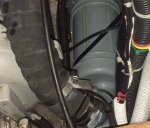
Probably just cable tied or hose clipped to the outside of the exhaust hose. Thats what I did, anyway. There are some temperature monitors that fit through a hole in the exhaust hose (Vetus, iirc.) But most of us are looking for a sudden increase in exhaust temperature that indicates a cooling system problem faster than the engine block one would.

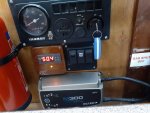
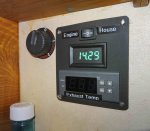
I bought a £15 temperature monitor/ alarm on Ebay and wired it to the engine alarm buzzer. Works a treat. I spent a few hours watching the exhaust temperature under various conditions at the dockside then at sea, adjusting the alarm threshold so it wasn't triggered in normal use. Then, heart in mouth, I turned the water off and checked how quickly the temperature climbed and that the alarm went off as desired. Then double checked. Then replaced the impeller which looked fine tbh
 

Attachments

  • IMG-20201219-WA0009.jpg
    IMG-20201219-WA0009.jpg
    214.1 KB · Views: 62
  • IMG-20201219-WA0008.jpg
    IMG-20201219-WA0008.jpg
    152.2 KB · Views: 62
I fitted one of these 5 years sgo and it works very well when connected to a seperate buzzer {only a few pounds). The sensor wire can be lenthened and the sensor itself is held against the outside of the injection bend using a hose clip. 12/24/110-220V Digital STC-1000 Temperature Controller Thermostat + Sensor Probe | eBay complete setup for less than £12

Www.solocoastalsailing.co.uk
I use one of those for the 240v winter heater, great wee unit. Is it possible to change or extend the sensor cable as 1m is not long enough for me?

Like this one, 3m 10K 1% 3950 NTC Thermistor Temperature Sensor Waterproof Probe Wire Cable | eBay
 
Last edited:
How is the sensor fitted, as all it says is “no need to disconnect exhaust hose” ?

Basically drill a 4mm hole through the exhaust hose. The sensor is pushed through and held in place by a Jubilee type clip.

From the instructions online ( http://www.siliconmarine.com/SM010.pdf - note this is just one of various types of gauge they sell, but all use the same sensor, I believe) -
'Assemble the sensor as shown, tighten the nuts firmly. No thread should protrude below bottom nut (see picture).

Select a point on the hose about 150mm or more downstream from the water injection point. Drill a 4mm hole avoiding the steel reinforcement rings (If you have a horizontal hose it is preferable to mount the sensor on the top). Push the sensor through the hole into the exhaust pipe and secure firmly.

The sealing O ring should make a good waterproof seal; if in doubt add a little silicon sealant.
Use a cable tie to secure the cable to the hose clamp as shown.'

Home: Silicon Marine

I have no connection with Silicon Marine, but bought one of these recently (yet to be fitted).
 
Last edited:
I bought the other display from silicon marine, the square one with NMEA output, so I could have a repeater on the flybridge.
I'm very impressed with them, also very impressed with the company. I had a few email exchanges with them to ascertain the best system for my needs as I wanted to wire it a little differently from the instructions and with a very long cable run.
They were extremely helpful and forthcoming with advice, and also ended up supplying the complete install with extended wiring for no extra charge.
 
I’ve been running a multi-point engine temperature monitoring setup for several years now using ESP32 boards and low-cost DS18B20 one-wire probes (about $2 each, rated up to ~125 °C).

I cable-tie the probes to the coolant area, thermostat, raw-water elbow, and alternator. This gives early warnings well before trouble — for example, my elbow normally runs 38–40 °C, and I set an alert at 42 °C which has already flagged blockages in time. The alternator sensor has also been invaluable when charging lithium batteries where alternators work harder.

The system logs everything so you can review history and spot trends, and can trigger sirens or flashing lights if thresholds are exceeded (e.g. alternator >100 °C).

This method was featured in Practical Boat Owner (June 2025 edition), and I’ve written up the full build guide with wiring diagrams, YAML examples, dashboards, and automations here:
👉 Engine Temp Monitor using ESP32 & DS18B20
 
I’ve been running a multi-point engine temperature monitoring setup for several years now using ESP32 boards and low-cost DS18B20 one-wire probes (about $2 each, rated up to ~125 °C).

I cable-tie the probes to the coolant area, thermostat, raw-water elbow, and alternator. This gives early warnings well before trouble — for example, my elbow normally runs 38–40 °C, and I set an alert at 42 °C which has already flagged blockages in time. The alternator sensor has also been invaluable when charging lithium batteries where alternators work harder.

The system logs everything so you can review history and spot trends, and can trigger sirens or flashing lights if thresholds are exceeded (e.g. alternator >100 °C).

This method was featured in Practical Boat Owner (June 2025 edition), and I’ve written up the full build guide with wiring diagrams, YAML examples, dashboards, and automations here:
👉 Engine Temp Monitor using ESP32 & DS18B20
I used Rob’s articles to build my smart system -works great, but I would suggest getting quality sensors as the ones from Aliexpress have been hit and miss.
 
Top