Engine Oil Extraction

So do most people change the oil before the boat is lifted out for the winter ?

Yes.

I realise this is the equivalent of saying I wouldn't start from here. :)

How many engine hours have you run up since the last oil change?
 
Bit of a problem if the inlet is covered by a grid. I've used a tank on a barrel with a larger diameter hose to catch the output and then a hose connected direct to the inboard filter. Bit messy but you will be surprised how fast you will use up 5 gallons.

I disconnect the inlet pipe from the skin fitting and put it in a bucket. I have the hose with a valve on it also in the bucket, so the engine is sucking water in its usual way. With just a bucket I can run the engine for a few minutes, which I do to ensure it will start before re-launching. I suppose the speed at which water is consumed will depend on size and make of motor.
 
So do most people change the oil before the boat is lifted out for the winter ?

I used to.

Nowadays we don’t “lift out for the winter” anyway, just a quick lift and scrub in the spring to clean off the bottom ready for the new season.

I do an engine service at some point in the late autumn, but the boat remains available for use.

Pete
 
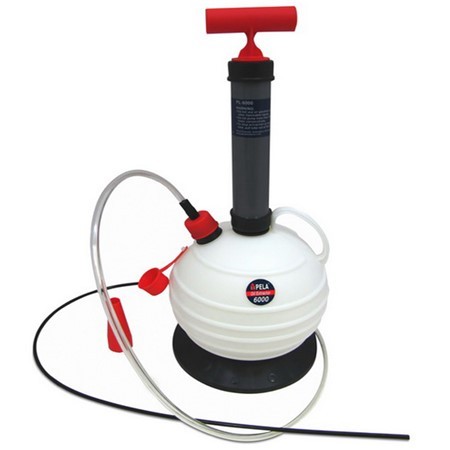
I'd do an oil change just before the boat comes out for the winter, after running the engine so that the oil is warm. A Pela 6000 has a capacity of 6 litres, more than enough for a small engine.
s-l640.jpg

A filter change as well - a packet of babies nappies comes in very handy to wrap one round it and catch any drips. Jolly useful to keep them on the boat - just remember to tell SWMBO they are there and why!

My last boat had a Vetus strainer "flask" on the raw water intake pipe.
VetusStrainer.jpg

Convenient for running the engine with freshwater from a hose or cans either afloat or ashore with the seacock closed - just unscrew the top. Also flushing with anti-freeze mix afloat or ashore, remembering of course that anti-freeze is toxic and should be collected from the exhaust.:encouragement:
 
Change the oil AFTER you have lifted out, otherwise as a friend of mine discovered, you will have to run it again to pull anti-freeze through the system, best to do both at the same time...
 
Change the oil AFTER you have lifted out, otherwise as a friend of mine discovered, you will have to run it again to pull anti-freeze through the system, best to do both at the same time...
If you have a VETUS STRAINER you can run through BEFORE you have lifted out and pull anti-freeze through the system. Just make sure the yard don't have a set of engine keys to pull sea water through!
 
Change the oil AFTER you have lifted out, otherwise as a friend of mine discovered, you will have to run it again to pull anti-freeze through the system, best to do both at the same time...

You can run your engine between the oil change and lift out you know. New oil doesn't stop doing it's job that quickly. All you're trying to do is avoid leaving the old oil, which might've become acidic after many hours of use, in the engine over the winter.
 
Humm. Draining/replacing the old oil doesn't really do anything to benefit the engine over the winter - you might protect the sump from all that nasty acidic oil, but changing it then running it will be of benefit. Surely unless you run it after changing the oil you might as well leave your oil change until the spring.
 
Not something I have done but it may be possible to heat the oil in the sump with careful use of a heat gun on low power or some other method that is safe and will not damage paint or surrounding electrics.
 
Not something I have done but it may be possible to heat the oil in the sump with careful use of a heat gun on low power or some other method that is safe and will not damage paint or surrounding electrics.

I once used a fan-heater. The oil didn't get as warm as when running the engine but it did make it easier to suck it out with the Pela.
 
I think that one of the benefits of running the engine prior to a change (other than making the oil easier to drain) is that a lot of the debris will become suspended in the oil and be removed when the oil is drained.
 
Top