Engine Oil Change

Most warranti

Most warranties are invalidated if you don't use the dealers or manufacturers oil, and an oil lab can tell the difference. A bit different if it's an extended warranty. A good major brand oil is only 5 to 10 quid more for 5 liters than supermarket oil, and I can't understand why anyone who owns an expensive engine would want to save a fiver taking a chance over the quality of the oil. Do you buy Fram El Cheapo oil filters to help extend the engines life ??

One bad thing about cheap oils is that the bae oil is often contaminated with tiny, (10 to 20 micron), particles of Silicon, (Sand), that gets past the oil filter and then gets stuck in the bearing races causing a lot of increased wear. Cheap oils are not filtered. Hydrocrack oils are, (Called full synthetic in the UK and USA, but not the real thing). The best oils for cleanliness are the German full synthetics and Shell GTL, (Gas To Liquids), oils that are used in Shell Ultra.


Not the Honda warranty - I do my own servicing and as long as I use honda parts and make a note of when it's done I'm covered. The oil I use is as previously stated - higher specification than they require...
 
Not the Honda warranty - I do my own servicing and as long as I use honda parts and make a note of when it's done I'm covered. The oil I use is as previously stated - higher specification than they require...
OK, so Honda don't publish a list of acceptable oils, like Bukh and some other engine companies do. I would be careful about using a so called higher spec oil, as that can cause problems with some types of older diesels, but if you have a gas guzzler petrol it's not an issue. The reason is that the oil seals of some diesels don't like full synthetics and tend to start leaking if run on a higher spec oil. So for example the old BMC says conventional base 20W50, and you must not use a different base, or get too far from the 20W50, partly cos the same oil is used for the gearbox, but also the oil seals were designed and made before full synthetics existed.
Still can't understand why you want to risk using a cheap oil, as saving a fiver per 5 liters does not make sense, as I can assure you a major brand oil will be better in both the purity of its base stock AND the level of the additives.
 
OK, so Honda don't publish a list of acceptable oils, like Bukh and some other engine companies do. I would be careful about using a so called higher spec oil, as that can cause problems with some types of older diesels, but if you have a gas guzzler petrol it's not an issue. The reason is that the oil seals of some diesels don't like full synthetics and tend to start leaking if run on a higher spec oil. So for example the old BMC says conventional base 20W50, and you must not use a different base, or get too far from the 20W50, partly cos the same oil is used for the gearbox, but also the oil seals were designed and made before full synthetics existed.
Still can't understand why you want to risk using a cheap oil, as saving a fiver per 5 liters does not make sense, as I can assure you a major brand oil will be better in both the purity of its base stock AND the level of the additives.

Modern outboards are actually highly efficient and whilst the cost per litre is higher, when you factor in VP and other brands spares cost they are on par for a typical recreational boater.

Added to that the engine is fresh water flushed every trip and apart from the engine bracket the whole engine is clear of salt water.

You can see the market changing to reflect this and there are plenty of 30 ft plus boats with outboard options.

As I previously mentioned, we'll have to disagree on the oil, Honda issue a standard to meet for their oils and I've met that with the oil I use...
 
One important point is that I have used a number of non major brand oils overseas. If you want to see if it's any good, use a free test kit to send off a 200ml sample of new oil to get a VOA, (Virgin Oil Analysis), done. That way you can see if the oil is contaminated already and what it includes for additives. It's often possible to find the UOA results for a major brand oil to compare with. That way you will know if you are being sold a junk oil or not.

They also do filter testing:
Oil Filter Testing | Blackstone Laboratories (blackstone-labs.com)
 
Modern outboards are actually highly efficient and whilst the cost per litre is higher, when you factor in VP and other brands spares cost they are on par for a typical recreational boater.

Added to that the engine is fresh water flushed every trip and apart from the engine bracket the whole engine is clear of salt water.

You can see the market changing to reflect this and there are plenty of 30 ft plus boats with outboard options.

As I previously mentioned, we'll have to disagree on the oil, Honda issue a standard to meet for their oils and I've met that with the oil I use...

Umm, petrol outboards are gas guzzlers in comparison to any diesel. Not seen many 30ft boats with outboards around my area, as we are a bit go green, so the trend is towards electric, or diesel electric. There are some good electric outboards.

My lifeboat can carry around 300 liters of diesel, and that's enough for a range of around 1000 nm. If I fitted a gas outboard of 30hp, it would probably need 1000 liters of petrol to do 300nm. I think I will give the highly efficient outboard idea miss.

You do not know what standard you meet with a supermarket oil, all you know is what is printed on the can. If I want to buy food, I do go to a supermarket, but if I want to buy oil, I go to an oil company. That way I know that the label on the can will be correct.
 
The oils that I buy have the manufacturers recommendations and spec written on .BOTH .
Eg for 15W 40 diesel oil ( insert brand ) MAN 3275 or Renault ,(spec code ) Mack , ( spec code ) Mercedes’ , ( spec code )
This ^ could be a shell brand ,Total Fina in France or IP ( Italian Petroleum) in Italy .These are truck heavy duty oils .
Typical manufacturers list here = https://www.cankaltd.com.tr/image/Technical information/Liag/MANFuelsS.pdf

For cars the same the manufacturers name and spec code which syncs with the manuals .

Most might have there own brand but usually offer other brands and list them or the spec codes .
So for a Porsche if it ain’t got Porsche written on the container and it’s spec code I do not use it .Same with my MAN s in the boat .

So if Honda don’t list alternatives or endorse any then it’s risky relying on only the other numbers and codes alone esp as some have become obsolete.
Realise from a marketing pov they are pushing you towards there own brand .If you can access this own brand you should imho use it .
In some back and beyond corner of Africa where Honda oil is unavailable , no franchise reach etc , then sure resort to following the manual recommendations those specs API + the other letters until the proper “Honda “oil can be used .

Honda first and foremost suggest use Honda oil available in there franchised territory’s .
Then if unavailable the owners book suggest nearly fits with those API and other letters some as mentioned obsolete.
 
Last edited:
If you follow the manufacturer's instructions exactly, you'll be OK.

I've never seen any warning that a warranty would be voided if you didn't use a specific oil brand, but I've also only dealt with engines since 1978, -limited to cars, trucks, buses and boats in addition to various small engines.

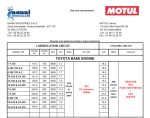
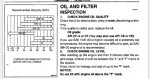
For my current engines, Nanni based on Toyota, these two companies states


oiln.jpg oilt.jpg

Not too hard too to comply with, me thinks.
 
At the other end of the oil chain.
4 Decades.
5 Boats
9 Engines. Petrol and Diesel.
Approx 4500 hours in total.
Have never knowingly used any " genuine!" oil and filters with the words Volvo. Penta Perkins or Mercruiser on the labels.

Engine oil pressure problems 0
Engine problems other than duff fuel 0

Boat number 6. Generic fleet oil and generic fuel/oil filters.
Suspect we will survive.

Outdrive problems. Legion. :)
 
At the other end of the oil chain.
4 Decades.
5 Boats
9 Engines. Petrol and Diesel.
Approx 4500 hours in total.
Have never knowingly used any " genuine!" oil and filters with the words Volvo. Penta Perkins or Mercruiser on the labels.

Engine oil pressure problems 0
Engine problems other than duff fuel 0

Boat number 6. Generic fleet oil and generic fuel/oil filters.
Suspect we will survive.

Outdrive problems. Legion. :)

I've never even seen a can with Volvo, Penta or Mercruiser labels, although I will be using one with Beta for top ups for my new Beta. Had a lot of problems with the only outdrive any of the boats I owned or skippered was fitted with. It was a Volvo leg and the cost of the parts resulted in me selling a 23ft Sunseeker Day Cab, (Volvo Penta 150 turbo diesel), to a native in Gran Cannery, (Skipjack Tuna).

I've got a long list of engine oil companies and warnings associated with out of limits that I can check. It's about 5 years old, so does not have any of the more recent own or supermarket oil companies listed. The API warning list is easy to find, but the one issued by ACEA is not, for some reason they are not keen to admit that any product they had certified was no longer in limits as regards one of the additives or other requirements, including contamination or even wrong base stock.
The main side effects of using some of those bad oils was premature turbo failure, (Wrong base stock in one case), sludge formation in the sump and oil pump intake screen, (Zero detergents), and premature main bearings failure, (Almost zero Zinc based additive). It often took years before some oil lab noticed that a previously good minor brand oil was now just another junk oil. The money made during that time was real good, as dumped Bulgarian base stock, (Mostly 15W40), with no additives in it, costs the manufacturer about 20% of the cost of their original mix. Some of them got caught because an engine that needs an 0W30 will not start too easily minus 25C if it has 15W40 in it.
One quarter of the main car dealers in Germany and Austria were reported for using an oil that was incorrectly described on the invoice. Those that should have used Castrol Edge 0W30 or 5W40, had in fact used Castrol Magnetec 10W40, (About half the price). The service centers that were supposed to have used Mobil 0W40, had in fact used a Mobil 10W40. In about half of the cases the dealer was not at fault as they had swapped over labels on the drums of oil before they were delivered.

So which generic fleet oil are you using ??

Reply to Chrome Dome:
MOTUL are supposed to be a good French Oil company. If you need to use some oil company you don't recognise when overseas, it often possible to ask if they are OK in BOBS THE OIL GUY forum. The members often have a VOA of the oil or will know if the company has been reported for something interesting.

Some of the engine companies like Bukh do publish a list of engine oils for use in different countries that are supposed to be good. BMC also published such a list, but for some reason that good practice has stopped, probably because it was bad for their sales of their own oil.
 
Last edited:
At the other end of the oil chain.
4 Decades.
5 Boats
9 Engines. Petrol and Diesel.
Approx 4500 hours in total.
Have never knowingly used any " genuine!" oil and filters with the words Volvo. Penta Perkins or Mercruiser on the labels.

Engine oil pressure problems 0
Engine problems other than duff fuel 0

Boat number 6. Generic fleet oil and generic fuel/oil filters.
Suspect we will survive.

Outdrive problems. Legion. :)
But this is a low hrs / engine number .Typical of course in the leisure sector.
What folks need to look at the commercial sector of there engine manufacturer .
For me I occasionally look at the MAN marine diesel engineers FB site .This is techs sharing experience/ work etc .

Some moon milage hrs reported .Not just proper oils , but injector service and cooling system hygiene.
15 to 25 K hrs before a “ tear down “ .A tear down involves new liners , pistons , crank shells and valve gear .Then away again .
Often they keep rebuilt ones in the shop and for a commercial operator simply swap it out in 2days to reduce down time .
Yes they do oil analysis regularly during the life .

The feeling or common denominator of a failure / busted motor ( private owners ) is lack of adherence to maintenance esp simple stuff like oils .

Cheap oil might do 5-8 K hrs but the better oil 20 K hrs .You , us leisure users aren’t running them up to those hrs so this masks the issue . Which is what’s happening here .
 
So... if you do change the oil and filters when is the best time?
I always do mine just before layup and fogg the engines, believing that to be recommended.
But should we be performing this in the spring?

The good book says change old oil before the layup period. The reason is that it will prevent corrosion, as old oil is acidic. About half of all engine wear is not caused by running, it results from corrosion after shutdown.

Most engine manufacturers say their engines should be run every month, although they don't say for how long. It takes quite some time to burn off water or fuel contamination, and I doubt if it makes a difference how long you run the engine for.

The big killer of most marine diesels is either overheating incidents, or cold starts with the wrong viscosity oil in particular. Another big issue concerns changing the oil and filter too often. Lots of owners keep changing the oil and filter when it does not need it. There are 2 reasons why that is a big mistake and the first relates to how efficient a cheap paper element oil filter is when clean, and the second to the new detergents being a tad too effective for a while.

A typicall cheap paper element oil filter might well stop 97% of troublesome 20 micron particles when new, BUT will stop 99% when very dirty due to contaminantes reducing the size of the tiny holes in the media of the oil filter.
So the clean filter lets 3% past, whilst the dirty filter lets only 1% past., BUT that is not true of modern syntheic media oil or fuel filters, as how dirty the filter makes no difference to the efficiency.
New engine oil that is designed for long oil change intervals contains a lot of Calcium based detergents, and that additive will damage the protection from the old Zinc layer before a new one can be deposited. Zinc additves are very good at reduring direct metal on metal weear and corrosion, but Zinc ta kes time to bake on.

The net resuly is that an engine can often suffer as much wear during the first 50 hours of a 200 hour oil & filter, as the rest of the 150 hours. If you combine that effect with the cold start oil flow iisue, and the post run acids forming, long runs reduce engine wear. This is why a commercial diesel that does very long run times, can last a biblical number of engine hours.

Both private and commercial diesels can be trashed in upper cylinder wear terms by too much time at low power. In basic terms a non common rail ECU controlled diesel suffers from incomplete combustion due to too low a cylinder head temperature. That results in blowby products fouling the cyliders, and in cylinder liner glazing.
If that occurs the direct ring, valve guide oil seals, cylinder liner wear. Mostly top end trouble, BUT if the blowby contamination of the oil blocks the filter intake screen causing the oil pressure to drop, all bets are off.

Viscosity vs block condition
When an engine is new, just use the recommended oil, lets say an 0W30 in winter and a 15W40 in summer. with an old worn engine I increase that viscosity in an attempt to reduce engine wear, say an 0W40 in winter and a 20W50, or even Mobil 10W60 EL, which was designed for old engines, so it has seal conditioners to prevent oil drips and has a shed load of Zinc and Boron additives, in addition to around double the amount of detergent additives.
Now if you don't want to change oil used in winter to a thicker one in summer, try using an oil thickner additive from Liqui Moly. They also make a very good product to help reduce the old age damage to the bottom end in particular.
Cera Tec | LIQUI MOLY (liqui-moly.com)

PS: Don't use any additive made by other companies, as it might be no good, and additives must not be used during the warranty.
 
You do not know what standard you meet with a supermarket oil, all you know is what is printed on the can. If I want to buy food, I do go to a supermarket, but if I want to buy oil, I go to an oil company. That way I know that the label on the can will be correct.
And you really do think in this world of Chinese knockoffs they dont make a label on an oil container look convincing....
 
And you really do think in this world of Chinese knockoffs they dont make a label on an oil container look convincing....

Yes, the Chinese could tool up to produce the can and label to match the real thing, then dodge the folks like myself that judge which is is suitable after looking at a VOA, by using the correct base stock and all the additives to make the real oil. Alas the only can swaps and false label opertors have been caught very easily. More of an issue over good quality oil filters than oil.
If you can't afford 30 dollars plus postage for a 200ml sample, (The sample kits are free), to get a VOA of the oil done by Blackstones in the USA, there is a minute chance that the local oil mafia are collecting empty cans from their local top of the range car service centers, filling them with junk oil, and then selling them on Fleabay. That's far more likely and more profitable than copying a major brand oil can and label.

ASDA oil is made by Comma, who are no 1 in the UK for making very cheaps oil that are very close to the limits in terms of additive content. You can buy Comma own label engine oil for almost the same price. So you are buying a cheaper version from an oil supplier, (Comma use Bulgarian base stocks), who is no 1 for cheap oils. In the end you will get what you pay for.

My recommendation to anyone who is trying to maximise the life of an engine, is to buy Major brand oils only and make sure you buy from a good supplier in the UK, Germany or USA, (Out of date drum or can risk). If you can't find a major brand oil, buy a top up bottle and send a sample to a good oil lab to see what is really in it, rather than what is on the label or web site.

Shell make a real star performer called ULTRA, and that oil produces some UOA results that are almost as good as Liqui Moly Synthoil High Tech 5W40 (A4/B4) that is used by some real top end petrol and diesel cars.
Alas there is an oil for sale in many car parts shops with a similar label, BUT it's called ULTRA PRO 15W40, and it has a real good can and label. The can is labelled correctly in API and Acea terms which involve a group 1 base stock, when Ultra is a group 3 made from natural gas, not contaminated dinasaur oil. A group 1 base stock is only good for low compression tractor engines. Almost no additives, so very bad news in a turbo diesel.
 
Yes, the Chinese could tool up to produce the can and label to match the real thing, then dodge the folks like myself that judge which is is suitable after looking at a VOA, by using the correct base stock and all the additives to make the real oil. Alas the only can swaps and false label opertors have been caught very easily. More of an issue over good quality oil filters than oil.
If you can't afford 30 dollars plus postage for a 200ml sample, (The sample kits are free), to get a VOA of the oil done by Blackstones in the USA, there is a minute chance that the local oil mafia are collecting empty cans from their local top of the range car service centers, filling them with junk oil, and then selling them on Fleabay. That's far more likely and more profitable than copying a major brand oil can and label.

ASDA oil is made by Comma, who are no 1 in the UK for making very cheaps oil that are very close to the limits in terms of additive content. You can buy Comma own label engine oil for almost the same price. So you are buying a cheaper version from an oil supplier, (Comma use Bulgarian base stocks), who is no 1 for cheap oils. In the end you will get what you pay for.

My recommendation to anyone who is trying to maximise the life of an engine, is to buy Major brand oils only and make sure you buy from a good supplier in the UK, Germany or USA, (Out of date drum or can risk). If you can't find a major brand oil, buy a top up bottle and send a sample to a good oil lab to see what is really in it, rather than what is on the label or web site.

Shell make a real star performer called ULTRA, and that oil produces some UOA results that are almost as good as Liqui Moly Synthoil High Tech 5W40 (A4/B4) that is used by some real top end petrol and diesel cars.
Alas there is an oil for sale in many car parts shops with a similar label, BUT it's called ULTRA PRO 15W40, and it has a real good can and label. The can is labelled correctly in API and Acea terms which involve a group 1 base stock, when Ultra is a group 3 made from natural gas, not contaminated dinasaur oil. A group 1 base stock is only good for low compression tractor engines. Almost no additives, so very bad news in a turbo diesel.
On the other hand, if you look on google earth at all the marinas in Europe and the USofA there are thousands and thousands of boats with engines....how many owners of them do you think the way you do...as for engine warm up there are thousands of cars that do much less than an hour jurney from cold every day...
To my mind there is an enormous amount of waste with all this gobbledegook, and one has to remember the oil is already thousands of years old before you get it.... ok ok all the tech stuff , but just how many people go to buy oil and accept the store person recommendations....
 
On the other hand, if you look on google earth at all the marinas in Europe and the USofA there are thousands and thousands of boats with engines....how many owners of them do you think the way you do...as for engine warm up there are thousands of cars that do much less than an hour jurney from cold every day...
To my mind there is an enormous amount of waste with all this gobbledegook, and one has to remember the oil is already thousands of years old before you get it.... ok ok all the tech stuff , but just how many people go to buy oil and accept the store person recommendations....

Truck and bus companies in the USA and Germany change their oil when the oil lab report says it needs changing. It saves them money cos a large diesel will often take over 20 liters of oil, and in the case of one boat I skippered and services 30 liters to the full mark. The aim is to use the oil until one of the limiting wear metals, viscosity or contaminants was nearly out of limits in long term wear terms. Oddly enough for an engine in good condition that often means exceeeding the recommended oil change interval, BUT, that only happens if you use a real good oil. Longer oil change intervals can produce lower wear, BUT only if you use an oil lab report to conform they are good. If you get fuel or coolant contamination, the report might well result in you changing the oil far more often.

Some of the very best engine oils are made in a chemical plant, (Group 4 German synthoils), although they are about twice the price of Shell Ultra, and engines fail every day or start smoking or dripping oil due to poor quality engine oils or filters. If you correctly service a good marine diesel, and fit heat pads or warm the engine bay before a cold start, the engine could easily do at least 50,000 hours before a full rebuild. With a car the record for a turbo diesel is held by a Nissan engineer who did 165,000 miles from new, without changing the oil or oil filter. The engine was perfectly OK, BUT he was using the factory fill which is an expensive group 4 synthetic. He did change the air and fuel filter once. He was using Blackstones when the last report started to go out of limits.
Not many boaters ask or store person in a supermarket for advice about an oil.

Don't forget that for ultimate block life, you do need to avoid cold starts, (Wolverine heat pads), try not to idle or operate at low RPM for too long, avoid overheats and slamming the throttle open or shut too fast. Most turbos have a 2 min cool down restriction. Bad air filters can contaminate the engine oil with ultra fine Silicon dust, and bad fuel can also result in additional top end wear, (Mostly gummed up injector tips). Older diesels can survive overheat incidents, (Bukh are the best for surviving abuse), far better than more close tollerance lighter engines, where the head gasket can fail. Not a fan of Yanmars in that respect.
OIL ANALYSIS: How To Check Diesel Engine Health Using Oil Sample Kit - YouTube

I don't guess at which oil to use or when to change it, the oil lab report tells all.

Microsoft Word - Understanding Engine bubble.doc (blackstone-labs.com)
 
Last edited:
Truck and bus companies in the USA and Germany change their oil when the oil lab report says it needs changing. It saves them money cos a large diesel will often take over 20 liters of oil, and in the case of one boat I skippered and services 30 liters to the full mark. The aim is to use the oil until one of the limiting wear metals, viscosity or contaminants was nearly out of limits in long term wear terms. Oddly enough for an engine in good condition that often means exceeeding the recommended oil change interval, BUT, that only happens if you use a real good oil. Longer oil change intervals can produce lower wear, BUT only if you use an oil lab report to conform they are good. If you get fuel or coolant contamination, the report might well result in you changing the oil far more often.

Some of the very best engine oils are made in a chemical plant, (Group 4 German synthoils), although they are about twice the price of Shell Ultra, and engines fail every day or start smoking or dripping oil due to poor quality engine oils or filters. If you correctly service a good marine diesel, and fit heat pads or warm the engine bay before a cold start, the engine could easily do at least 50,000 hours before a full rebuild. With a car the record for a turbo diesel is held by a Nissan engineer who did 165,000 miles from new, without changing the oil or oil filter. The engine was perfectly OK, BUT he was using the factory fill which is an expensive group 4 synthetic. He did change the air and fuel filter once. He was using Blackstones when the last report started to go out of limits.
Not many boaters ask or store person in a supermarket for advice about an oil.

Don't forget that for ultimate block life, you do need to avoid cold starts, (Wolverine heat pads), try not to idle or operate at low RPM for too long, avoid overheats and slamming the throttle open or shut too fast. Most turbos have a 2 min cool down restriction. Bad air filters can contaminate the engine oil with ultra fine Silicon dust, and bad fuel can also result in additional top end wear, (Mostly gummed up injector tips). Older diesels can survive overheat incidents, (Bukh are the best for surviving abuse), far better than more close tollerance lighter engines, where the head gasket can fail. Not a fan of Yanmars in that respect.
OIL ANALYSIS: How To Check Diesel Engine Health Using Oil Sample Kit - YouTube

I don't guess at which oil to use or when to change it, the oil lab report tells all.

Microsoft Word - Understanding Engine bubble.doc (blackstone-labs.com)
Well all I can say is in 60+years of boat and car ownership I have never had a problem yet.
(Although I admit I have purchased problems) I have never had an engine wear out on me yet...
Also I think you will be surprised on the amount of boat people (that want to save a penny or two) will go the "automobile " route to avoid paying inflated "yotti" price
 
Never even seen a can with Volvo, Penta or Mercruiser labels

1676485691772.png
"So which generic fleet oil are you using "

Anything my local motor factor is flogging off to their lorry drivers.
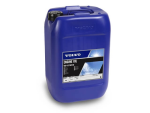
Actually not that long ago did buy some Volvo Penta badged VDS3 oil in 20L drums.
25 quid for a 20 litre drum .
 
Last edited:
On the other hand, if you look on google earth at all the marinas in Europe and the USofA there are thousands and thousands of boats with engines....how many owners of them do you think the way you do...as for engine warm up there are thousands of cars that do much less than an hour jurney from cold every day...
To my mind there is an enormous amount of waste with all this gobbledegook, and one has to remember the oil is already thousands of years old before you get it.... ok ok all the tech stuff , but just how many people go to buy oil and accept the store person recommendations....

Truck and bus companies in the USA and Germany change their oil when the oil lab report says it needs changing. It saves them money cos a large diesel will often take over 20 liters of oil, and in the case of one boat I skippered and services 30 liters to the full mark. The aim is to use the oil until one of the limiting wear metals, viscosity or contaminants was nearly out of limits in long term wear terms. Oddly enough for an engine in good condition that often means exceeeding the recommended oil change interval, BUT, that only happens if you use a real good oil.
Some of the very best engine oils are made in a chemical plant, (Group 4 German synthoils), although they are about twice the price of Shell Ultra, and engines fail every day or start smoking or dripping oil due to poor quality engine oils or filters. If you correctly service and use a good marine diesel, and fit heat pads or warm the engine bay before a cold start, the engine could easily do at least 50,000 hours before a full rebuild. With a car the record for a turbo diesel is held by a Nissan engineer who did 165,000 miles from new, without changing the oil or oil filter. The engine was perfectly OK, BUT he was using the factory fill which is an expensive group 4 synthetic. He did change the air and fuel filter once. He was using Blackstones when the last report started to go out of limits.
Not many boaters ask or store person in a supermarket for advice about an oil.

Don't forget that for ultimate block life, you do need to avoid cold starts, (Wolverine heat pads), try not to idle or operate at low RPM for too long, avoid overheats and slamming the throttle open or shut too fast. Most turbos have a 2 min cool down restriction. Bad air filters can contaminate the engine oil with ultra fine Silicon dust, and bad fuel can also result in additional top end wear, (Mostly gummed up injector tips).
OIL ANALYSIS: How To Check Diesel Engine Health Using Oil Sample Kit - YouTube
Never even seen a can with Volvo, Penta or Mercruiser labels

View attachment 151227
"So which generic fleet oil are you using "

Anything my local motor factor is flogging off to their lorry drivers.
Actually not that long ago did buy some Volvo Penta badged VDS3 oil in 20L drums.
25 quid for a 20 litre drum .

25 quid for 20 liters is below the production cost. There is an old saying, if something is too good to be true, it probably is. I would never use any oil purchased from a small supplier, only the main dealer.

This is the cost from a typical Fleabay seller:
Genuine Volvo Penta 20L VDS3 15W40 Engine Oil Barrell 23909456 23909461 | eBay

So if a local shop is selling it for 25 quid, rather than the nearly 200 quid it normally sells for, it would be a good idea to ask in Bobs The Oil Guy if it's a scam. Wild guess but in the EU they use Bulgarian 15W40 group 1 truck oil which would cost around 20 quid. Might be the real thing and out of date. In the US they get a lot of cans taken from a skip that are then filled with filtered used machine oil. Looks good, but zero additives. You can check with Volvo, as the barrel number is registered. At the end of the day, if you suspect an oil is not the real thing, getting a VOA done will reveal all.
Alas Volvo do have it listed as subject to being copied, so odds on it's not the real thing. If you like using ultra high tech oil, this is a top of the range marine oil:
Liqui Moly Marine 4T Motor Engine Oil (marinesuperstore.com)

I've taken a quick look around, and it might be old stock, as Volvo had some problems with their initial oil and changed to a newer version. If it's the older spec oil, it should not be sold. Was the cap sealed and did you get the certicate, (Might be a PDS and an A4 certificate that matches the can number). I've never seen an expensive oil like genuine Volvo sold through small shops or Ebay.

THIS IS WORTH WATCHING:
ENGINE OIL SCAM CASTROL MOTUL SHELL LIQUI MOLY MOBIL HP IDENTIFY COUNTERFEIT DUPLICATE ENGINE OIL - YouTube
 
Last edited:
Perhaps it had been drained from someones engines ?
Which reminds me about 5yrs ago ltr coke bottles of old engine oil was being sold for $5 a ltr in Venezuela, wasn't a surprise to see a washing up bowl under a parked car at the supermarket....
 
Top