Encapsulated Keel Join Repair

eebygum

Well-Known Member
Joined
6 Nov 2002
Messages
566
Location
Manchester
Visit site
I finally got down to the boat today to start preparing for antifouling... and thought I would chip away at the hairline crack I noticed either side of the keel and what I thought might have been some shoulder rust bulge at the top of the keel..... and kept on chipping any loose ‘stuff’ off

The good news is that was no rust bulge and no rusting keel which is bright metal. BUT over the last 45+ years on my SHE32C there was at least two types of filler/repairs around the keel join (one orange and one white).

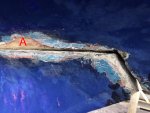
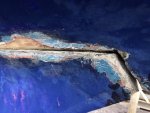
I kept going until any degraded filler was out which included a section immediately in front of the lead keel. (See photo). It’s worst at the front of the keel, integrity of the export at the back is intact.
64A0857F-837D-415B-9499-4169148B5B9E.jpeg

All internal keel bolts are dry and rust-free and there are no rust stains from the keel itself anywhere (which has been ashore all winter) so I’m happy in its integrity.

So any forum advice on how I best fix this myself ? I’m happy using West Epoxy systems but wondering:

(1) Would 650-8 Epoxy be better than 650-K to give a better adhesion and more flexible join

(2) Best technique for filling the large gap at front ? Plenty of chopped strand

(3) Once all finished, edged and sanded down; I would do give it any overall epoxy coat. Thinking Hempel High Protect Or is there a West alternative.

Thanks in advice for any suggestions.

Cheers, Andrew
 
It would be much better if you have access from inside to the front cut, because as it looks at the pic, there is a though hull cut now making it impossible to fill from outside. (sides look like can be filled easily from outside .
I would do this in 3 stages
1) laminating from inside first with chop strand.
2) apply thickened epoxy from the outside. Sand down the epoxy and at the same time bring out clean healthy laminate.
3) relaminate the whole area, fill again with epoxy putty, sand it for perfection, and apply then your epoxy primer of your choice.
If the front cut doesn't go through the hull, then you can go from step 2.
 
Thanks Akestor for the advice which is consistent with the videos I’ve been watching.

The front cut (from side to side) was already there (I just removed what looked like some old epoxy sealant or filler; definitely not epoxy laminate/chop strand) does not go all the way inside the hull; so I think I can start from Step 2. I will create a form to help get a nice smooth finish.

Im just trying to get my head around why ‘The cut’ is there... was It either built like that (I think not) OR repaired in such a fashion during its history.
 
I'm a little confused by what we're seeing - my understanding of the concept of 'Encapsulated Keel' means the ballast material is internal to the grp hull envelope so there are no keel bolts and no keel/hull joint. The 'grey' that's visible and the lack of rust, would suggest to me that it's lead you've revealed there, albeit with a fibreglass skin over it.

If you could fully establish what you have, then the advice of how to seal it would be more specific.
 
Last edited:
That is not an encapsulated keel. That is a bolt on keel.

I would rake out and dry the gap as thoroughly as possible and inject CT1 into it but I emphasise that is my opinion.

Others here will undoubtedly inevitably disagree and offer their own solutions.
 
Last edited:
This is NOT an encapsulated keel, as evidenced by the your own mention of keel bolts, and also the lack of GRP across the joint, which would be about 20mm thick and easily observable.

The original keel bedding would have been a resilient mastic, compressed by the keel bolts. This has now hardened with age, giving the appearance of filler, but should be replaced using a simialr material, such as Sikaflex 292. Epoxy filler should not be used, and on no account should glass fibre be laid across the joint.

Even though the joint is fine at the aft end, you should be thinking in terms of a full re-bed of the keel in the near future.

Has the hull had an osmosis treatment in the past? In which case, it is possible that the epoxy coating has been incorrectly applied across the hull / keel joint, making it appear encapsulated.
 
Last edited:
I'm also not quite sure whats going on at A. Looks like you need to jam a bit of brown parcel tape coated thin ply into the joint and make good that area first.

Then filling the joint depends on how else it is filled. If the keel was originally drawn up into solid filler and then a skin of fibreglass covered all the lead and the joint in the hope of making a solid join, then replace as original. But if it was bolted up onto a flexible bedding compound, then repeating this is your best course of action as any slight movement will crack anything more rigid. But the slot at the front looks a bit big for a flexible filler alone - for this I would bed a piece of fibreglass 'plate' (of about half the slots thickness) into the gap with loads of sealant. The most cost effective sealant would be PU40 from ToolStation which is a polyurethane adhesive /sealant made by Sika.


keel.jpg
 
Last edited:
How thick is the grp over thehull/keel join?
Is it meant to be structural or just a fairing skin?

What is happening at 'A'?
A proper job is probably going to mean dropping the keel off to re-bed.
 
I'm a little confused by what we're seeing - my understanding of the concept of 'Encapsulated Keel' means the ballast material is internal to the grp hull envelope so there are no keel bolts and no keel/hull joint. The 'grey' that's visible and the lack of rust, would suggest to me that it's lead you've revealed there, albeit with a fibreglass skin over it.

If you could fully establish what you have, then the advice of how to seal it would be more specific.

Yes your absolutely right. I should have known that from the keel bolts and more research Confirms it’s a lead fin keel.

That’s makes me feel more comfortable about the repair in general and the advice given.
 
That is not an encapsulated keel. That is a bolt on keel.

I would rake out and dry the gap as thoroughly as possible and inject CT1 into it but I emphasise that is my opinion.
Thanks your absolutely right... lead fin keel with thin fibreglass.
Others here will undoubtedly disagree and offer their own solutions.
 
This is NOT an encapsulated keel, as evidenced by the your own mention of keel bolts, and also the lack of GRP across the joint, which would be about 20mm thick and easily observable.

The original keel bedding would have been a resilient mastic, compressed by the keel bolts. This has now hardened with age, giving the appearance of filler, but should be replaced using a simialr material, such as Sikaflex 292. Epoxy filler should not be used, and on no account should glass fibre be laid across the joint.

Even though the joint is fine at the aft end, you should be thinking in terms of a full re-bed of the keel in the near future.

Has the hull had an osmosis treatment in the past? In which case, it is possible that the epoxy coating has been incorrectly applied across the hull / keel joint, making it appear encapsulated.
Hi, From all the receipts and history I know of the boat it’s not been treated for osmosis in the past. There are some small osmosis blIsters above the waterline at the rear and their purely cosmetic and I’m not worried about them.

I understand why I should Use a flexible filler like Sikaflex 292, what would’ve best to go over this with ? Primocon and then antifouling or protect further with Interlux Interprotect ?
Cheers,
 
How thick is the grp over thehull/keel join?
Is it meant to be structural or just a fairing skin?

What is happening at 'A'?
A proper job is probably going to mean dropping the keel off to re-bed.


The Fibreglass over the join is relatively thin and I would say definitely not structural. In section A it’s I believe it’s where I’ve just chipped off a little bit more.

Along the keel join it was quite bumpy... which made me think I had shoulder sag from an encapsulated keel... hence the title of my original post which was incorrect. I think the roughness was caused by years of patched up filling.

I can clean and dry out the join and path up with a flexible filler like Sikaflex 292 but still musing what to go over that with to get a smooth fairing into the rest of the hull ?
 
Hi, From all the receipts and history I know of the boat it’s not been treated for osmosis in the past. There are some small osmosis blIsters above the waterline at the rear and their purely cosmetic and I’m not worried about them.

I understand why I should Use a flexible filler like Sikaflex 292, what would’ve best to go over this with ? Primocon and then antifouling or protect further with Interlux Interprotect ?
Cheers,
Interprotect is epoxy-based, and will be too rigid to remain intact over the joint. Best to go with simple primocon and paint. Just make sure the filler / mastic is fully cured before applying paint over the top, otherwise the reagents in the mastic will prevent the paint from curing.

Does she have a keel stepped mast? It may be that she has been raced in the past, and heavy rig strains have pushed down on the forward end of the keel, opening up the joint at that end: this is a common problem with S&S34s, from the same designers. Not a structural failure, just a symptom that GRP moulded hull structures are more flexible than they may appear. You just need to keep an eye on it, make sure there's no sign of strain or leakage around the forward-most keelbolt, and rake out / refill the joint whenver the filler hardens and cracks.
 
Last edited:
So is it a keel that was "updated" by covering it with thin fiberglass maybe? I wonder if the thin fiberglass layer visible under the joint engulfs the keel or it is just covering the joint and a little bit of the keel. If the keel is indeed enclosed in fiberglass, even thin, a relamination should be done over the joint and in a larger area to unify fiberglass above joint and bellow (with the joint filled with polyurethane). Otherwise the remaining fiberglass bellow the joint will eventually start to delaminate from the lead ( or iron) from the water getting in slow and steady. In the case of not re-laminating and just filling the joint with sealant, i would remove the fiberglass from the keel and treat it with several coats of antirust epoxy primer before antiful. If it was my boat i would prefer the easier way to relaminate (in the case it's a "pseydo-encapsulated")
 
Top