Dual Passport, VAT, etc

TomIre

New Member
Joined
5 Feb 2025
Messages
15
Visit site
My wife and I are dual Irish and US citizens. We are also full time live aboards on our Nordhavn 47.
We're currently cruising in the US where we bought the bought. We'd really like to get ourselves to Europe but not if we have to pay 23 percent Irish VAT.
I'm thinking that a ToR (Transfer of Residence might be a way to go. We've done that before 20 years ago when we moved to Ireland but not on a boat.
The potential issue is our liveaboard status. You have to demonstrate intent to Customs that you are moving permanently Does anyone have experience with this? We could possibly rent a flat and show that as our address but I hate to be too dodgy when it comes to these things. We could also sign a marina slip lease but then I'm guessing most Irish (or other EU) marinas aren't keen on liveaboards.
Lastly, I feel like I need to seek some professional advice on this. Just not sure if it's a solicitor, an accountant or who.
Any advice appreciated!
 
I don't think that the RCD is required for boats entering under transfer of residence but you will need to check with Irish customs as they are in the EU nit the UK, although suspect the rules are the same. Do you intend moving permanently and taking up residence in the EU? or are you remaining US resident? The alternative may be to enter as visitors and as you are EU citizens there are no restrictions. The boat can enter under Temporary Admission for 18 months renewable by a quick trip across to the UK and return. You will then have freedom to roam around Europe and UK.
 
Lots to sort out. We are resident on our boat. No land residence.
Possibly the way forward is a TA. Do you know if an EU citizen can get a TA? If so, that might work. Just need to leave briefly every 18 months.
 
Lots to sort out. We are resident on our boat. No land residence.
Possibly the way forward is a TA. Do you know if an EU citizen can get a TA? If so, that might work. Just need to leave briefly every 18 months.
Someone else may give a definitive answer. I believe TA depends on residency rather than citizenship. The latter impacts things like if you can stay and how long. TA affects the vessel e.g. tax liability. You'd be OK with a home in US and saying you are on a long, temporary, stay in EU. Living on the boat with no other permanent home outside the EU would probably impact TA and tax would be due.

You could initially argue you weren't resident in the EU on arrival. Likely to be a problem eventually if you remain for a long time in one place.
 
Last edited:
Thanks Mistroma, a very sensible answer. I think you're correct that TA depends on residency and not citizenship.
I suppose it rests on how things are presented. Probably best to but claim to be a liveaboard. We do have a mailing address in America and can show bank statements, tax returns, etc as "proof" that we reside in America.
I do need to find someone to get professional advice on all this. No idea if it is a maritime solicitor but that's probably the place to start.
 
I do need to find someone to get professional advice on all this. No idea if it is a maritime solicitor but that's probably the place to start.
I definitely agree you need professional tax advice. If you apply for TA you'll be OK in Ireland for the first 183 days but if you stay longer you become tax resident. Even moving around the EU with spells in the UK will probably catch up on you, especially as you don't have a permanent residence in the US.
 
My wife and I are dual Irish and US citizens. We are also full time live aboards on our Nordhavn 47.
We're currently cruising in the US where we bought the bought. We'd really like to get ourselves to Europe but not if we have to pay 23 percent Irish VAT.
I'm thinking that a ToR (Transfer of Residence might be a way to go. We've done that before 20 years ago when we moved to Ireland but not on a boat.
The potential issue is our liveaboard status. You have to demonstrate intent to Customs that you are moving permanently Does anyone have experience with this? We could possibly rent a flat and show that as our address but I hate to be too dodgy when it comes to these things. We could also sign a marina slip lease but then I'm guessing most Irish (or other EU) marinas aren't keen on liveaboards.
Lastly, I feel like I need to seek some professional advice on this. Just not sure if it's a solicitor, an accountant or who.
Any advice appreciated!
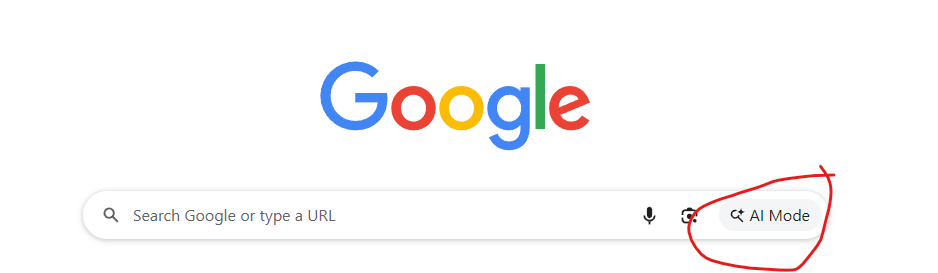
Try re-formulating your text into a set of precise questions and then use Google Gemini AI on the Google search page ....
1769760687725.png
I did this and got the following reply ....
A Transfer of Residence (TOR) is a legitimate path to avoid the 23% VAT, provided you meet strict criteria regarding your residency history and the boat's ownership. However, using a boat as a primary residence while claiming TOR involves navigating specific documentation requirements from Irish Revenue.

1. Requirements for Transfer of Residence (TOR)
To qualify for relief from Customs Duty and VAT when importing your boat from the US to Ireland, you must:
  • Residency: Have lived outside the EU for at least 12 continuous months prior to the move.
  • Ownership: Have owned and used the boat for at least 6 months before arriving in Ireland.
  • Intent: Be transferring your "normal residence" to Ireland permanently.
  • Disposal Restriction: You cannot sell, hire out, or lend the boat for 12 months after importation without paying the waived taxes.

2. Demonstrating Permanent Intent
Customs requires evidence of "normal residence," defined as the place where you live for at least 185 days per year due to personal and occupational ties.
  • Evidence Needed: Revenue typically asks for proof of disposing of your home abroad (e.g., sale of a US property or ending a lease) and acquiring a home in Ireland (e.g., a rental agreement or purchase contract).
  • Using a Boat as Address: While a boat can be a residence, a marina berth lease may be scrutinized. You must provide "day-to-day living" evidence like Irish bank statements, utility bills, and proof of your arrival (flight/ferry tickets).
  • Warning: Renting a flat solely for "paperwork" without living there may be considered tax evasion if discovered.

3. Liveaboard Realities in Irish Marinas
  • Legality: Most public harbours managed by Waterways Ireland prohibit long-term liveaboard status, often limiting stays to 5 days.
  • Private Marinas: Many private marinas in Ireland allow liveaboards but may not offer "residential" status for official purposes (like receiving a PPS number or proving residency to Revenue). You should contact specific marinas (e.g.,
    Dun Laoghaire
    ,
    Malahide
    , or
    Kinsale
    ) directly to confirm if their berth agreements meet Revenue's documentation standards.

4. Seeking Professional Advice
You should consult a Tax Consultant or a Customs Agent who specializes in "Transfer of Residence" for high-value assets.
  • Why not a solicitor? Solicitors handle legal property transfers, but a specialist tax accountant or customs broker has the direct experience filing Form C&E 1076 with Revenue for vehicle/vessel imports.
  • Alternative: Some Irish boat owners use Temporary Admission, allowing a non-EU vessel to stay for 18 months without paying VAT, provided the owner is not an EU resident. However, as dual citizens intending to live there, you would likely be deemed residents, making TOR the only permanent tax-free option.
Would you like me to look up specific private marinas in Ireland that are known to accommodate full-time liveaboards?

As always research the links referenced in the response, and the AI is not great at inferring accompanying issues (like RCD as it has made no mention if you need to comply or not) . Read Googles disclaimer here ...

Get AI-powered responses with AI Mode in Google Search - Computer - Google Search Help
 
Try re-formulating your text into a set of precise questions and then use Google Gemini AI on the Google search page ....
View attachment 205769
I did this and got the following reply ....


As always research the links referenced in the response, and the AI is not great at inferring accompanying issues (like RCD as it has made no mention if you need to comply or not) . Read Googles disclaimer here ...

Get AI-powered responses with AI Mode in Google Search - Computer - Google Search Help
Very good suggestion to check the documents found. I've never used the Google AI directly as I search via StartPage to filter tracking from the resulting links. However, I have used several other AIs and all return some really silly stuff sometimes. They can go badly wrong, even with very technical stuff. I've had suggestions that would probably lose the data I was trying to preserve. I was recently told that the root problem stopping a process accessing a remote server was due to me entering 15/01/26 as the date. It pointed out that it was failing because of the discrepancy between that date and the actual date. I should put in 15/01/24 instead. I pointed out that it was 2026 not and not 2024. This resulted in a very apologetic reply stating that it had been trained in 2024 and that's why it used that date.

Shades of "daisy, daisy, give me your answer do" from 2001. :D:D

It will probably give a lot of good links and those might point to other documents if they are out of date. You could narrow the query to get a better reply. e.g. You could specifically state you only want to reference specific official EU government data and use the most up-to-date information that's relevant to 2026.

Restricting sources initially should give a decent chance of only getting relevant information. I've seen AIs give as much credence to old irrelevant stuff as newer data if there's more of the old stuff (fairly common). You could include examples of situations to see if it is still making sense in relation to your specific circumstances. Ask for a summary at the end and if the AI can see any problems with the route you are considering as a result of the query.

I imagine it will be a good starting point and you can always return for clarification on certain points once you've absorbed the initial information.
 
Very good suggestion to check the documents found. I've never used the Google AI directly as I search via StartPage to filter tracking from the resulting links. However, I have used several other AIs and all return some really silly stuff sometimes. They can go badly wrong, even with very technical stuff. I've had suggestions that would probably lose the data I was trying to preserve. I was recently told that the root problem stopping a process accessing a remote server was due to me entering 15/01/26 as the date. It pointed out that it was failing because of the discrepancy between that date and the actual date. I should put in 15/01/24 instead. I pointed out that it was 2026 not and not 2024. This resulted in a very apologetic reply stating that it had been trained in 2024 and that's why it used that date.

Shades of "daisy, daisy, give me your answer do" from 2001. :D:D

It will probably give a lot of good links and those might point to other documents if they are out of date. You could narrow the query to get a better reply. e.g. You could specifically state you only want to reference specific official EU government data and use the most up-to-date information that's relevant to 2026.

Restricting sources initially should give a decent chance of only getting relevant information. I've seen AIs give as much credence to old irrelevant stuff as newer data if there's more of the old stuff (fairly common). You could include examples of situations to see if it is still making sense in relation to your specific circumstances. Ask for a summary at the end and if the AI can see any problems with the route you are considering as a result of the query.

I imagine it will be a good starting point and you can always return for clarification on certain points once you've absorbed the initial information.
I was trying to keep it simple ..... :ROFLMAO: :ROFLMAO: :ROFLMAO: .... it would have been a much longer post explaining how to define the persona and constraints, and ground the AI to specific data - so the next best thing is to use it for the links it provides, and treat the reply as just a summary that may be inaccurate.

Spotting hallucinations is also made harder if nothing about the expected result is known by the user, made even harder if the data set hasn't been effectively constrained.

I find them interesting, and some of the results can be hilarious.
 
Top