Driving on a single engine

philipdawsonladds

Well-Known Member
Joined
14 Sep 2017
Messages
145
Location
Chichester
Visit site
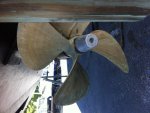
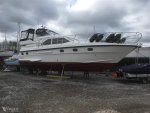
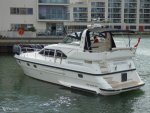
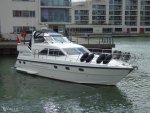
I have just bought an Atlantic 42 with twin Volvo Penta TAMD63P diesels (2 x 370HP). The engines are mounted close together apparently to facilitate running on a single engine whilst in harbour or on rivers, canals. The rudder offset only being 5 degrees to keep in a straight line. This all sounded good in terms of more economic running whilst limited to 8Kts (local speed limit) but what is this doing to the idle engine gearbox? Hopefully, the gearbox is designed to be spun by the idle prop but could it be doing some damage? Anyone else been in this situation?
 
Not been in that situation.

The issue of windmilling is because the engine is off AND if there is a gearbox oil cooler there is no water flow to cool the gear box oil .
Some gearboxes have a manual lock off lever/ bolt .My twin disc boxes do .You can lock up the shaft to prevent windmilling .
Also if not some have a gearbox oil temp gauge so you can keep an eye on the oil temp .Twin disc suggest keep it below 100 * C
Change the oil if it exceeds .

Read the operators manual .
 
Not that I'm an expert in any way, but I can't see any issue at all, there is no load on that gearbox, it's effectively in neutral and free wheeling, no clutch or other components to generate friction that needs overcoming, especially at 8 knots apart from gears turning in oil, I just can't see that reaching anywhere near 100 degrees. Of course this is assuming the lever is in neutral position and the drive isn't engaged. If drive was accidentally engaged, well that would be interesting, either the prop would lock or the clutch would slip, or the engine would crank lol, I'd expect the first two would be more likely but it is an intriguing question, I look forward to some more knowledgeable replies.

I have PSS seals on my shafts, they require to be water cooled if the boat can exceed 12 knots. If I had to run back on one engine, advice is not to exceed 12 knots for similar reasons, the engine would be off so there would be no water cooling to that prop seal, which is something else to consider depending on the setup of your boat. You can T the water feeds in so that either engine can supply water to either seal for extra redundancy, mines not currently set up that way but it is food for thought.

On a separate note, there is an Atlantic 42 in our marina, I have to say the engines sounded so quiet and nice that I actually had to google it to find out that they run those TAMD63s, the external exhaust boxes they have on those Atlantics really make them sound nice, in the marina anyway. Lovely boats good luck with the new purchase.
 
Last edited:
Thanks for this - it all makes sense - I haven't got hold of the manuals as yet so they might also give some guidance. In any event, great advice and things to watch out for. I'll also have a chat with the previous owner.
 
Pretty sure the gearbox on the end of a 63P allows freewheeling - find out which make/model of gearbox you have. I used to do it with a fairline that had 63Ps. At river speeds the undriven shaft turns pretty slowly so cooling not an issue. Fuel wise - you won't see much difference. Any gain by using one engine s lost through extra drag caused by the other engine. However it is much better for the running engine as it has a proper load on it, and will come up to working temperatures etc. When I used to do river cruising I would alternate the engines every couple of hours, or use one engine one day and the other engine the next day.

edit Beautiful boat, great for UK waters -congratulations, any pictures?
 
Last edited:
Just two pennies worth. ?
Forget gearbox semantics. Just use both engines.
The boat will handle underway like a drunken pig with the single prop thrust only going past one rudder blade and will be almost impossible to manoeuvre going astern if something with a set of sails gets in your way.
No choice if the power steering/ calorifier/ domestic / starter batteries are run from different engines.
Need both engines to get out of you mooring and probably have to get the other engine going once you leave your 8 knot limit .
Presume before leaving the mooring that you will start both engines to check they work ?
Rumours that starting engine and promptly shutting down again not good for any engines health.

Also very suspicious about the "engines being close together for single prop running," its the only way of squeezing in two great lumps of metal inside a small space and just wait till you have to do any servicing .
Most builders are guilty of this sin.
Sounds like broker speak to help flog a boat that drinks fuel like trooper, 30 gallons an hour flat out, but fear not sir, only 10 GPH on one engine , sign here Sir. :)
As for that rudder offset for straight running on a single engine its going to cause extra drag at anything over displacement , could possibly be common with all steering gear, it certainly is with Out*******s.
 
Last edited:
^ All very good points. Our calorifier is only fed from the port engine, Our rudders don't really become effective until about 5knots. I was going to say earlier that I'd run both engines purely from a manoeuvrability perspective but not familiar with how large the Atlantic rudders are.
 
Craft capable of planing tend to have very small rudder area, suspect this is to prevent serious problems with big rudder deflections resulting in serious and possibly violent handling problems at high speeds. ?
The downside is little rudder authority at low speeds.
 
I think the OP was relating to rudder offset being 5 degrees to keep going in a straight line with one engine. I.e. move the wheel to compensate so the boat keeps going straight.
 
Frequently cruise inland waterways where the speed limit is 8 kilometers per hour and with locks as close as a mile or two apart only always run on two engines.
Folks did suggest only using one engine to " save fuel" but this only resulted in having to run with the helm /rudders offset, increasing drag plus poor handling and some considerable panics when approaching destinations/ hazards having forgotton that one engine was turned off.
As most boats simply sip fuel at tickover the fuel saving is probably insignificent as well.
 
Pretty sure the gearbox on the end of a 63P allows freewheeling - find out which make/model of gearbox you have. I used to do it with a fairline that had 63Ps. At river speeds the undriven shaft turns pretty slowly so cooling not an issue. Fuel wise - you won't see much difference. Any gain by using one engine s lost through extra drag caused by the other engine. However it is much better for the running engine as it has a proper load on it, and will come up to working temperatures etc. When I used to do river cruising I would alternate the engines every couple of hours, or use one engine one day and the other engine the next day.

edit Beautiful boat, great for UK waters -congratulations, any pictures?
Thanks - I was wondering about the virtues of driving on a single engine - making it work sounds a good reason although it might have been nice to save some fuel too!133553064gallery_wm.jpg133553064gallery_wm.jpg133553064gallery_wm.jpg133675614gallery_wm.jpg133675618gallery_wm.jpg
 
Beautiful boat...congratulations :)

Edit: just seen the Ad, very classy all around.
 
Last edited:
Just looked at the broker pics. I think the gearboxes are IRM220 - same as the ones I had. If you can find a manual check what it says about freewheeling.
 
My 34' power cat has 2 x75 HP Yanmars. Except in the marina and for close manoeuvring or very heavy weather I only ever us one engine. I generally motor @2200 revs making 7 kts. With 2 engine both at 2200 revs I get 8 kts.
 
Just looked at the manual - specifically stated that the boat can be towed or driven on a single engine with no risk to the transmission - I just need to decide if it's worth it!
 
Top