DPH outdrive letting in water

julians

Well-Known Member
Joined
11 Jun 2006
Messages
2,679
Visit site
Hi Chaps,

Posting this on behalf of my father , who is having a bit of trouble with his volvo penta DPH outdrives.

The drives are 2007 model (DPH -A). The local official VP service agent have stripped the two drives down and found water in them (again) , despite new seals being fitted at the last service in march/april.

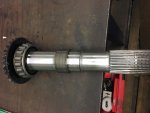
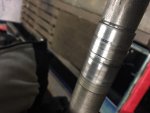
The service agent thinks that the cause of the water ingress is because there is some wear on the driveshaft where the seals sit , and because of this wear, the new seals are not sealing fully and are letting water in. I have seen photos and there is some marks where the seals sit.

They are recommending a replacement of the driveshafts, which also involves replacing the gears because the drive shafts and gears are not sold separately. These parts are fairly pricey. In essence it looks like a complete rebuild of the drives is required.

The bill for this work is quite substantial (2 drives) , so I was wondering if there is a known more cost effective approach to fixing the problem with the lack of sealing rather than effectively rebuild the drives.

Any advice from those in the know?

Thanks
 
Last edited:
Any moment now someone be along and say look more outdrive trouble !

I would imagine the first thing to do is to get a micrometer on the shaft and see if is in spec or not. I assume he size is known or could be compared against a new one.

Coastal rides sell recon drives and depending on the scale of the bill that may prove a better option ?

I would assume a seal would be a tight fit so for it to pass water would be quite a lot of wear ( just a punters point of view not an engineer )
 
Thanks J, I was going to add at the end of my post that tales of how outdrives are the devils work will not be tolerated.

With regards to whether the shafts are in or out of spec, for now I will assume they are out of spec, because the official VP service agent are saying they need replacing.

I had seen the coastalrides recon'd DPH drives, and they look decent value. Has anyone experienced them? are they reliable? Coastal rides seem to have a marmite reputation.
 
I have last winter just had to redress the same issue. Bit the bullet and haemorrhaged money. I am pretty convinced but have no proof that my damage was caused by berthing in silty estuary waters with a tidal current strong enough to cause the props to freewheel. Over a year that's an awful lot of miles done and wear and tear. I had asked previously whether this would be an issue, and whether leaving the engine in gear would be a better option but nobody seemed to think so. I'd be curious to know if your father berths under similar conditions?

IMG_1592.jpg
IMG_1593.jpg
IMG_1594.jpg
 
Last edited:
That speedisleeve looks like a great invention,but not sure it would work in this application, what would stop the water just going between the sleeve and the shaft? also I'm not sure the shaft is the same diameter all along it length ,so not sure how the sleeve could be slid into place.

Im no engineer so apologies if i have not understood something fundamental.

Bruce, the boat is moored stern to in a marina in the med,so theres no flow of water at all,so i dont think its due to the props turning continuously. In fact the drives have only done something like 400 hours in total.

Edited to add: the shaft looks like those in brucek photos,but not as deeply worn/scored
 
Last edited:
Grit or sandy water can cause chaos if trapped between seals and shaft.
Positioning the seals slightly "out of place" might buy you some time.
Are "outsize seals" an option? Not sure.

But it might be worth weighing up the cost of new lower units vs a shafts and bearings rebuild.
 
...I would imagine the first thing to do is to get a micrometer on the shaft and see if is in spec or not. I assume he size is known or could be compared against a new one...

Damage is more likely to be a groove worn where the seal is in contact with the shaft, rather than a general reduction in diameter. Photo in BruceK's post below appears to show this.
 
Seals always seem to wear the steel rather than steel wear the rubber in my experience as a yoof trying to keep old bangers on the road.
 
Hi Chaps,

Posting this on behalf of my father , who is having a bit of trouble with his volvo penta DPH outdrives.

The drives are 2007 model (DPH -A). The local official VP service agent have stripped the two drives down and found water in them (again) , despite new seals being fitted at the last service in march/april.

The service agent thinks that the cause of the water ingress is because there is some wear on the driveshaft where the seals sit , and because of this wear, the new seals are not sealing fully and are letting water in. I have seen photos and there is some marks where the seals sit.

They are recommending a replacement of the driveshafts, which also involves replacing the gears because the drive shafts and gears are not sold separately. These parts are fairly pricey. In essence it looks like a complete rebuild of the drives is required.

The bill for this work is quite substantial (2 drives) , so I was wondering if there is a known more cost effective approach to fixing the problem with the lack of sealing rather than effectively rebuild the drives.

Any advice from those in the know?

Thanks

This boat isn't A V42 by any chance ?

Plus on a 10 year old drive I'd be fitting a new lower gear unit instead of fitting shafts and gears , more cost effective Labour wise for sure as all you do is fit the lower unit to the upper gear case job done.
 
Hi

Had the same problem. Speak to Jason at Sea Power hamble point marina

Both my legs were stripped and shafts reground then welded hardened and re machined

Far less cost than new shafts
 
Rob,

How long ago did you have that work done? And how many hours have you put on the drives since then?
 
Legs were off at the start of the year and have done about 20 ish hours

Sounded like a better solution than the sleeves which can move apparently

From memory I had over 1mm of wear on the shafts so it would have been 4 shafts with cost of thousands
 
Top