Does British boat building have a future?

I don't think that's a realistic representation of the process.
Happy to be corrected by someone (rafiki?) much more expert than myself, but I believe that's the time to assemble rather than really "build" the thing.
I mean, AFAIK most if not all the more complex components are built elsewhere (often by different companies!) and brought to the final assembly line ready to be screwed together.
Ok, starting with a modern automotive factory, you will see next to no automation in Trim and Final, where the body is fitted with the powertrain, suspension units, harnesses and the interior. It is not cost effective. You will see lots of automation in the B-I-W assembly, and the paint shop. Lots of highly repetitive activity with little choice of options. Again, not much automation in the engine assembly, but some in the machine shop. How could this translate to boatbuilders? Hardly at all. However, there are lots of opportunities at both Fairline and Sunseeker for significant efficiency improvements. I can talk about Princess, as I’ve never been round their factory. Some basic principles. You only add value to a work piece when you are working on it. All the time there is no work it is wasteful. Obvious really, but how many part built hulls do you see with nothing happening? Either they are in the wrong part of the hall, and need moving, or are awaiting parts to be made in another hall. A modern car assembly line, where complete sub assemblies are sequenced, sees some value add to the car all the time. There should be less than 300 parts assembled in trim and final. Nissan takes 15 hours to assemble a car in Sunderland. This is world class. The suppliers only get paid when the part or sub-assembly is on the car, and the system adds it to the virtual build card. Can this translate to boatbuilding? The principles can, but not the detail. How many car manufacturers make harnesses? None. Actually there is no automation in harness building, they are built on pin boards, in low cost countries. The harnesses for most of UK/EU were built in the Ukraine, until Putins folly. Took 3 weeks to re-source as it is low skilled, with no tooling. How many make seats and soft trim? None.
 
Apparently I’m not allowed to do military stuff. @jfm says it’s too much of distraction but I can’t help thinking that knowing we supply special forces as well would have given owners a bit of an edge in the yacht club bar.

🙁
Military business is huge margin. Why? Lots of unique and generally unnecessary specification. Ker-ching.
 
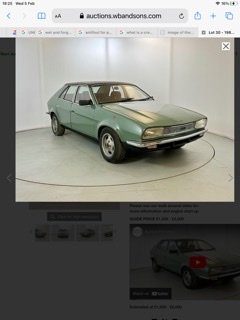
Could they start making cars like these, these were hand built by Red Robbo
and only a few sold.
 

Attachments

  • C4CF06ED-737B-4BB6-809B-B4419B099BF4.jpg
    C4CF06ED-737B-4BB6-809B-B4419B099BF4.jpg
    19.7 KB · Views: 8
That might save enough money to keep building the wooden mock ups as well….. 😂

Well we seem to have descended into a warren of accounting jargon and boardroom technicalities. As someone who’s never written out a business plan I’ve had to sit out on the sidelines for a while.

At one point @jfm used words I recognise to help explain things and it all seemed to make sense.

I wonder if my fag packet methods might work here:

Annual turnover £300 million.

Number of employees 3,000

Revenue per employee £100k

Given the quality of employee required - they’re not selling burgers and chicken nuggets, you can see how things start to get squeezed when you factor in somewhere to work from and materials to work with. You’ll easily fit far more value in materials than your wage each day.

If you had fewer people and did less of the processes yourself you’d need less space and boy do we all know how expensive factory space is.

I know I keep getting told off for using automotive comparisons but car makers use just in time supply chains to great effect and each supplier is a master of their own field.

Design remains in house and you assemble. As much manufacture as possible is done elsewhere.

It also makes it really easy to reject sub standard parts because you don’t have to pay. Similarly you are free to choose the best technology, not just the technology you happen to own.

That might save enough money to keep building the wooden mock ups as well….. 😂
Just off-topic for a sec.... why can't good CAD with VR be a great substitute for old fashioned mockups?
 
Just off-topic for a sec.... why can't good CAD with VR be a great substitute for old fashioned mockups?
I hope they have CAD to start with, if not things are really bad for them :-)
VR is the right tool for the job (imho) a VR theatre or a VR cave even is way way way cheaper than a ply moc and you can change whatever settings in minutes are review it with the customer if you wish walking around wearing some glasses.
a 1k VR helmet would do the job nicely and is the cheapest solution known to mankind for that sort of work :p

V.
 
I hope they have CAD to start with, if not things are really bad for them :)
VR is the right tool for the job (imho) a VR theatre or a VR cave even is way way way cheaper than a ply moc and you can change whatever settings in minutes are review it with the customer if you wish walking around wearing some glasses.
a 1k VR helmet would do the job nicely and is the cheapest solution known to mankind for that sort of work :p

V.
VR Cave/tunnel is really expensive, and much of the capability is now in headsets. The investment in software for the cave was £300k a year. Tough to justify.
 
I hope they have CAD to start with, if not things are really bad for them :)
VR is the right tool for the job (imho) a VR theatre or a VR cave even is way way way cheaper than a ply moc and you can change whatever settings in minutes are review it with the customer if you wish walking around wearing some glasses.
a 1k VR helmet would do the job nicely and is the cheapest solution known to mankind for that sort of work :p

V.
That's the thing, they'll definitely be using CAD to design them. The thought of a plywood mockup makes me cringe!
 
  • Haha
Reactions: vas
VR Cave/tunnel is really expensive, and much of the capability is now in headsets. The investment in software for the cave was £300k a year. Tough to justify.
P., I'm pretty sure these prices are no more, slashed a decade or so when they moved the "engines" to linux boxes.
But yes VR headsets are the real solution!
 
Last edited:
VR Cave/tunnel is really expensive, and much of the capability is now in headsets. The investment in software for the cave was £300k a year. Tough to justify.
P, if they are burning money at the rate they are, a Cave is small change for them :p
 
Which elements remain in house beyond assembly? Moulding and what else?
Don't take anything as a given.
Do you know what Azimut, Benetti, Baglietto, Ferretti, Canados, Riva, CRN, MCY, Pershing, and several other builders have in common?
The fact that some of their hulls were moulded by a (relatively) tiny company in NE Italy, which I bet neither you nor most if not all other forumites never heard of.
I kid you not.
 
I can’t help but feel I’d be unpopular. Maybe if you do the pre-pack stuff and I swing in saying don’t worry everyone all is not lost. For some of you.

Of course the reality is that many would presumably find employment in the newly formed specialist supply chain. They’re just wearing Sid’s stainless steel or Wendy’s wiring loom tops not Princess ones. Scope to do well as a smaller specialist entity who possibly gets to serve more than just one company. Trend do it with the glass.

Which elements remain in house beyond assembly? Moulding and what else?
Anything that feels and touches like a Princess should. Which does not have to include the hull, or the bare superstructure.
 
Don't take anything as a given.
Do you know what Azimut, Benetti, Baglietto, Ferretti, Canados, Riva, CRN, MCY, Pershing, and several other builders have in common?
The fact that some of their hulls were moulded by a (relatively) tiny company in NE Italy, which I bet neither you nor most if not all other forumites never heard of.
I kid you not.
Not just in NE but also in the big Tuscany boat building zone. Several independent hull moulders there make hulls for Ferretti group, Leopard and many others who choose to buy in their hulls. See 09:42 of this video for delivery of a bare Riva Argo hull to Ferretti's La Spezia yard ready to be made into a boat.

Sanlorenzo do substantially the same by separating moulding, except that they own their moulding factory. It is on site in Massa, 10km from where they build the boats. In this factory all they do is mould hulls and decks, and deliver them bare just as in the video linked above. Easy to see costs independently.
 
Not just in NE but also in the big Tuscany boat building zone. Several independent hull moulders there make hulls for Ferretti group, Leopard and many others who choose to buy in their hulls. See 09:42 of this video for delivery of a bare Riva Argo hull to Ferretti's La Spezia yard ready to be made into a boat.

Sanlorenzo do substantially the same by separating moulding, except that they own their moulding factory. It is on site in Massa, 10km from where they build the boats. In this factory all they do is mould hulls and decks, and deliver them bare just as in the video linked above. Easy to see costs independently.
This way they can hone skills, improve quality and efficiency. Princess/Fair/Sun should try and learn from these. In the same way that the Europeans and Koreans learnt car production techniques from the Japanese in the 80’s. The irony being that the Japanese learnt from the Americans in the 50’s and 60’s.
 
So many moulders in Italy. In Italy but especially the Pisa to Genova area you can go with an idea and a design in your head and build the thing.
Some boat builders actually started that way in recent years or decades. It is much more easy in that area especially for semi-custom/custom yachting.
In that area alone there is like a dozen moulders, but not only those, furniture makers, and problem solvers of any kind.

It is a school and an industry which has been build onward of the fifties with wood boat and yacht building starting in the area of Viareggio and Pisa and Genova and then always expanding outwards.
 
British boat building has already died and the fairline saga is just one more nail in a coffin holding picton, phantom, ring, broom (still going as a business), shakespeare, fletcher, moody, westerly, mg yachts, southerly, achilles, albin, newbridge, cobra, mirage, jaguar, prout, sadler, hunter, elizebethan, invicta, leisure, plancraft, driver, nicholson.....

I could go on and on. The sailing market is bereft of british suppliers, the motorboat market down to two.

Yet you go to the boot show, or grand pavois in la rochelle and you will see make after make of boat, large and small, power and sail, who, in the main are not marketed or sold in the uk.

The uk manufacturing sector is just not competetive, brexit hasn't helped and the domestic market is too small and been shrinking too long.

Someone early on in this thread asked why nobody looked at selking smaller boats. Well back in the late 90s early 2000s we tried importing a small cruiser/racer, around 24 ft, indeed fullcircle on this forum helped us at a couple of boat shows. There was very little interest in the smaller models. People want bigger and bigger.

In answer to the original question. British boat building, in numbers anyway, is fe@ked, will never come back and can't come back.
 
I can’t comment on this, but I doubt we can compete in the UK with Polish, Italian and Turkish yards.
This way they can hone skills, improve quality and efficiency. Princess/Fair/Sun should try and learn from these. In the same way that the Europeans and Koreans learnt car production techniques from the Japanese in the 80’s. The irony being that the Japanese learnt from the Americans in the 50’s and 60’s.
The Turkish are copying the Italian model in the Antalya free zone.
 
Sanlorenzo do substantially the same by separating moulding, except that they own their moulding factory. It is on site in Massa, 10km from where they build the boats. In this factory all they do is mould hulls and decks, and deliver them bare just as in the video linked above. Easy to see costs independently.
To be fair, AFAIK, Princess do much the same - a lot of the hull parts are moulded in a separate facility and "trucked" into assembly facilities overnight - hence the need for Police car escorts. So should be easy to separate costs as well. For example when we visited the factory (a while back now) the 67 was moulded off site. The hulls were brought into Newport Street and attached to a production track with (in our case) 5 other boats at various stages. Every now and then the track moved and a finished boat came out of the other end. But my point is that these hulls were made in a separate facility.
 
Last edited:
Top