Do oil rigs use radar?

Cerebus

N/A
Joined
4 May 2025
Messages
1,185
Visit site
Do oil rigs use radar?
Do other non moving ‘things’ like big buoys (forget their name) in North Sea use radar? (This one I doubt unless remotely viewed).
 
Yes. For a variety of reasons such as obvious ones such as monitoring ships, incoming flights but also for weather monitoring and increasingly for security.

Not sure what you mean by 'big bouys' (SBMs?) but remote systems have monitoring systems which are linked by radio, video or acoustics.
Subsea hardware is monitored acoustic systems and sometimes hard wired
 
Stuff like floating storage off take systems, will not. Also anchors for semi-submersibles can be prepaid with large floats to mark them, before the semi sub is on location. They will not be active, or even have radar reflectors. Position will be stated in TNM, also movements can be announced via Navtex.

Worth getting the chart and lates NTM of the area. However, you need to be pretty unlucky to hit them.

Instalations (catch all phrase) will have standby vessels, shared, or individual in location, monitoring for approaching vessels in the Uk NS sector. Other regions maybe not.
 
As ever, it depends? What sea areas are you talking about?
Mobile, Rigs stand alone or work-overs?... or fixed installations?

UK. Eg Liverpol Bay project, the main production facility (Douglas oil and gas) is in the "central reservation" of the Liverpool TSS. Some parts Very close inshore...
Therefore it is required by HSE (and others) to operate a highly developed watch scheme, including 24hr manned radars, ashore and afloat. Guard ship too, plus usual supply boat traffic.
There is a small self propelled jackup rig that does work overs. As this is itself a vessel (a "lift boat"), it has usual navaids and some nav crew.
The floating storage "tanker" installation has a Marine crew, 24 hrs manned radars.
All very well lit with flashing "U" nav lights, as well as lots of work lights. Nav Lights on any one individual unit must be synchronised to avoid confusion.
UK HSE, trinity house etc routinely check all this...

In Nigeria, you'd be lucky to get any light at all on some unmanned production installations.
Some areas so hazardous that we never moved at night....not that unlit platforms are your biggest danger in that part of the world...
 
Last edited:
We were called by a rig at night when sailing past the Humber advising us to change course by 20degs as we were in danger of getting too close.

In the UK there are enforceable statutory exclusion zones around established units. Usually 500m. Charted if permanent.
Some are very vigorously protected by guard ships, some of these are substantial "tugs", and ultimately will "nudge" you off a collision course!
 
I would say yes to the ones off the Fylde coast, we used to fish the wreck of the Montreal which is located near to a rig, even in fog they knew we were on our way, they would send a rib out to meet us and ask us what we were doing, all very friendly, we would give them the latest newspaper and they would go back to the rig,
Also when sailing back from the IOM we have been approached , in a friendly way, there is a 500 metre exclusion zone in operation.
 
We were called by a rig at night when sailing past the Humber advising us to change course by 20degs as we were in danger of getting too close.
Yes - that was the Amethyst rig. SO yes, they do have radar and keep an attentive watch. Further, they must have verified the radar visually as they knew what lights I was showing; I have a radar transponder so they couldn't have told from the strength of the radar reflection.
 
Some of the platforms we fly to in the central and northern North Sea (UK) have radar, but not many. They all have (although some groups of close platforms share) standby boats who among other things guard the platform and its 500m zone. Mobile drilling rigs also have standby vessels when on station, other mobiles have standard radar.

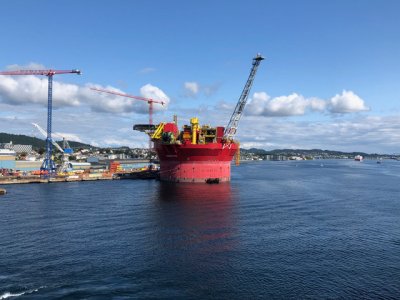
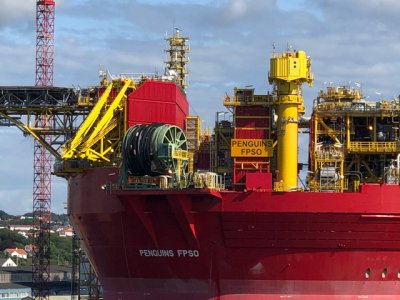
I remember in a previous career being in a Risk Assessment meeting with a client for the installation of a mooring system for an FPSO. The client posed the scenario (supported by a series of slides showing a vessel collide with a platform) of a vessel on a collision course with our installation vessel while laying the mile long 5” steel mooring cables. The offshore manager stepped up and said that we would take all means of contacting the vessel and alerting it but ultimately we would cut the mooring cable and run. The client blanched. They hadn’t ordered a spare cable. Thankfully all 10 were installed without mishap
 
Top