Do I need yacht varnish for internal wood?

RogerFoxTerrier

Well-Known Member
Joined
28 Aug 2024
Messages
137
Visit site
I've used Epifanes varnish for external woodwork, and have been very impressed. But it's not cheap!

Do I need yacht varnish for internal wood (I'm making a new control panel) or is there something more cost effective?

Ta
 
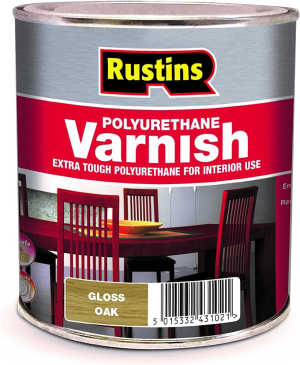
Polyuraehane varnish will do the job.
Use a cheap (disposable ) brush.
Brush on and wipe off with a lint free rag (old tee shirt).
Light sanding with 300 grit or finer between coats
3 coats. Job done.
Gary
1765456663723.png
Amazon.co.uk
 
The old way and yet to be bettered IMHO ..... thinned traditional varnish .. wiped on ... sanded back ... wiped on ... sanded back ... keep doing it until grain 'hairs'no longer rise ... then multiple coats of very thin diluted varnish .. gradually reducing the dilution till final coat is near full strength varnish.
 
The old way and yet to be bettered IMHO ..... thinned traditional varnish .. wiped on ... sanded back ... wiped on ... sanded back ... keep doing it until grain 'hairs'no longer rise ... then multiple coats of very thin diluted varnish .. gradually reducing the dilution till final coat is near full strength varnish.
Have you tried 2 pack varnish?
Im revarnishining the companion way steps.
This afternoon, sanded all the old varnish off with 120 grit disc in angle grinder then 80 grit in orbital sander.
Then 3 coats of varnish. Will sand down with 120 grit orbital sander tomorrow then 1 or 2 coats to finish.
The advantage of 2 pack is that it cures rather than evaporates.
 
Have you tried 2 pack varnish?
Im revarnishining the companion way steps.
This afternoon, sanded all the old varnish off with 120 grit disc in angle grinder then 80 grit in orbital sander.
Then 3 coats of varnish. Will sand down with 120 grit orbital sander tomorrow then 1 or 2 coats to finish.
The advantage of 2 pack is that it cures rather than evaporates.

Have you 'varnished traditionally' ?

When you have or get to see a table / top / surface that has been - then come back again ... the difference is significant.
 
The trouble with traditional varnish is that, if it gets damaged, and damp underneath, it has to be stripped back to bare wood before starting again. For a tougher, easy to repair finish, try le Tonkinois. It survived the best part of 10 years on the stairs with a houseful of kids who became teenagers in Chateau Stemar
 
Look in my signature for my About Me page and look for the link to my presentation on renovating internal woodwork. Basically you should be using a 2 part lacquer, not varnish. It dries quicker allowing up to 4 coats in a day, whereas varnish remains sticky whilst drying and cannot be recoated under 24 hours. Boat builders use lacquer rather than varnish for this reason alone, plus it costs less than varnish.
 
Original post
Do I need yacht varnish for internal wood (I'm making a new control panel) or is there something more cost effective?

How much wear is a control panel (fitted internally )going to see.

K,I,S,S.

gary
 
Look in my signature for my About Me page and look for the link to my presentation on renovating internal woodwork. Basically you should be using a 2 part lacquer, not varnish. It dries quicker allowing up to 4 coats in a day, whereas varnish remains sticky whilst drying and cannot be recoated under 24 hours. Boat builders use lacquer rather than varnish for this reason alone, plus it costs less than varnish.

Not all, some boat builders will use a sprayed 2 part polyurethane finish.
In the manual that came with my Elan (2003 vintage) it specifically states that the interior woodwork was sprayed with a two part polyurethane varnish, and revarnishing can be the same or with single part.

Morrells, as well as offering the Acid Lacquer, also offer a Poly lacquer that's recoatable in 60 minutes, so still way better than conventional varnish in terms of overcoating times & probably toughness. It should be a slightly tougher finish than the acid based one.
 
We can all attain a really nice finish whatever we use - but the main problem is matching in with original and surrounding areas. This can often lead to using a bulkhead joint / beading etc to give a transition ...
Even using the same product as the builder / fabricator - is not always the solution. Its usually not possible for us to recreate the 'paintshop' conditions and materials preparation.

Best we can do is get near to matching ... or deliberately mis-match and create transition borders.

I suggested very early on Furnture Lacquer - available in many forms and wood shades ... having spent many years around boat builders and yards - the use of Lacquers was evident.

I have areas of water seepage damage to woodwork in my 38 .. so this thread has been useful ... but I do not expect to marry in the recoated areas without there being visible transition. One is where water has seeped in via the bulkhead compass ... not exactly an area that's out of sight !!
 
I re-did my main saloon woodwork over the course of the summer cruise this year. I used a carbide scraper to take back to bare wood then used an oxalic acid in a spray bottle to take out any black spots.

I spit the cabin into four sections - port / bulkhead / starboard and external heads. Scraped one section bare and treated it then gave it one coat of varnish. Following day repeat on different section plus second coat on first section and continued for the following week ‘till every section had its 5 coats.

I spent an hour a day over lunch doing this whilst on anchor and in the end was a pleasant way of refinishing the cabin. Not being able to do multiple coats in a day was not an issue and very happy with the results.
 
I also have my 25ft Motor Sailer galley area to 'varnish' having fitted new woodwork after ripping out old to repair stbd bilge keel.

Have a couple of guys pushing me to allow them to do the job ... they say in return for all the sailing and help I give them ..

Boats mid 70's .... retired to the river .... so I think I'll let them get on with it .....
 
Top