
long_ben
Member
So further to my post about my Crescent 3.9hp outboard... as part of my budget dinghy solution, I have an old Avon which was slowly loosing air. After inflating and working my way round all the seams and surface with a spray bottle, I have traced the sources of the leaks to the areas around the valves. These seem to to have been built up over time with a series of repairs on repairs on repairs... I suspect due to a fairly poorly done initial valve replacement. Not being too keen on the idea of adding to the problem, I removed the whole 'aftermarket' assembly... which - to give you an idea of it's soundness - simply peeled off after being left in the sun for half an hour.
So... it looks like the wrong adhesive was used to repair the dinghy from the outset and the previous owner had been chasing their tail with more material and adhesive ever since. Problem is... I am now left with this mess...
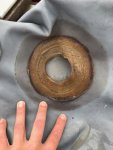
I can't decide whether to try and sand it back or to try and find some sort of clever solvent that will attack the crusty mess but not the hypalon. I have had a bit of a go at one of the valve surrounds with a bit of 120 grit but it doesn't seem to want to come off too easily. Is there a less labour intensive method of getting this stuff off? I'm not adverse to elbow grease but I also don't necessarily believe in making work for myself if there's a neat - and not prohibitively expensive - solution... thanks all... Ben
So... it looks like the wrong adhesive was used to repair the dinghy from the outset and the previous owner had been chasing their tail with more material and adhesive ever since. Problem is... I am now left with this mess...
I can't decide whether to try and sand it back or to try and find some sort of clever solvent that will attack the crusty mess but not the hypalon. I have had a bit of a go at one of the valve surrounds with a bit of 120 grit but it doesn't seem to want to come off too easily. Is there a less labour intensive method of getting this stuff off? I'm not adverse to elbow grease but I also don't necessarily believe in making work for myself if there's a neat - and not prohibitively expensive - solution... thanks all... Ben


