Diesel Bug

Porthandbuoy

Well-Known Member
Joined
27 Apr 2003
Messages
5,868
Location
The Gareloch
www.backbearing.com
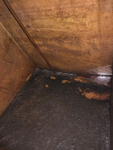
Well, I've got the inspection hatches off the diesel tanks (2 x 225 litres) and as you can see they are pretty well drained.
What you can't see in the photo is the condensation on the side of the tank which, in this case, is the hull. It was running with moisture.
Definitely an argument for keeping the tanks topped up to the brim over winter.

The black stuff is a mat of slimy, 'orrible diesel bug. The only thing I can think to do is pressure wash with hot, soapy water, drain and repeat until sparkling.
Once that's done, and the tank is dry, I'll be topping up with diesel, adding Star Tron and Fuel Set to kill any bugs left and disperse remaining moisture.
I'm also making up a fuel polishing rig using a 12V pump and a Racor filter clone fitted with a 30 micron cartridge. I'll probably go down to 10 micron eventually.

Just posted this as I thought some of you might find it interesting and/or scary ;)
1641384472390.png
 
Last edited:
Clean out what you can and then I would use a heavy bug busting dose of Marine 16.

Both our Island Packets had bugged tanks, ones impossible to clean as the only access was through a 38mm hole where the fuel gauge fitted.

The filters required regular changing at short intervals initially, all fine after the first season.
 
A bit (like not a lot) of petrol in the diesel will give it a wee turbo boost !
I was very picky with fuel over the lockdowns, only getting it from busy service stations in 20l jerry cans.
A friend filled up at a quiet marina, and had untold issues with bug -
 
A similar small amount of petrol in my tractor's fuel made it run like a dog on three legs and smoke horribly.
I wouldn't reccommend it.
 
I had the same problem on our motor boat, and also built a fuel polisher. May I suggest you add a demijohn on the input.

The fuel comes up though a copper pipe, pushed down the filler tube, to the bottom of the tank.
then a rubber pipe to the top of the demijohn,
then a copper pipe through the rubber bung to the near bottom of the demijohn, .
Another copper tube from 3/4 the way up the demijohn out through the rubber bung at the top.
Then rubber tube to the system as you describe it.
This gives a reservoir for water and gunge to settle out before the filter, that you can easily see if what is coming out.

My system is built onto a stand on which the demijohn sits / is held, the filter and pump are bolted to the board near the top.

The first time I used it it had to have water taken out of the demijohn several times. I reckon a total of about 2 gallons.

Now every time I go down to work on the boat or be on it not going anywhere, the fuel polisher is set up and left running . The following couple of times a little more water came out, and I suppose I've changed the filter half a dozen times.
The tank has just the fuel filler hole, a fuel takeout pipe and a fuel return pipe, so it's almost impossible to get into to clean it.
I now add an anti bug additive when refueling...
 
I had the same problem on our motor boat, and also built a fuel polisher. May I suggest you add a demijohn on the input.

The fuel comes up though a copper pipe, pushed down the filler tube, to the bottom of the tank.
then a rubber pipe to the top of the demijohn,
then a copper pipe through the rubber bung to the near bottom of the demijohn, .
Another copper tube from 3/4 the way up the demijohn out through the rubber bung at the top.
Then rubber tube to the system as you describe it.
This gives a reservoir for water and gunge to settle out before the filter, that you can easily see if what is coming out.

My system is built onto a stand on which the demijohn sits / is held, the filter and pump are bolted to the board near the top.

The first time I used it it had to have water taken out of the demijohn several times. I reckon a total of about 2 gallons.

Now every time I go down to work on the boat or be on it not going anywhere, the fuel polisher is set up and left running . The following couple of times a little more water came out, and I suppose I've changed the filter half a dozen times.
The tank has just the fuel filler hole, a fuel takeout pipe and a fuel return pipe, so it's almost impossible to get into to clean it.
I now add an anti bug additive when refueling...
Sounds great and a lot cheaper I would imagine but the simpler option for me was to buy one of these

Home

Works a treat and often amazed at the amount of water left over in it once Ive finished filling up. Stops the spills from Jerry cans to when I use them.
 
You may be interested in this piece of equipment displayed on the Sailing Cadoha site
Diesel cleaner
They have regular updates on its performance & having large tanks you may find it worthwhile
At £1000 that is a rather expensive solution.
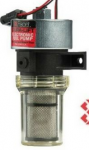
It looks like it uses a Facet pump like this at £100 Facet so maybe there is scope for assembling a cheaper version.

1641460522198.png
 
You may be interested in this piece of equipment displayed on the Sailing Cadoha site
Diesel cleaner
They have regular updates on its performance & having large tanks you may find it worthwhile

At around a £1,000 for the whole caboodle, I don't think so.
My port & starboard tanks are cross-linked from the very bottom, with isolation valves and a common drain. I've ordered the parts that will let me draw from the common drain, and hence either tank, suck it through a Racor 500 filter clone (chinese copy) using a 12Vdc pump (~70 L/hr), and by means of a Y diverter valve re-route the clean diesel back to the tank. Total cost circa £120 including a box of filter cartridges.
I could use the rig to transfer fuel from one tank to the other, but there is a risk of overfilling if I wasn't carefull.
 
You may be interested in this piece of equipment displayed on the Sailing Cadoha site
Diesel cleaner
They have regular updates on its performance & having large tanks you may find it worthwhile

Not impressed that he removed the tank drain valves and installed a hosetail elbow instead. Hose chafes or rots through and he's got a bilge full of diesel.
 
Sounds great and a lot cheaper I would imagine but the simpler option for me was to buy one of these

Home

Works a treat and often amazed at the amount of water left over in it once Ive finished filling up. Stops the spills from Jerry cans to when I use them.
On the Norfolk broads we don't fill up from jerry cans. we pull up to a boat yard filling pump and the staff fill her up just like a old time petrol station. That filter couldn't take the amount of fuel that pours in and I doubt you'd get the staff to stand there and use it.. However If I were to need to use a jerry can that would be a good idea.
 
Last edited:
A bit (like not a lot) of petrol in the diesel will give it a wee turbo boost !
I was very picky with fuel over the lockdowns, only getting it from busy service stations in 20l jerry cans.
A friend filled up at a quiet marina, and had untold issues with bug -
Great to hear other people doing the same as me.

I just wish others would look carefully where they source their diesel from.
 
On the Norfolk broads we don't fill up from jerry cans. we pull up to a boat yard filling pump and the staff fill her up just like a old time petrol station. That filter couldn't take the amount of fuel that pours in and I doubt you'd get the staff to stand there and use it.. However If I were to need to use a jerry can that would be a good idea.
I've used a Mr Filler for three years, you will be surprised at the amount of crud it captures.
 
Top