Diesel Bug

Assuming you can reach inside, I suggest a 2" wall paper scraper and a carton. You aren't going to clean that lot with some chemicals, its got the consistency of axle grease. Been there and go the t shirt, but having scraped it all out and given it a wash with clean diesel, no problems since.
 
On the Norfolk broads we don't fill up from jerry cans. we pull up to a boat yard filling pump and the staff fill her up just like a old time petrol station. That filter couldn't take the amount of fuel that pours in and I doubt you'd get the staff to stand there and use it.. However If I were to need to use a jerry can that would be a good idea.
You are right about the smaller models, when we use the fuel pumps it's a pain but they make a model with 2 filters inside that copes much better with fuel pump flow rates. It is considerably more expensive than the single filter versions hence my bit where I said your home made filter is probably a lot cheaper.
Horses for courses but it is very easy to use, clean and dump water and dirt from when finished with.
 
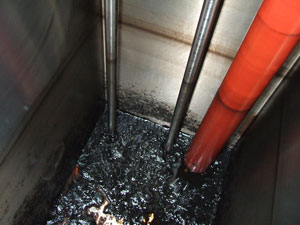
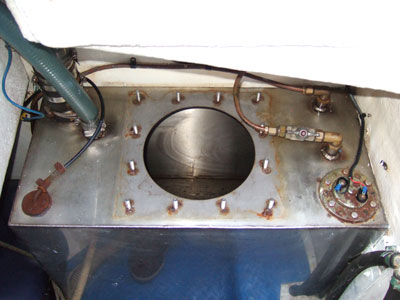
Well, I've got the inspection hatches off the diesel tanks (2 x 225 litres) and as you can see they are pretty well drained.
What you can't see in the photo is the condensation on the side of the tank which, in this case, is the hull. It was running with moisture.
Definitely an argument for keeping the tanks topped up to the brim over winter.

The black stuff is a mat of slimy, 'orrible diesel bug. The only thing I can think to do is pressure wash with hot, soapy water, drain and repeat until sparkling.
Once that's done, and the tank is dry, I'll be topping up with diesel, adding Star Tron and Fuel Set to kill any bugs left and disperse remaining moisture.
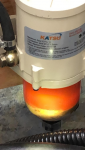
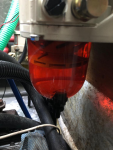
I'm also making up a fuel polishing rig using a 12V pump and a Racor filter clone fitted with a 30 micron cartridge. I'll probably go down to 10 micron eventually.

Just posted this as I thought some of you might find it interesting and/or scary ;)

View attachment 128048
Go easy on the biocides. Can cause short term issues for sure.
 
Well, I've got the inspection hatches off the diesel tanks (2 x 225 litres) and as you can see they are pretty well drained.
What you can't see in the photo is the condensation on the side of the tank which, in this case, is the hull. It was running with moisture.
Definitely an argument for keeping the tanks topped up to the brim over winter.

The black stuff is a mat of slimy, 'orrible diesel bug. The only thing I can think to do is pressure wash with hot, soapy water, drain and repeat until sparkling.
Once that's done, and the tank is dry, I'll be topping up with diesel, adding Star Tron and Fuel Set to kill any bugs left and disperse remaining moisture.
I'm also making up a fuel polishing rig using a 12V pump and a Racor filter clone fitted with a 30 micron cartridge. I'll probably go down to 10 micron eventually.

Just posted this as I thought some of you might find it interesting and/or scary ;)
On the Norfolk broads we don't fill up from jerry cans. we pull up to a boat yard filling pump and the staff fill her up just like a old time petrol station. That filter couldn't take the amount of fuel that pours in and I doubt you'd get the staff to stand there and use it.. However If I were to need to use a jerry can that would be a good idea.

Ignore the staff and pre filter the fuel. Alas I sold my 3 stage BAJA fuel filter with my last yacht, and now they are unobtainium . Practical Sailor did test some filter funnels, so if I can't find a good used Baja, one of those will have to do.

Reintroducing Mr. Funnel - Practical Sailor (practical-sailor.com)

If the staff really will not let you filter their fuel, BUY some fuel cans. It's nuts to put potentially contaminated diesel directly into a fuel tank without pre filtering it, with a filter that will stop water.
 
Last edited:
Halfway through recirculating through a 100 micron washable filter while stirring up the tank contents with a scouring pad on a stick.
Couldn't scrub everywhere though on account of the baffles.

1645051193537.png

And after a few hours through a 30 micron filter.
1645051218127.png
 
Well, I've got the inspection hatches off the diesel tanks (2 x 225 litres) and as you can see they are pretty well drained.
What you can't see in the photo is the condensation on the side of the tank which, in this case, is the hull. It was running with moisture.
Definitely an argument for keeping the tanks topped up to the brim over winter.

The black stuff is a mat of slimy, 'orrible diesel bug. The only thing I can think to do is pressure wash with hot, soapy water, drain and repeat until sparkling.
Once that's done, and the tank is dry, I'll be topping up with diesel, adding Star Tron and Fuel Set to kill any bugs left and disperse remaining moisture.
I'm also making up a fuel polishing rig using a 12V pump and a Racor filter clone fitted with a 30 micron cartridge. I'll probably go down to 10 micron eventually.

Just posted this as I thought some of you might find it interesting and/or scary ;)

View attachment 128048
That looks very similar to what mine looked like!
Tank1.jpg

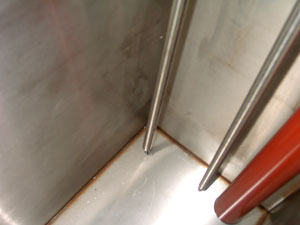
I shovelled out the shit with a trowel, mopped it with rags, used "soapy water" then steam cleaned everything - removed all the pipework I could and blasted steam down them.
Here's the result:
Tank2.jpg

I refilled with nice clean red diesel with prophylactic "Fuel Set" and everything was hunky dory. I wish I'd done it earlier...
I couldn't have done it without the inspection hatch...
TankA.jpg
Filter.jpg
 
Last edited:
12 diesel bug treatments tested - Practical Boat Owner (pbo.co.uk)

That articles is worth a read, BUT I would like to point out that the solution is not fuel additives, it's cleaning the tank out, or if you have to suffer poor fuel quality issues, use of a pre filter before fuel enters the tank.

If you do decide to use a fuel additive make sure it is made by a real good company like Liqui Moly, otherwise there is a risk it might contain cheap chemicals that can cause long term damage to injection pump seals.
 
I had a fuel blockage last season in the Ionian. This was in spite of dosing with Marine 16. The blockage was a large bit of crud blocking the pick-up. My mistake was to have had the course screen that used to be around the lick up removed. Its now back!!

I have now dosed with an updated version of Marine 16 that is meant to be better for Greek bio-diesel

I do have a Fuelguard filter upstream of the Racor. I am thinking of adding the little polishing pump. Fuel Polishing - Marine (fuel-guard.co.uk) I do wonder how often the pump ought to be run
Any advice?
TudorSailor
 
I had a fuel blockage last season in the Ionian. This was in spite of dosing with Marine 16. The blockage was a large bit of crud blocking the pick-up. My mistake was to have had the course screen that used to be around the lick up removed. Its now back!!
The pick-up in my tank was just a piece of pipe - no screen. You can just see it in pic 2 in my #27. I shortened it by ~15mm in the hope that it would be less likely to be sitting in crud, accepting that it would reduce the effective capacity of the tank.
 
Top