
Biggles Wader
Well-Known Member
Well worth it. Having a sump with a drain plug makes things so much easier and makes preventive maintenance actually happen, thus solving the problem before it occurs.Part the plan for winter

Well worth it. Having a sump with a drain plug makes things so much easier and makes preventive maintenance actually happen, thus solving the problem before it occurs.Part the plan for winter


I’d still like to know whether the water fully emulsifies using M16 if anyone can shed any light? There must be water but I’ve never seen any.
But according to the PBO test it does ........According to the Marine 16 website, their Diesel Bug Treatment won't emulsify water in the tank.

But according to the PBO test it does ........
The 2016 one in my OP. 12 diesel bug treatments tested - Practical Boat OwnerWhich PBO test is that? It doesn't seem to mention it in the 2007 test.
The 2016 one in my OP. 12 diesel bug treatments tested - Practical Boat Owner
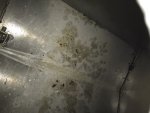
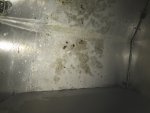

Its a shame whilst the tank is empty that you couldn't add a small drain cock at the bottom, but that of course depends on accessibility. You sometime wish you could take the Builders/Designers and place them against the wall....... It is totally negligent in a sea going yacht.Thought I’d finish this off. I ran the tank down before lifting out for the winter, with the gauge just into the red I reckoned I’d have 30-40l left to pump out. Turned out I only had around 15l left so good to know for the future. I accessed the tank through the hole for the gauge sensor and used an electric pump to remove the remaining diesel and crud from the bottom of the tank. I then fixed an old fashioned type dish mop to a pole and had a good scrub round, adding another litre of diesel to wash the bottom of the tank. Another pump out and mopping and the result is a pretty clean tank. I’ll give it another scrub to get any remaining loose stuf out but generally it looks ok. Still puzzled as to where the bug came from as no sign of any water in the tank but all should be good for next season ?
View attachment 104703View attachment 104704
Just a quick comment on advice on the shell website a few years back. They said that their water removing product was NOT suitable for low volume low use environments, when the finally divided particle of water in the fuel would provide a playground for the development of the bug, providing in effect a huge surface area on which to interact.OK, didn't notice that. Marine 16 isn't really intended to remove water, the glycol-based treatments are supposed to be better at that I believe. However, it's pretty good stuff at killing bugs, and once you sort your tank out you shouldn't have any further problems.
A drain at the bottom is only any use if you can get something under it. It's also a leak risk, many owners have had problems over the years with tank drains dripping including one or two on here.Its a shame whilst the tank is empty that you couldn't add a small drain cock at the bottom, but that of course depends on accessibility. You sometime wish you could take the Builders/Designers and place them against the wall....... It is totally negligent in a sea going yacht.
Not quite sure what I was looking at here - a photo taken from the top of the noce clean bottom? If so you have done a good job! I note that the bottom is slightly shapes to provide a bit of a collection area. If no room for drain cock, just do an annual suction job which will work well.
 Yes, there is a ‘V’ collection area at the bottom of the tank, the location of the fuel pick-up would make a drain cock impractical. I’ve just remembered I have a high pressure nozzle for my steam cleaner so I’ll steamclean this afternoon. The sides of the tank you can see are baffles so impossible to get beyond them. I’m hoping though that all the muck collected at the bottom of the tank and has therefore been ‘got’? I’ll drain and clean the tank annually now, not a big job and fresh diesel in the new season.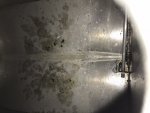
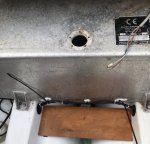
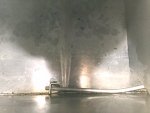
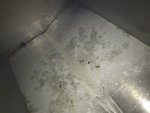
Brilliant! At least your designer did di a v shaped collection area - hardly a sump! but provided you extract a few litres every years from the bottom - you have broken the back of it.
The clear stuff could be water.We used to check transformer oil when I was at steelworks by putting a sample in a test tube over a gas flame and if it crackles and spits you have water.You could put a little in a pan and warm up outside with a gas torch.Be careful that you dont get too hot and wear goggles.Whatever the clear viscous fluid is, it's not wanted in the tank.
'Diesel Bug' is a whole zoo's worth of different oragnisms, then there are breakdown products from diesel reacting with or catalysed by metals like copper. Then there's the possibility that someone has added something other than diesel to the tank, like veg oil as fuel.
Your tank sounds fairly severe.
Personally I would put a suction pipe to the bottom and see what comes out.
Remove any water that way.
Then agitate it to get as much crud as possible into suspension, then suck it all out into drums and see what you have.
It might be worth getting and endoscope or some small camera to see inside the tank?
Whatever it was has now goneThe clear stuff could be water.We used to check transformer oil when I was at steelworks by putting a sample in a test tube over a gas flame and if it crackles and spits you have water.You could put a little in a pan and warm up outside with a gas torch.Be careful that you dont get too hot and wear goggles.
It may well have been emulsified water but now history☺I’ll empty and clean the tank every year now, not a big job but great for peace of mind. I’d still like to add an access hatch but really don’t fancy trying to cut the hole with the tank in situ, and even less keen on dragging the tank out....Good job, especially considering it was undertaken using only the level sender access. Our tank is similar in this respect (no access hatch). It was steamed cleaned when the new engine was installed (only 300 hours and still looks clean inside). But this gives me the confidence to tackle the job on ours when the time comes.

I was told recently that sump taps on boat fuel tanks are not now permitted, but access hatches are required. If anyone has a copy of BS ISO 21487: "Permanently installed fuel tanks" , perhaps you could check!Shame the stupid designer/builder did not put a sump tap in !

See section 6.1 here https://www.google.com/url?sa=t&sou...FjAKegQICRAB&usg=AOvVaw2D5IbWs0cLxOsHOqIPCbszI was told recently that sump taps on boat fuel tanks are not now permitted, but access hatches are required. If anyone has a copy of BS ISO 21487: "Permanently installed fuel tanks" , perhaps you could check!


