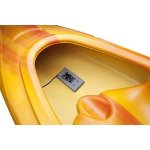
Depth transducer liquid, water or oil ?

True ...

But even cheaper with plastic water pipe !!
OK, OK!
But the petrol used driving to a plumber's merchants to buy the plastic pipe and to a chemist to buy castor oil.

Not forgetting my valuable time. ;)

(Although if my time was that valuable I wouldn't be wasting it on this forum!) :confused:
 
The "raymarine" (well airmar of course) I have just bought specifies Ethyl Glycol. Getting hold of it is not as easy as I expected so I may just anti-freeze

My current one is quite happy in sunflower oil or whatever I had in the kitchen at the time
 
Like everything else I reckon .... a new method comes about because someone has something else handy and uses that ... writes an article on a forum or whatever and its re-invention of the wheel again.

I think you may have missed the point. The use of foam to help adjust the transducer to the angle of the hull is the important difference. It may be a wheel but now it has roller bearings ?? Plastic pipe works fine if you have a through-hull transducer that you want to mount in-hull (DIY version of the Airmar P79), but the box and foam method is much easier for fixing and adjusting transducers designed for transom mounting.
 
Gotta say that I'm not sure about this foam malarkey. The author says you don't need much liquid to fill the box because of the foam, which implies that the foam is closed cell. If it's a light foam then those cells have air in them. The whole point of immersing the transducer is to make use of one of the properties that separates liquids from gases - incompressibility. Put foam in there and you've added bubbles.

Acksherly, prompted by typing the above, I've just had a chat with a techie at A British Manufacturer of echo sounders. He agrees that a closed cell foam is daft. They don't recommend bath silicone because of the possibility of getting bubbles. He had a little chuckle about the foam.

I used clear silicone, squeezed carefully without bubbles, it's fine. I'm not checking the depth of the Atlantic Trench.
 
Gotta say that I'm not sure about this foam malarkey. The author says you don't need much liquid to fill the box because of the foam, which implies that the foam is closed cell. If it's a light foam then those cells have air in them. The whole point of immersing the transducer is to make use of one of the properties that separates liquids from gases - incompressibility. Put foam in there and you've added bubbles.

Acksherly, prompted by typing the above, I've just had a chat with a techie at A British Manufacturer of echo sounders. He agrees that a closed cell foam is daft. They don't recommend bath silicone because of the possibility of getting bubbles. He had a little chuckle about the foam.

I used clear silicone, squeezed carefully without bubbles, it's fine. I'm not checking the depth of the Atlantic Trench.
I dont think the foam is between the transducer and the hull is it.

The reason not to use silicone is because it will attenuate the signal
 
Provided your hull hasn't got too much deadrise, simpler to drill a hole in the hull and fix the transducer in place. Also has the advantage of getting the best signal.
 
As for sound transmission, it does not make a difference. Water works just as well as thick oil. (I do ultrasound testing and often use plain water).

The trick is finding some than does not evaporate, freeze, or damamge the materials (resin, bedding compounds). MAny things can work. Ethylene or glycol (straigh engine antifreeze) and glycerine are also solid choices, non-damaging to polyester, epoxy, and most sealants and gaskets.
 
I dont think the foam is between the transducer and the hull is it.

The reason not to use silicone is because it will attenuate the signal
Looks like it to me.

transducer-1-225x300.jpg


The man that I spoke to wasn't worried by the attenuation from silicone, just the potential for bubbles.
 
The "raymarine" (well airmar of course) I have just bought specifies Ethyl Glycol. Getting hold of it is not as easy as I expected so I may just anti-freeze

My current one is quite happy in sunflower oil or whatever I had in the kitchen at the time

What do they mean by "ethyl glycol" ?

Glycols are compounds with two hydroxyl (OH) groups on different carbon atoms. Ethane only has 2 carbon atoms therefore if you stick a couple OH groups on it you get

CH2OH -CH2OH

the systematic name for this is ethane-1,2- diol and the common name is ethyelne glycol ~~~~~ as found in most common antifreezes
 
Assuming that the transducer is designed to transmit in water, then you need to match the liquid you use to have an acoustic impedance close to that of water.
If the acoustic impedance is substantially different to that of water, then the echosounder won't work well or perhaps not at all, the sound will just be reflected back into the transducer.
For a typical depth sounder on a boat the match isn't critical, it just needs to be in the same ballpark, but the bigger the difference the shorter the maximum range will be.
This is list of acoustic impedances for substance which might find there way between the transducer face and the water column.

  • Sea Water 1.569 at 20 deg C
  • Caster Oil 1.430
  • Olive Oil 1.391
  • Polyester Resin 2.86
  • Steel 46
  • Air 0.462
  • Glycol - ethylene 1,2-ethanediol @ 25°C 1.845
  • Glycol - ethylene Preston II 1.76
You can see that both Caster Oil and Olive Oil are quite good, Polyester resin is OK, but both steel and air are way off.
I have transducer "glued" to the hull with silicone, because I can't get the through hull to work, and I lose a good deal of the range, down from over 100m to round abot 50m, but that's good enough for what I need. Silicon, as in a sealant is a term which cover a multitude of different formulations, has an acoustic impedance of around 19.7, definitely not a good choice but it seems to work.

Just added Ethylene Glycol ..... two different forms just to keep up .... no idea what the difference is ..... but either would do.
 
Last edited:
Looks like it to me.

transducer-1-225x300.jpg


The man that I spoke to wasn't worried by the attenuation from silicone, just the potential for bubbles.

All you are looking at there is the top of the box, the foam is around the sides of the transducer, holding it in place at the appropriate angle. There will not be any foam underneath the transducer, Salar is not that stupid.
 
I can't see the point of recommending food grade. You won't be drinking it?.

Used to be Ethylene Glycol, as in anti-freeze. But that can be toxic to marine life (allegedly), the latest recommendation is propylene glycol, random quote from the web:

"Propylene glycol is a synthetic liquid substance that absorbs water. Propylene glycol is also used to make polyester compounds, and as a base for deicing solutions. Propylene glycol is used by the chemical, food, and pharmaceutical industries as an antifreeze when leakage might lead to contact with food. "

So you might be eating/drinking it :)
 
My Raymarine transducer housing is filled with Castor Oil.

I worked for Raymarine at the time I fitted it, and was told that almost anything will do the job, but Caster Oil doesn't freeze at normal temperatures, doesn't aerate easily, is inert in respect of attacking the plastic , and unlike other oils I might be tempted to use doesn't go off and smell. I was advised against using ATF, Gear Oil, Engine Oil or similar because it's additives might attack the plastic or 'O' ring.

As the castor Oil wasn't difficult to find, and was cheap enough, I did as suggested.

Nasher.
 
All you are looking at there is the top of the box, the foam is around the sides of the transducer, holding it in place at the appropriate angle. There will not be any foam underneath the transducer, Salar is not that stupid.
Thank you for your vote of confidence Paul! Yes, the foam grips the transducer. The whole lot is sitting in a bed of liquid and because the foam is closed cell, very little liquid is needed. You can buy a foam-only sticky thingy for fixing a transducer to the inside of a hull of a kayak. The foam actually forms a container for the liquid - water in that case. Manufacturing cost about 5p, retail price £20.
 
Acksherly, prompted by typing the above, I've just had a chat with a techie at A British Manufacturer of echo sounders. He agrees that a closed cell foam is daft. They don't recommend bath silicone because of the possibility of getting bubbles. He had a little chuckle about the foam.
Beware of talking to experts. Here's the product from Garmin, not exactly an unknown name in the world of transducers. Now cheaper but still a bonkers price and no protection either. Kayak In-hull Transducer Mount | Garmin
 

Attachments

  • foam.jpg
    foam.jpg
    10.9 KB · Views: 5
Acksherly, prompted by typing the above, I've just had a chat with a techie at A British Manufacturer of echo sounders. He agrees that a closed cell foam is daft. They don't recommend bath silicone because of the possibility of getting bubbles. He had a little chuckle about the foam.

I used clear silicone, squeezed carefully without bubbles, it's fine. I'm not checking the depth of the Atlantic Trench.

He's talking rubbish, it's nothing to do with air bubbles. The reason for not using silicon is that it absorbs the sound waves and gives incorrect readings. The thicker the silicon, the greater the error.

It's also not just about not getting 100m readings. The readings can be wrong in shallow water too.
 
Thank you for your vote of confidence Paul! Yes, the foam grips the transducer. The whole lot is sitting in a bed of liquid and because the foam is closed cell, very little liquid is needed. You can buy a foam-only sticky thingy for fixing a transducer to the inside of a hull of a kayak. The foam actually forms a container for the liquid - water in that case. Manufacturing cost about 5p, retail price £20.
I need to think it over, but am I right in thinking that the water more or less envelops the foam?
 
Top