Deploying a drogue?

Mike k

Well-Known Member
Joined
28 Mar 2011
Messages
1,307
Location
Rossendale
Visit site
I would like to ask the panel for views on how and where on the boat it is best to deploy a sea drogue/anchor.

I have just bought one and it doesn't really make it clear.

Any suggestions would be gratefully received.

thanks

Mike
 
The first question will be whether this is a drogue for trailing astern or a sea-anchor for securing ahead. Richard

Mike, if you're not sure on this then just state size of boat & size/make of drogue / anchor you have purchased.
The experts on here can work from that :)
 
Last edited:
Right. That's a drogue. Designed to be deployed over the stern to reduce speed in heavy followings seas.

thanks, so if for example we had an engine failure and/or windlass failure would that be ok to slow the boat down whilst we await assistance or would I need a sea anchor ( if described as this is it for forwards deployment?)
 
thanks, so if for example we had an engine failure and/or windlass failure would that be ok to slow the boat down whilst we await assistance or would I need a sea anchor ( if described as this is it for forwards deployment?)

No, it is not a good idea for that. These drogues are designed to be used while the boat is moving, trailed off the stern to slow their speed through the water in very heavy weather- the idea is that they prevent the boat rushing forward down the face of very big waves and being pitchpoled. But they are not designed to bring the boat to a halt. Sea anchors, in comparison, are intended to bring the boat to a near-standstill in the water during heavy weather, but are deployed off the bow so the boat faces up to the waves and weather. True sea anchors are many many times the size of a drogue.

The point about both is thaty they are intended for use by yachts in open sea- with complete searoom, tens of Nm offshore- in severe weather. The aim of both is to help the boat avoid being caught beam-on to big/breaking seas which would risk it being rolled. Despite the common purpose they are not interchangeable: a sea anchor deployed off the stern would slow the boat so much she would be at risk of being repeatedly pooped (cockpit filled with water) whilst a drogue deployed off the bow would be too small to keep her heading up to weather.

Looking at your profile and assuming the boat pictured there is the one for which you have bough the drogue the proper answer is that boat is not suitable for being out in anything like the weather in which either a drogue of sea anchor as described above would be used. However as you say you have bought it to try and slow your boat's speed through the water in the event of engine failure in (I am supposing) moderate to light conditions. Because both sea anchors and drogues need there to be some force on the yacht 'pushing' the yacht away from them in order to open out and exert resistance (remember they're for use in heavy seas) you are not likely to find them doing anything much in light conditions when deployed from a gently drifting boat. In fact if you did not use floating line I wonder if it would not just sink straight beneath you. Which brings me to the proper thing to do to hold position in the event of a failure in reasonable condition and coastal waters, which is to be able to deploy your anchor (the pointy metal type) whether your windlass is working or not. If you are far enough offshore that the water is too deep to deploy your anchor, then there is no real need to hold position while awaiting rescue.

Your emergency strategy should include a means of calling for help with a position and ideally the ability to update that position, for which VHF, GPS and PLB are complimentary and excellent.

Here is a useful article on sea anchors and a specific type of drogue called a JSD which is much more powerful than the type you have; it might be helpful reading. http://www.yachtingworld.com/yachts...a-jordan-series-drogue-and-a-paraanchor-67260

ETA: if you do want to do something with a drogue, it is important to have lines and equipment for handling it which is up to spec- huge loads are exerted on even modest drogues, and you have to configure the lines such that they cannot be chafed through, rip bits out of the boat, etc etc. So there is more to it than buying the device itself.
 
Last edited:
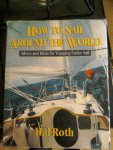
There is a good chapter in heavy weather use of drogues in this book (plus lots of other useful advice)....

1480775730524-1350721179.jpg
 
No, it is not a good idea for that. These drogues are designed to be used while the boat is moving, trailed off the stern to slow their speed through the water in very heavy weather- the idea is that they prevent the boat rushing forward down the face of very big waves and being pitchpoled. But they are not designed to bring the boat to a halt. Sea anchors, in comparison, are intended to bring the boat to a near-standstill in the water during heavy weather, but are deployed off the bow so the boat faces up to the waves and weather. True sea anchors are many many times the size of a drogue.

The point about both is thaty they are intended for use by yachts in open sea- with complete searoom, tens of Nm offshore- in severe weather. The aim of both is to help the boat avoid being caught beam-on to big/breaking seas which would risk it being rolled. Despite the common purpose they are not interchangeable: a sea anchor deployed off the stern would slow the boat so much she would be at risk of being repeatedly pooped (cockpit filled with water) whilst a drogue deployed off the bow would be too small to keep her heading up to weather.

Looking at your profile and assuming the boat pictured there is the one for which you have bough the drogue the proper answer is that boat is not suitable for being out in anything like the weather in which either a drogue of sea anchor as described above would be used. However as you say you have bought it to try and slow your boat's speed through the water in the event of engine failure in (I am supposing) moderate to light conditions. Because both sea anchors and drogues need there to be some force on the yacht 'pushing' the yacht away from them in order to open out and exert resistance (remember they're for use in heavy seas) you are not likely to find them doing anything much in light conditions when deployed from a gently drifting boat. In fact if you did not use floating line I wonder if it would not just sink straight beneath you. Which brings me to the proper thing to do to hold position in the event of a failure in reasonable condition and coastal waters, which is to be able to deploy your anchor (the pointy metal type) whether your windlass is working or not. If you are far enough offshore that the water is too deep to deploy your anchor, then there is no real need to hold position while awaiting rescue.

Your emergency strategy should include a means of calling for help with a position and ideally the ability to update that position, for which VHF, GPS and PLB are complimentary and excellent.

Here is a useful article on sea anchors and a specific type of drogue called a JSD which is much more powerful than the type you have; it might be helpful reading. http://www.yachtingworld.com/yachts...a-jordan-series-drogue-and-a-paraanchor-67260

ETA: if you do want to do something with a drogue, it is important to have lines and equipment for handling it which is up to spec- huge loads are exerted on even modest drogues, and you have to configure the lines such that they cannot be chafed through, rip bits out of the boat, etc etc. So there is more to it than buying the device itself.

Sorry about posting and then vanishing Mike ..... but I can't add anything to Bitbaltic's excellent summary. :)

Welcome to the forum.

Richard
 
No, it is not a good idea for that. These drogues are designed to be used while the boat is moving, trailed off the stern to slow their speed through the water in very heavy weather- the idea is that they prevent the boat rushing forward down the face of very big waves and being pitchpoled. But they are not designed to bring the boat to a halt. Sea anchors, in comparison, are intended to bring the boat to a near-standstill in the water during heavy weather, but are deployed off the bow so the boat faces up to the waves and weather. True sea anchors are many many times the size of a drogue.

The point about both is thaty they are intended for use by yachts in open sea- with complete searoom, tens of Nm offshore- in severe weather. The aim of both is to help the boat avoid being caught beam-on to big/breaking seas which would risk it being rolled. Despite the common purpose they are not interchangeable: a sea anchor deployed off the stern would slow the boat so much she would be at risk of being repeatedly pooped (cockpit filled with water) whilst a drogue deployed off the bow would be too small to keep her heading up to weather.

Looking at your profile and assuming the boat pictured there is the one for which you have bough the drogue the proper answer is that boat is not suitable for being out in anything like the weather in which either a drogue of sea anchor as described above would be used. However as you say you have bought it to try and slow your boat's speed through the water in the event of engine failure in (I am supposing) moderate to light conditions. Because both sea anchors and drogues need there to be some force on the yacht 'pushing' the yacht away from them in order to open out and exert resistance (remember they're for use in heavy seas) you are not likely to find them doing anything much in light conditions when deployed from a gently drifting boat. In fact if you did not use floating line I wonder if it would not just sink straight beneath you. Which brings me to the proper thing to do to hold position in the event of a failure in reasonable condition and coastal waters, which is to be able to deploy your anchor (the pointy metal type) whether your windlass is working or not. If you are far enough offshore that the water is too deep to deploy your anchor, then there is no real need to hold position while awaiting rescue.

Your emergency strategy should include a means of calling for help with a position and ideally the ability to update that position, for which VHF, GPS and PLB are complimentary and excellent.

Here is a useful article on sea anchors and a specific type of drogue called a JSD which is much more powerful than the type you have; it might be helpful reading. http://www.yachtingworld.com/yachts...a-jordan-series-drogue-and-a-paraanchor-67260

ETA: if you do want to do something with a drogue, it is important to have lines and equipment for handling it which is up to spec- huge loads are exerted on even modest drogues, and you have to configure the lines such that they cannot be chafed through, rip bits out of the boat, etc etc. So there is more to it than buying the device itself.

thank you for such a detailed and informative response - my reason for asking is that we often anchor in the river Mersey which has 10m tidal range and 8knot flow. My concern is for the event of a failure which will require an action to prevent boat being quickly floated off to jeopardy - so want to acquire something to stem the flow in the event of windlass failure or for engine failure something quick to deploy because deploying my anchor is quite time consuming as it has to be done on the bow which is precarious and slow .
 
The first question will be whether this is a drogue for trailing astern or a sea-anchor for securing ahead.

Or it is supposed to be able to fulfill both functions, albeit not at the same time?

Richard
Given that it says in the link that it is 1500 by 2200 that is a flippin big drogue! The title also is misleading, its either a sea anchor or its a drogue! Sea anchors go off the front, drogues go off the back?
Stu
 
my reason for asking is that we often anchor in the river Mersey which has 10m tidal range and 8knot flow. My concern is for the event of a failure which will require an action to prevent boat being quickly floated off to jeopardy - so want to acquire something to stem the flow

A sea anchor will still have you drifting with the tide. An anchor, or making way, are the only means to stop the boat relative to the land with tide running.
 
thank you for such a detailed and informative response - my reason for asking is that we often anchor in the river Mersey which has 10m tidal range and 8knot flow. My concern is for the event of a failure which will require an action to prevent boat being quickly floated off to jeopardy - so want to acquire something to stem the flow in the event of windlass failure or for engine failure something quick to deploy because deploying my anchor is quite time consuming as it has to be done on the bow which is precarious and slow .

I may be getting the wrong end of the stick here, but surely a drogue is to act as a kind of brake, when a yacht is being moved by the wind, or by surfing down huge waves, faster than you would want......it is to keep the stern on to waves and allow the yacht to travel at a reasonable controllable speed and avoid it ploughing into the base of the wave ahead and potentially pitchpoling.

I can't picture how it would help to control a boat drifting with the current which is what you seem to be looking for? If the boat is moving with the CURRENT not the wind, then the drogue will also be being moved with the current at the same speed?

Surely, a drogue is to counter the effects of WIND....I guess if you were being moved with wind as well it could St least reduce that element of your drift.

I've never used one, but I have read a lot!!!!! So I may be incorrect
 
Best bet is to call up Mersey Fire and Rescue stationed at the landing stage their jet boat would be with you before you have a chance to drift far.
 
so want to acquire something to stem the flow in the event of windlass failure or for engine failure something quick to deploy because deploying my anchor is quite time consuming as it has to be done on the bow which is precarious and slow .
For what you want to do a sea anchor is what you are talking about but that is also going to take quite a time to deploy.
If you feel that your engine is that unreliable I would spend time and effort sorting that out.
If your anchor is difficult to deploy, which should be first course of action if your engine fails, you should 'pre deploy' it back into the cockpit so it is ready to go from the cockpit.
Sea anchors and drogues are for use out at sea where there is sea room, not for confined spaces.

PS if your main anchor is difficult to deploy, then invest some money in a lighter weight kedge anchor with a short length of chain and an appropriate length of anchorplat.
 
Last edited:
Drogues are used in series typically 20 to 30 or more in ine subject to the weight of the boat, one drogue will do nothing to slow the boat. The question is are you intending to go long distance sailing where you have to take whatever weather comes along, if not don't bother with drogues.

Drogues should be used with spade rudders, a parachute anchor by skeg hung or long keel rudders, the reason is with a parachute anchor the boat moves backwards and that would tear off a spade rudder. We had a heavy displacement long keel boat and carried an 18 foot diameter parachute anchor with the bow bridle, partly chain in water hose, permanently set up but fortunately never had to use it.
 
Last edited:
Top