Cutlass bearing

Rappey

Well-Known Member
Joined
13 Dec 2019
Messages
4,974
Visit site
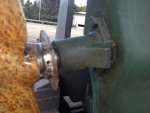
Not seen one like this before. How does it come off? There is no plate that bolts on.
Taking a guess that it just unscrews?
Will it have a press fit bearing inside or is the whole thing one piece ?Studio_20201016_212257.jpg
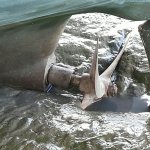
 
Looks very odd, as if the bearing housing has never been fitted. The flat area is where a traditional bearing housing would normally be but there are no bolt holes to indicate there ever was one.

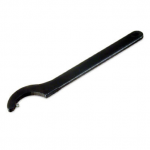
If it does unscrew, that small hole in the tube would presumably be for a C-spanner with peg to engage in.

1602880838902.png


I've got a better idea. Ask Vyv Cox!
 
There is no hole. It is just the pic.. I like your thinking though.
It's a long keeled yacht.
I'm thinking it can only be one of two things, either the housing for the bearing/bush unscrews or its part of the boat structure and the shaft needs removing to pull the bush/bearing out.
I know nothing else as it's a friends boat and I quickly took a snap as we left
 
Hi, may I suggest you look at new cutlass bearings, especially, the ones with a brass looking outer and a lining. Mine, a) did need shaft removed b) then we cut a slot, (hacksaw blade) in the lining and outer. That way it compressed and could be wrinkled out. 1963/4 long keeled hull for me!
 
My Colvic Northerner has a similar arrangement. No cutless bearing as such had a white metal bearing previously, now replaced with Vesconite. No explanation for the fixing method though.

Two shown on the website, one mine, plus some other similar ones.
 
. No explanation for the fixing method though.
Damn. Was hoping for a magical solution .
Will try for a better look today . The fitting appears to have something white where it joins the keel. Will also try to see if it has an insert or it is one piece.
 
Mine is a similar construction and caused some puzzlement until it was discovered that it was a water lubricated white metal bearing with no grub screw to retain it, just a push fit into the housing.
Yours may not be the same as you don't seem to have the water scoop (the angled bit facing forward) but the solution may be similar, devise a puller to drag the old one out or very carefully cut through the bearing with a hacksaw blade mounted in a handle to 'split' the bearing inside its housing.
With a short stern tube a puller is easily contrived from a length of threaded stud, some nuts and stout washers and a big socket to bear on the aft face of the bearing holder.

IMG_2659.JPG
 
Is it possible that the stern tube simply sticks out from the deadwood and a standard cutlass bearing slides into it? This is the arrangement on my boat although the extending part on mine is grp. To remove the bearing I take off the prop and draw out the shaft then make up an arrangement of studding, washers and tube to draw out the old bearing. In my case there are a couple of small grub screws that tighten up onto the bearing. These are hard to see with all the antifoul and muck on the hull. just a thought.
 
I would look at the housing carefully as normally you will find a grub screw that locks the Cutlass bearing in position, other wise the cutlass bearing itself should come out , or if seized you may end up collapsing it, However whatever you do measure it up first BEFORE you do anything, once the shaft is out you should be able to feel internally its length
 
I would fit a bearing about a half inch longer so I could get a mole grip on it to get it out.
That actually makes good sense !
The housing should easily be removable to then drive the bearing out and press another one in. The problem in this scenario is the housing may also be the actual cutlass bearing?


I was not able to get a good look at it today at low water as the boat was sunk deeper in the mud hiding the propellor..

Apparently - the actual name is a stave bearing. Originally, they were made of the hardwood, lignum vitae, which is resistant to rot, is very hard and doesn't swell when wet.
The name 'Cutless' is actually a tradename owned by Duramax Marine for their molded rubber stave bearing. This then evolved to cutlass bearing and became the generic name.
 
Last edited:
There is also a Stuart Turner outer bearing which uses a rubber bearing similar to a cut§ss bearing but does not have an outer shell
 
The name 'Cutless' is actually a tradename owned by Duramax Marine for their molded rubber stave bearing. This then evolved to cutlass bearing and became the generic name.
No it did not!
It's a bloody cutlEss bearing, nothing to do with being in the state of carrying a sword!
 
Cutless or cutlass ?
I found this.
The original term is cutless bearing, but that is a trade name, and the corruption "cutlass bearing" is in common use.
 
Is there a reason why people fit cutless bearings flush to the housing?
If I had that type of housing I would fit a bearing about a half inch longer so I could get a mole grip on it to get it out.
Not seen one like this before. How does it come off? There is no plate that bolts on.
Taking a guess that it just unscrews?
Will it have a press fit bearing inside or is the whole thing one piece ?View attachment 100779
Hi looking at your picture my theory is a new prop shaft has been fitted in the past of a smaller diameter than the original fit. My thinking is, because the shaft is smaller whoever fitted the new prop shaft could not obtain a cuttless bearing of the correct outside diameter to fit the keel so they made an insert to fit the keel with a bore to accept a new bearing, also i feel the new shaft was too long but because of a taper both ends of the shaft and without machining the shaft to reduce it to its correct length, the cutless bearing when fitted was left long to take up some of the overhang of the shaft and judging by the gap between shaft and cuttless bearing it is in need of replacing. Jim
 
Is there a reason why people fit cutless bearings flush to the housing?
If I had that type of housing I would fit a bearing about a half inch longer so I could get a mole grip on it to get it out.
There is a good reason for fitting cuttless bearings flush with keel / 'P' bracket , with a correct length shaft the bearing supports what little shaft over hang there is thus reducing any vibration there might be. JIm
 
Yes, exposed unsupported shaft should be <1.5 times diameter.
If what we see exposed is actually a cutless, perhaps you have a GRP stern tube, glassed in, as there is no outside bearing carrier bolted to the 'deadwood', which normally supports the aft end of a bronze tube. You may see if so from inside. In that case it should be susceptible to encouragement from a large stillson but something must have stopped it slipping out when first fitted, normally grub screws......or some sort of adhesive mastic, in which case puller needed for definite.
You'll have to get the shaft out, then you can see the other end of the bearing and get a better idea of what you're up against.
The puller I used was a round thick steel washer with flat sides cut and a slot for studding, so it could be tipped 45 deg, shoved up the bearing, then pulled flat against the inside end. A short tube went over the carrier for the studding to pull against. It had to be dragged every mm of the way out, due to machining grooves in the cutless sleeve and marine growth. When you replace it use copperslip to stop the growth.
Of course if you can remove the inner stuffing box you can feed the puller down from inside.
 
The boat will be out the water in the near future to do the bearing as there is play.
Posted here to get an idea of what needs removing as would be good to know before getting the boat out of the water.
If that's the carrier with an insert in the pic then it's fairly straight forward.
If that is the bush/bearing then I can see a tough job ahead.
 
Cutless or cutlass ?
I found this.
The original term is cutless bearing, but that is a trade name, and the corruption "cutlass bearing" is in common use.
It was called a cutless bearing because that described its manufacture. Rubber bearings originally had the grooves cut with a knife but this introduced failure sites. Moulded bearings were therefore 'cutless'. The name was protected by Duramax.
 
Top