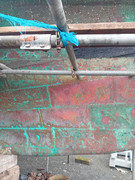
creosote

Hello out there,

Is there any product for wooden hulls that will do what anti-foul does but a lot cheaper - such as creosote for example?

John


Maybe this but not sure its all that good at antifouling
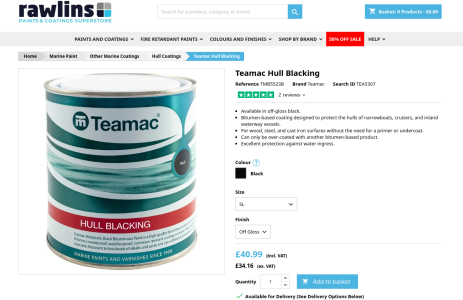
1733605482430.png


Or something cheaper but equally uncertain on antifouling capability1733605719725.png
 
Re: creosote - where

Creosote is alive and well - less the toxic bit - and is sold as creosote substitute.

Can be bought at Homebase, Focus and B&Q. Both hide it away where it's not easy to find, 'cos they want you to buy more expensive less effective water based preparations.

...and of course buy ever more of their cheap nasty modern wood-made products, fence posts and the like. None of which now lasts like it did. They are SUPPOSEDLY "environmentally friendly "...
 
I didn't say that
I think Jonathan was commenting on the effectiveness of some modern antifouling paints that do not live up to their advertising.
As this thread illustrates, health and safety considerations have rendered many traditional products ineffective. It may well be that refusal by professional operatives to use suitable protection has been the main driver for this. I read a while ago about methylene chloride, a highly effective paint stripper now largely withdrawn. Workers in USA refused to use the breathing protection provided and developed cancers as a result.
 
Chilli powder and commercial weed killer in emulsion paint.
Would never be such a cheap skate myself, but that should answer your question.
I once went to a boatyard in France and noticed a member of staff putting antifoul along the hull of a large motor cruiser. I looked at the tin he was using and it was just grey emulsion, presumably they use that as an undercoat while the boat is on the hard waiting for a buyer then put the proper antifouling on when its sold.

And if you are mixing your own apart from weedkiller perhaps also some powdered Horse Wormer (Panacure) as that would also kill off barnacle's.
 
I once went to a boatyard in France and noticed a member of staff putting antifoul along the hull of a large motor cruiser. I looked at the tin he was using and it was just grey emulsion, presumably they use that as an undercoat while the boat is on the hard waiting for a buyer then put the proper antifouling on when its sold.

And if you are mixing your own apart from weedkiller perhaps also some powdered Horse Wormer (Panacure) as that would also kill off barnacle's.
Dick Durham tested a novel antifouling technique about 10(?) years ago, reported in YM. It was a collection of thin, self adhesive squares of copper applied all over the hull. It turned out to be disastrously poor, all the edges of the squares proving most attractive to marine growth.

He hauled out alongside another boat whose owner had simply painted the hull with emulsion paint. It was far less fouled than his copper squares.
 
Dick Durham tested a novel antifouling technique about 10(?) years ago, reported in YM. It was a collection of thin, self adhesive squares of copper applied all over the hull. It turned out to be disastrously poor, all the edges of the squares proving most attractive to marine growth.

He hauled out alongside another boat whose owner had simply painted the hull with emulsion paint. It was far less fouled than his copper squares.


Funny you should mention that. I snapped this pic today . Wooden hull. Maybe nailed on .
 
Hello out there,

Is there any product for wooden hulls that will do what anti-foul does but a lot cheaper - such as creosote for example?

John
That organisation we arent allowed to mention on here banned creosote and we cant buy it now.

Best cure for wooden hulls is GRP sheathing, or better still replacing.

As for antifouling, I once met an Indian doctor at the start of his round the world voyage. He had worked for the Swedish NHS and from them he had managed to "secure" a large quantity of an antibiotic - tetracyclene I think. So he mixed this up with some water based paint and applied it to the hull of his HR reckoning that since antibiotics are biocides, it would prevent marine growth. I lost contact before I could find out if it had worked.

Best answer is to cultivate a contact within a naval dockyard where you will be able to exchange coin of the realm for proper tin based anti fouls.
 
An organisation we are allowed to mention, ie the United States of America, also restricts sales of creosote to suitably qualified professional users.

I dare say that, could I be bothered to check, many other states also impose restrictions on the sale and use of creosote.

And a good thing they do, for it's pretty nasty stuff.
 
Maybe this but not sure its all that good at antifouling
View attachment 186483


Or something cheaper but equally uncertain on antifouling capabilityView attachment 186484
No reason to believe its anything like toxic enough.
But I suppose one could overcoat it with creosote, if you could get or make some
Or mix creosote in to it.
Or mix a lot of copper powder in to it, (if you could get some) to make a poor mans coppercoat
It probably wouldn't be ablative though, so you might have to scrub it to activate, which is alleged to be the case with epoxy-bound coppercoat too.

A potentially huge advantage of these bitumen-based paints (assuming they havn't changed the formulation from when I last used some on a boat trailer several decades ago) is that they remain dissolvable in white spirit, gasoline etc after drying. This means they can be "revitalised" on the job or in the pot (=infinite pot-life, AFAIK) and can be removed with relatively low effort.
 
Top