
Considering a long keel...

MASH

N/A
Joined
8 Mar 2004
Messages
2,188
Visit site
sadler32linescrop.jpg Biscay36P3crop.jpg

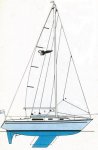
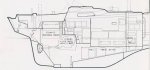
Thinking of going from a fin keel Sadler to this long keeler - both with fixed 3 blade props.

I've not used a long keel for 30 years - anyone care to describe how different I'm going to find it as a mostly singlehander? Will there be things I used to do but just won't be able to with a long keel? Clearly one gets used to a boat's handling characteristics with practice, will the long-keel's lack of manoeuverability in astern be a lasting handicap? Is handling in ahead much different?

It is said the ride will be easier and smoother too - much different or is this a bit overstated?

Views & opinions appreciated.
 
Last edited:
Long keelers have more resistance to being blown sideways, so marina manoeuvres might actually be easier. Handling astern will be less agile, but if you make use of prop walk you'll no doubt find it OK with practice. The boat's motion in a lumpy sea should be quite a bit softer.
 
Likely to be more stable in direction, which could be good for a single-hander. I could leave Kindred Spirit's tiller alone for quite a while on most courses (not downwind) and she'd keep going the same way.

Pete
 
boat most likely will be a lot slower.

out of curiosity, why are you thinking of going that way? it's a bit like deciding to move back to black and white TV - the world has moved on. long keels are obsolete designs.
 
It will be more sea kindly but the prop walk is an issue, it's very ponounced. If you are leaving a pontoon going aft put a spring on to stop the boat going backwards. Run the engine in gear at 1200 revs for two minutes, that gets water going over the rudder , release the spring and the boat should go straight back. Check which way the prop walk is and you can use it to turn into a berth. To stop the boat turning going in reverse blip the revs, do not ever keep the revs on. It took me a while to work all that out. Bear in mind a heavy displacement boat carries it's weigh, we used to cut the pwer at about 20 yards out from a pontoon, so check your weigh.
 
Is it only me that gets a little miffed at some of the outrageous generalisations made by people on the subject of long keels vs fin?

It all depends is the only accurate answer, although a few generalised remarks might be true.

Long keeled boats get blown sideways just like fin keeled boats. In fact with a long keel and a shallow forefoot the bow will blow downwind on a long keeled boat just as impressively and just as much out of control as some fin keeled boats blow bows off.

I don't believe that the amount of prop walk has anything to do with keel length. What happens is that fin keeled boats tend to be much more responsive and you don't notice the prop walk so much. Anyway there's nothing wrong with a bit if prop walk. It's only when it's unpredictable and so excessive you can't control it that it becomes a pain.

Motion is about hull form, mass and weight distribution. Long keeled boats are NOT inherently more sea kindly than a moderate fin keeled hull. Long keeled boats are often heavier and people attribute the easy motion to the length of the keel without realising its the weight of the whole boat that is easing the violence of the crinkly sea.

I'm not denying that some modern lightweight fin keeled yachts are dogs when it comes to sea keeping qualities but that has more to do with their hull shape, fat bottoms and light weight than the length of the keel sticking down into the water.

So I would argue very strongly that hull design HAS moved on and I would think very long and hard before going back to a long keel. The disadvantages in terms if manoeuvring are many and they are not countered by many positives unless you count tacking very slowly as a good thing?
 
Last edited:
Motion is about hull form, mass and weight distribution bling keeled boats are NOT inherently more sea kindly than a moderate fin keeled hull. Long keeled boats are often heavier and people attribute the easy motion to the keel without realising its the weight that is easing the violence of the crinkly sea.

It's certainly about hull form - fin keelers often have fairly flat hulls forward of the keel, leading to slamming; long keelers have more of a V-form carried right to the bows, so enter waves more gently.
 
They may not suit the sailing you do but but long keels are a long way from obsolete IMO.

Quite! They're not really like going from a colour to a black and white telly, more like going from a colour telly to a black and white telly with some features that the colour telly can't offer!

Anyway, as far as the OP is concerned, obviously, there are different sorts of long keel, and different lengths too: Avocet's is a pretty long, encapsulated one with a keel-hung rudder.

On the plus side:

1. It is likely to be more stable in a straight line. If the sails are correctly set, I can usually leave the tiller for a short while and come back to find the boat still more or less on the same heading. That's really handy when single-handed.

2. On the (very rare, naturally!) occasions when I run on to a mud or sand bank, I can usually just reverse off it again. I've never been aground in such a way that I couldn't get off again unaided.

3. It's a nice motion in a seaway

4. I've never had to worry about a rusty keel bolt - or, indeed, loosing my keel.

5. I've never had a rope round my prop (though that could just be luck)

6. I've never had a rope round my rudder

7. On the rare occasions when I've been lucky and had the wind pushing me one way and the tide pushing me the other, I've been able to make very good distance.

8. I can dry out against a wall with the hull extremely well supported (though Avocet does tend to fall on her nose as the water disappears).

9. OK not exclusive to long keelers, but again, generally going hand-in-hand with that kind of hull shape, is that without the fat bottoms of the newer designs, you don't go mad listening to the waves slapping your quarter when on a mooring at night.


On the downside:

1. It has a turning circle like a supertanker

2. There's no space down below (which, I know is not "because" of the long keel, but the two generally go hand-in-hand)

3. It never goes astern under power the same way twice!

4. Because it's an encapsulated keel, if I ever DID go aground on something hard and sharp enough to penetrate the fibreglass, I'd be in trouble!

5. My log transducer isn't in a particularly good place

6. I have to be very careful when lifting out because the slings can end up under the rudder.

7. It's probably a bit slower than an equivalent fin-keeled boat with a 3 ton displacement, 50% ballast ratio, modest sail area, 20' waterline length and a beam of only7'6" (but then, there aren't many of those)!
 
Last edited:
They may not suit the sailing you do but but long keels are a long way from obsolete IMO.

Very true Georgio but it is probably better to ignore the usual gormless remarks, that always seem to crop up, when this type of genuine question is raised.

As to the question, the Sadler could not be described as flighty so I think there will be little problem in getting into the groove with the new boat. I recall that my long keeler hove to very easily and your increased displacement will make itself felt in offshore conditions. Check out the noise levels from the new boat under power, you may be surprised at the level of hull transmitted vibration; of course all things being equal, the three blader should have less effect on the sailing performance of the Biscay. If I stalled the long keel coming up to a mooring there was no chance of getting things together quickly, it was round again on a long circuit.
 
It's certainly about hull form - fin keelers often have fairly flat hulls forward of the keel, leading to slamming; long keelers have more of a V-form carried right to the bows, so enter waves more gently.

That's fine provided the boat is bolt upright. If you look at the heeled shape, the V type has a large flat area without much curve which slams like a demon. The U shaped sections are not so badly affected.
 
Not True!! When the water moves we ALL move together

I think maybe he meant when pinned sideways by the tide a long keeler will be pushed against the pontoon, bridge, neighbouring boat much harder than an equivalent short fin-keeler with a flatter bottom. I've seen many long keelers pop fenders in the crinan canal if the sluice gates were opened too wide too soon - used to be a constant worry with our Vega - but then fenders seem to be more robust these days, haven't seen one pop for years.

I don't think this is a deal-breaking difference, just something to be aware of.
 
Very true Georgio but it is probably better to ignore the usual gormless remarks, that always seem to crop up, when this type of genuine question is raised.

Probably not gormless, just made by someone with a bias or little experience.

Again as with anything nautical it's horses for courses. Like all long keelers ours would be considered to be a bitch going astern. But is she ? I know exactly how to handle her & how she responds in all conditions, so whats the problem ?
She also turns a full circle in her own length. She has 2 1/2 tons of ballast in the keel so is very stable, and can easily and safely sail under full canvas in an F8........................Oh yes, and long keeler's are obsolete. I was forgetting.
 
Useful stuff, thanks everyone. I hadn't realised opinions were so polarised.

Do people with long keelers find they have particular situations that they avoid because of handling difficulties or is it just a matter of doing it in a different way rather than not doing it at all?

I like the tip about getting the water moving over the rudder - just the sort of thing I'm after, and the idea of a Sadler being "flighty" (or not) raised a smile - they're not puddings - surprisingly nimble boat,
as with anything nautical it's horses for courses.
but hardly in the Hippopotamus class that Sandyman seems (inadvertently I'm sure) to be alluding to ;)
 
That's fine provided the boat is bolt upright. If you look at the heeled shape, the V type has a large flat area without much curve which slams like a demon. The U shaped sections are not so badly affected.

I must say that hasn't been my experience with our long-keeler! We can sail Avocet pretty much on her ear and there's no slamming. I don't know about other such boats but Avocet doesn't really rise and fall vertically with the waves when beating hard to windward. Rather, she tends to move obliquely - not quite parallel to the line of the mast, but certainly not vertically. I assume this is because of the big surface area of keel in the water.
 
Top