Choosing the right outboard motor amoung these 4.

peterjaw

Well-Known Member
Joined
25 Sep 2017
Messages
384
Location
Taipei, Taiwan
Visit site
Good day, guys.

I am in the phase of picking up the right outboard motor for my first boat. The dealer provides me
4 motors of different horsepower.

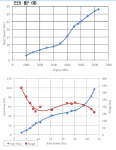
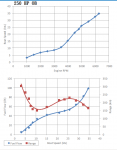
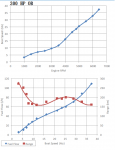
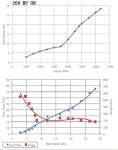
From the performance charts, I probably will pick the 250HP one; however, all the articles on the internet suggest
me to pick the top one which is 300HP in my case. But from these charts, I don't see any obvious benefit from the
300HP motor except the additional few knots at full throttle.

Appreciate for any suggestions and/or comments.
 

Attachments

  • 200HP.png
    200HP.png
    51 KB · Views: 0
  • 225HP.png
    225HP.png
    47.6 KB · Views: 0
  • 250HP.png
    250HP.png
    47.5 KB · Views: 0
  • 300HP.png
    300HP.png
    45.9 KB · Views: 0
Do you want a boat that does 35kts or 38kts?
The curves look very similar otherwise.
Only you can decide :)

Honestly, I have no idea about how much different between 35 kts and 38 kts.

But at around 25 kts, the 250HP motor has much better range than the 300HP does. (230 KM vs. 200 KM)

My main question is: since the top 300HP motor does not have significant benefit over the 250HP or 225HP motors, why
all the boating magazines recommend the biggest one?

By the way, the testing data sheet says there were 2 persons aboard when testing. This boat can carry up to 9 person.
Would the curves change a lot if the boat was fully loaded? Would the 300HP motor show its benefit then?
 
Last edited:
At some time in the future (hopefully) I will also be considering which new Outboard Motor to choose.
On thing which will help me make up my mind is how much it costs to have its yearly service (for guarantee requirements) as I believe that the cost can vary enormously between makes of Outboard and their service agents.
 
These are all Mercury Verado.

All these motors are based on the same block, which is used for the 350hp model as well, so the 300 is in the middle of what's possible hp-wise.
I guess the other thing to consider is resale: will the boat be more desirable with a 300?
(will others be more impressed at the dock / marina with "300" on the cowling? :))

In terms of fuel consumption, I suspect your wallet will not feel the difference between 55 Litres per hour and 60 Litres per hour, but extra range is always useful.

The fuel system on the 300 will be throwing in more fuel across the rev range, so I'd expect correspondingly better acceleration, although these figures aren't shown.

.
 
Last edited:
What size & Pitch of Prop? My last boat with an OB had a prop which was too big (Pitch & Dia) for the engine to achieve WOT. Personally I'd always buy the largest O/B that the boat was rated for.

Have you looked at other makes? The Evinrude G2 is a real winner IMO.
 
As Flower Power says they're based on the same block, in fact they're probably 99% the same engine with mostly software changes and a few part upgrades. There may be a gearbox upgrade, but I doubt it.

Engine manufacturers price their models based on HP, rather than cost to build, so you can pay a fair bit more for a 300 over a 250 even though it's basically the same engine. On the other hand, the extra top end power is "free" from a weight perspective, so it's down to priorities, and only you can answer that.

Good point about resale, if the boat you're considering is usually fitted with a 300.
 
The Verado is a racing motor straight out the box. So you might as well go like racing driver. Get the biggest
 
Never seen anyone complain about having too much power.......handy when you need it, and a big lazy engine that doesnt work hard when you dont need it....
 
Never seen anyone complain about having too much power.......handy when you need it, and a big lazy engine that doesnt work hard when you dont need it....

Well in that case the 250 is the one to go for.

At 25 knots, it is revving lower than the 300, using less fuel, and increasing the boat's range.

With these figures in mind, I would pick the 250 without hesitation.

It's pretty much the same story at 20 knots. Rpms are the same, but fuel flow is lower with the 250, hence again you get an increased range.

What's the price difference?
 
Last edited:
Honestly, I have no idea about how much different between 35 kts and 38 kts.

But at around 25 kts, the 250HP motor has much better range than the 300HP does. (230 KM vs. 200 KM)

My main question is: since the top 300HP motor does not have significant benefit over the 250HP or 225HP motors, why
all the boating magazines recommend the biggest one?

By the way, the testing data sheet says there were 2 persons aboard when testing. This boat can carry up to 9 person.
Would the curves change a lot if the boat was fully loaded? Would the 300HP motor show its benefit then?

What boat is it, and what boating mags have tested it?
 
As said above 250 and 300 are same engine apart from software. Please don't assume the data is precisely correct because it wont be. Assuming it is real world measured data there will have been differences in conditions that will explain some of the very small differences.

Eg at 20 knots you have about 45-50 lph with both 250+300 engines and the slight difference is explained by the noise that you can see in the data on the graph. The data suggests same pitch prop on both engines and therefore AOTBE the lph + range should be identical at the same speed. (I don't agree FP's comment in #7 that the 300 takes more fuel all the time)

You will almost always do <35 knots so the choice is based on
(a) cost upfront premium for 300 versus higher/easier resale of 300 when you're done with the boat, plus difference in service costs which should be zero
(b) marginal insurance premium increase
(c) whether you care about 38 vs 35knots occasionally,
(d) but more importantly whether the extra 50hp would be nice for holeshot when heavily loaded or in tough conditions
(d) Dockside badassery of 300 decals not 250 (but you can always buy decals!)

I would tend towards the 300hp because of the holeshot point. 50hp too little can leave you in the hole 5 seconds longer, and that's a PITA (depending on the boat of course, about which I have no clue)
 
I don't agree FP's comment in #7 that the 300 takes more fuel all the time

I can't find any figures, but with a more aggressive inlet cam and a different fuel map on the 300, I'd expect slightly more fuel to be burnt at the upper end of the rev range for any given engine speed vs the 250. Exactly how this translates to mpg and range will depend on the prop and the boat.
 
What boat is it
Good question.
Based on what the OP told us, she's bound to be smallish - probably somewhere between 7 and 8m.
And she can reach 38kts with a crew of 2 out of 9 max - i.e. very lightly loaded.
To me, she sounds like a tad underpowered even with 300hp... :ambivalence:
 
Well in that case the 250 is the one to go for.

At 25 knots, it is revving lower than the 300, using less fuel, and increasing the boat's range.

With these figures in mind, I would pick the 250 without hesitation.

It's pretty much the same story at 20 knots. Rpms are the same, but fuel flow is lower with the 250, hence again you get an increased range.

What's the price difference?

The 300HP is about 2200 GBP higher than the 250HP. (This is based on Taiwan delaer's price.)
 
Appreciate for all the comments and discussions.

I guess the additional 50HP is for some just-in-case conditions; if the weather is right, the ocean is right, the loading
is not so heavy, then the additional 50 horses just rest in the stable; but whenever I need some extra power, I can
wake them up. In the meantime, I still need to feed those 50 horses even they don't work all the time.

Do I have correct understanding?
===================================================================================================================
If my understanding is correct, then I need to consider the following:

1. How big is the chance I will meet wrong weather, wrong ocean, or heavy loading?

2. If it is worth to spend the additional GPB 2200?

3. How far will I go?
If my travel distance is ALWAYS less than 150 Km (round trip), then the
range data is not that important to me. (200 Km vs. 230 Km)
But if I might travel 180 Km (roung trip), then the extra 30 Km is crucial.

Do I have correct direction?
 
Last edited:
Top