Change oil for winter layup?

eddystone

Well-Known Member
Joined
18 Aug 2013
Messages
1,936
Location
North West Devon
Visit site
I usually service the engine in Spring, just after relaunch. Some people advocate changing the oil before winter layup; I was wondering about merits of splitting service to do oil and filter just before lift out (next week) and the rest on relaunch. I only changed oil and filter at the beginning of August a bit over 50 hours ago but then the hours wont be much different in April! How harmful is 3 months/60 hour old oil over the winter?
 
So long as those 60 hours were relatively clean burning, I would not change the oil till Spring or after a bit more running next season. The oil will still be clean and good unless your engine is very old and would benefit from an early change to flush it.
 
I'm also just thinking about this, only done about 10 hrs this year - I change oil & filters each autumn before layup so clean oil over winter - I don't I'll change oil as done so few hours. Still thinking about fuel filters though.
 
I usually service the engine in Spring, just after relaunch. Some people advocate changing the oil before winter layup; I was wondering about merits of splitting service to do oil and filter just before lift out (next week) and the rest on relaunch. I only changed oil and filter at the beginning of August a bit over 50 hours ago but then the hours wont be much different in April! How harmful is 3 months/60 hour old oil over the winter?

Splitting the service to do oil in the autumn and impeller, belts etc in the spring generally seems s good way to do things - that’s certainly my approach (as I sit with Pela oil extractor about to go).
But as others have said, this year a lot of engines have done minimal hours so perhaps unnecessary. I have done more hours than most years so oil being done now (in case lockdowns come back and can’t do in November as usual).
 
Every service manual of engines I've owned have recommended changing the oil and filter before, rather than after the layup.

I think the reason is because the old oil is best removed warm, i.e. after running the engine for a few minutes. This is best done before the old oil has been allowed to settle for some months and perhaps leave a sludge.
 
Every service manual of engines I've owned have recommended changing the oil and filter before, rather than after the layup.

I think the reason is because the old oil is best removed warm, i.e. after running the engine for a few minutes. This is best done before the old oil has been allowed to settle for some months and perhaps leave a sludge.
I do mine when warm, but then allow it to cool. This allows the remaining oil to drain down to the sump and I can gather about an extra 0.5l.

I thought the reason for doing it pre-winter is that the used oil contains nasties; when it's being left cold and unused in low temperatures, better to have bathed it in new, fresh oil first. So the question becomes: after limited hours, how many nasties will there actually be?

I have done forty hours and I personally will do an oil and oil filter change.
 
The oil in the engine does get contaminated by the products of combustion. The reason for changing it upon lay up is to remove these products from the engine giving the surfaces a coating of fresh oil.
 
Being rather ocd about wanting no trace of salt water inside my boat, my autumn routine is to wash the engine with car shampoo (yes, you did read the correctly!) run it up to dry the engine / engine bay and warm the oil. Then do an oil and filter change and spray all over the engine with WD40. When I sold my last boat (at 13yrs old) the new owner commented that he could have eaten his dinner off the engine. With the frequent oils changes hopefully the inside of the engine was as clean. Like others say this leaves nice clean oil through the winter (I don’t use the engine in winter). My thinking is, if you are going to do it once a year, I may as well do it in the autumn and leave it clean for 6 months rather than dirty
 
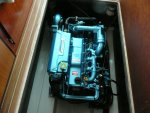
The picture below is of the engine in my previous boat, taken when the boat was 10 years old. Oil should be changed at the end of the season, as others have said.

View attachment 101337
That is absolutely beautiful. :love:

I never knew that Nanni used Toyota base engines. Now that I know that, Nanni have gone up massively in my estimation.

I also agree that if one is going to change the oil once a year, then it's best to do it before winter lay-up.

Richard
 
I do mine when warm, but then allow it to cool. This allows the remaining oil to drain down to the sump and I can gather about an extra 0.5l.

I thought the reason for doing it pre-winter is that the used oil contains nasties; when it's being left cold and unused in low temperatures, better to have bathed it in new, fresh oil first. So the question becomes: after limited hours, how many nasties will there actually be?

I have done forty hours and I personally will do an oil and oil filter change.


Yes good point, this came up recently.
Finishing the job by doing the filter change after allowing the engine to cool, means it is a much cleaner operation - esp with a horizontal filter or where the filter is in a difficult position.

If I was the OP I would probably change the oil, mainly because it is a five minute operation with a Beta and built in pump. I would almost certainly not bother with the filter.


.
 
That is absolutely beautiful. :love:

I never knew that Nanni used Toyota base engines. Now that I know that, Nanni have gone up massively in my estimation.

I also agree that if one is going to change the oil once a year, then it's best to do it before winter lay-up.

Richard

The engine is the pre D4D, 3.0l as fitted to some trucks and the Landcruiser Colorado, nice engine.
 
Follow the guidance in your engine manual.
Mine is from the 1970's and gives only run time not calendar requirement, unlike my car which is on miles or months whichever is first. the idea that 50 hour old oil is going to damage an engine is frankly ridiculous despite the claims in this thread. I look forward to a chemical engineer showing me the maths and proving me wrong.
 
Top