Bus bar or distribution post?

Fantasie 19

Well-Known Member
Joined
23 Mar 2009
Messages
4,591
Location
Chichester, West Sussex
Visit site
Small installation - no more than half a dozen devices - so bus bar or distribution post (in this case for the negatives)?

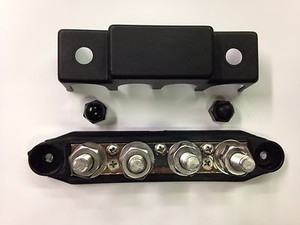
C927-1.jpg

s-l300.jpg
 
Small installation - no more than half a dozen devices - so bus bar or distribution post (in this case for the negatives)?

That obviously means about seven ring terminals on a terminal post, so it could be looking a bit messy by that stage.
 
Good choice. I was thinking along the lines of servicing circuits without having to cut them all, but also best practice is not to put more than six ring terminals on a single post as it becomes progressively less likely that they will make good contact and the whole assembly can overheat with the local resistance.

Rob.
 
but make sure they are non ferrous , screws as well, or they will rust

Nickel plated, so rusting is a distinct possibility, but it'll be inside and they are a sixth of the cost of the cheapest bus bar I can find which is a bit of a draw... WD40 is non-conducting I understand so I could give it a wipe over with that - but anything better for the job??

Many thanks Trundlebug!
 
Nickel plated, so rusting is a distinct possibility, but it'll be inside and they are a sixth of the cost of the cheapest bus bar I can find which is a bit of a draw... WD40 is non-conducting I understand so I could give it a wipe over with that - but anything better for the job??

You could always invest another quid and buy a stainless steel version - http://www.lyonlighting.com/acatalog/Stainless-Steel-8-Way-Earth-Terminal-Block-ETB8W.html

What is the relevance of WD40 being non-conducting, in the context of a bus bar?
 
Blocks of the chocbloc type are not as good as either a dedicated post or a bus bar, the screws tend to sheer off strands of the wire and they don't provide any strain relief so wires have been known to snap off. It is perfectly possible to make an adequate bus bar if you have a thick strip of brass or copper and drill, countersink and tap for screws, then solder them in place. There are still arguments as to the best way to attach ring terminals to the wire. Some advocate soldering and heat shrink for strain relief others prefer crimp terminals (but use a quality ratchet crimper!). Both methods do create a weakness either through heat embrittlement or localised pressure, so it's good practice to arrange some form of soft clamping of the cable close to the junction to prevent mechanical strain.

WD40 probably isn't long lasting enough to be effective unless you inspect your wiring monthly! There is an innocent reason I have a large tub of Vaseline on the boat - I smear it over completed joints.

Rob.
 
I make all my own bus bars using brass or copper strip with M8 brass set screws tapped into the brass bar (as many as you like) for commoning bus bars. For distribution bus bars I use plastic from cutting boards again with tapped brass screws. For the the negative return bus bars or positive supply bus bars like supplies to LED lights I use M4 brass screws.

All wire terminations are either 8mm or 4mm ring crimp terminals
 
Top