
Poignard
Well-Known Member
Just bought one. Arrived this morning. How does it work?

Just bought one. Arrived this morning. How does it work?
I think you find a pole to put it on the end of first, the pole would be dependent on how far you need to reach out to your target, for a high freeboard boat telescopic to be safe. Then you have to tie your mooring rope to the piece of string (painter) with a knot that will hold it firm but releases very quickly as if not the and tide running fast the whole thing will be gone. just stab it through the hoop and bring back to yourself on board.Just bought one. Arrived this morning. How does it work?
You get what you pay for but with patience and practice and a down hill wind it can work occasionallyAh, got it. My one doesn't seem very reliable - the bar slips off as you pull back.

You need to keep the rope under a degree of tension as you pull the device back onboard.My one doesn't seem very reliable - the bar slips off as you pull back.


All very good, but how do you get it off when you want to leave if you have high topsidesI have tried several types, the one I prefer is this; good stuff (as usual) made by Kong. The opening is quite large to grab rings, cleats etc up to a few cm thick, it can be used with a normal boathook without special fittings, both for attaching and releasing.
I prefer having a mooring line immediately attached rather than having to thread a second thicker line, when alone that makes the mooring a few seconds quicker, which is often a blessing
Mooring hook 201 - Sailing accessories - KONG
All very good, but how do you get it off when you want to leave if you have high topsides

I have tried several types, the one I prefer is this; good stuff (as usual) made by Kong. The opening is quite large to grab rings, cleats etc up to a few cm thick, it can be used with a normal boathook without special fittings, both for attaching and releasing.
I prefer having a mooring line immediately attached rather than having to thread a second thicker line, when alone that makes the mooring a few seconds quicker, which is often a blessing
Mooring hook 201 - Sailing accessories - KONG
The deck on my 31 ft boat is 900mm above waterline & by no means "high". A typical buoy ring might be 300-400 out of the water. Add a bit of swell, wind & current it may be difficult to pull the buoy up to the bow. To threadle the rope through the eye one may have to lay one's wife on the deck. poke her out through the pulpit ( i'm not going) & she is going to have to reach a fair old way possibly 700mm. It is not an easy task.How high are high topsides?
I use it to quickly grab the buoy, the boat does not run away and leaves all the time to pass "the" proper mooring rope. One of the other threading systems might help, though even having one of them I never felt the need to use it.
Once the proper mooring is passed, the carabiner can be taken taken away with a boathook of the same size used to attach it; I also have a wooden pole around 2.5-3m long (it is to clean the copious amounts of mud sometimes brought up by the anchor, while keeping it in the water), but so far never had to use it with the mooring hook.

We were given one of these by a friend when we bought our first cruiser. I found it brilliant for threading a rope through an arm of our cast iron garden bench, but very tricky/impossible when trying it on a moving buoy!! After trying it a few times I went back to lying on the foredeck, grabbing the buoy with one hand and threading the mooring line through the ring. Fortunately the bow was not too high and I have long arms.I've got one of these, it washed up on the beach and I found it while walking the dog; it seems to work well enough but my perception is there aren't enough visitor moorings with rings on the Clyde to justify buying one.
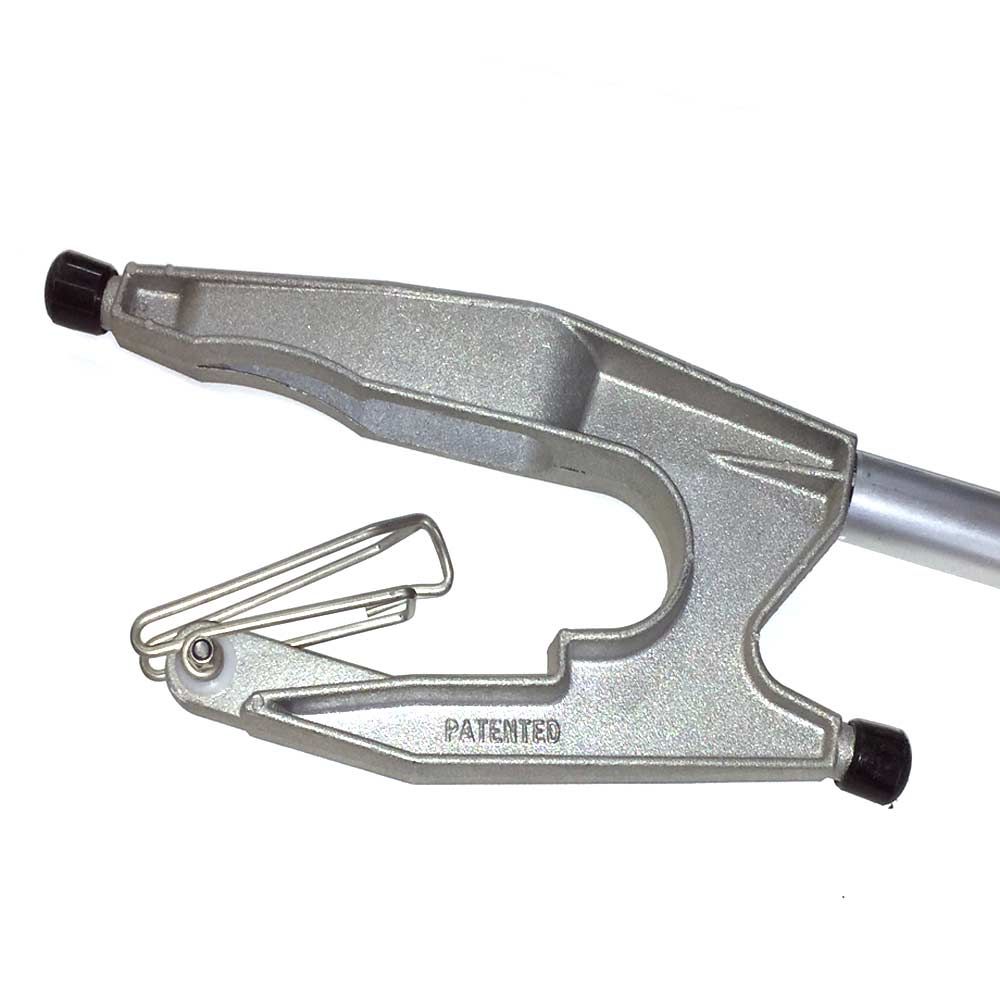
This is one of the main reasons we designed the buoycatcher to feed the main mooring lines directly through the target with nothing left behind and no tying of thicker ropes after and knots to tie. Just wanted quick one job operation and that is exactly what it does every time.How high are high topsides?
I use it to quickly grab the buoy, the boat does not run away and leaves all the time to pass "the" proper mooring rope. One of the other threading systems might help, though even having one of them I never felt the need to use it.
Once the proper mooring is passed, the carabiner can be taken taken away with a boathook of the same size used to attach it; I also have a wooden pole around 2.5-3m long (it is to clean the copious amounts of mud sometimes brought up by the anchor, while keeping it in the water), but so far never had to use it with the mooring hook.
That gives it an advantage over its much cheaper competitor, the Moorfast.This is one of the main reasons we designed the buoycatcher to feed the main mooring lines directly through the target with nothing left behind and no tying of thicker ropes after and knots to tie. Just wanted quick one job operation and that is exactly what it does every time.
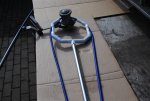
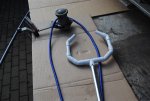
That is not a pretty thing however it is excellent for the purpose of the canal posts. Hat off to you.I have never found the need for anything like the buoy catcher but I do find that as a frequent visitor to the dutch canals it is not possible to easily lasso bollards that are inset into lock walls.
I made the item as shown below. I also use it to drop my stern line over posts when mooring between poles in places like Willemstad & Middleburg. I can just drop the line over & release the pole. I can also use it for cleats on pontoons if I wish although I tend to lasso those
View attachment 111402
View attachment 111404
Probably similar to mine (40'), we usually manage by pulling the carabiner rope in, then feed the mooring line.My mate has a 45 ft boat SWBO cannot reach the buoy at all. The deck is possibly 1200 high.
That's a good idea!
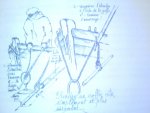
What book is that illustration from?Probably similar to mine (40'), we usually manage by pulling the carabiner rope in, then feed the mooring line.
In case it is not possible, once the boat is attached with the carabiner then the old Almanch method might come handy: instead of the stick going inside the tube as in the drawing, I used a 50cm PVC pipe with a messenger rope tied in the middle, brought towards the ring with the boathook pointy end; once passed inside, recover it on the other side and bring onboard, then thread the proper mooring line.
Anyway, for my needs the most important thing is attaching the boat to something as quickly as possible before wind or tide have begun sweeping it away, once the boat has gathered momentum it is often too hard to stop it, even pulling in a rope threaded in double.
If it is all calm, or if one can approach the buoy stern to, then all these things remain in the locker
View attachment 111417
