Bukh dv36 raw water pump shaft

Inclination

New Member
Joined
28 Feb 2025
Messages
4
Visit site
My 1983 DV36 has been reliable for 15 years. It’s fitted with a heat exchanger, with the coolant circulation pump mounted directly behind the raw water pump. A shaft connects these two pumps. Late last year we discovered a coolant leak which lead to the pumps being removed. While the leak was an easy fix, we found the pump shaft had sheared, resulting in highly reduced coolant flow. While waiting for a new replacement raw water pump and shaft a refurbished pump was installed. These got us through the summer season ( live in NZ), last week we fitted the brand new raw pump and shaft. It lasted. Less than an hour before the engine started to overheat, cruising at 2500rpm. Further investigation showed the connecting shaft had sheared completely, resulting in no coolant being circulated. Looking at the refurbished pump we used for 2 months over summer it too is showing signs of wear on the connecting shaft. So in the space of just 3 months, 3 shafts have failed. My mechanic, a trained bukh technician has checked all tolerances and can identify no reason for these failures. Bukh themselves say they have no experience of this. Has anyone experienced pump shaft failures like this on the dv36? Anyone got any clues / ideas, I’m at loss and unless a cause can be found I’ll be forced to re-power, which will be such a shame, I love this engine, but can it be saved?
 
I find it difficult to accept that you might have to scrap an engine that has given good service and which you love for the sake of something like this.

I would be inclined to get another engineer to have a look at it if you and your current engineer are unable to solve it.

You mention that you could see wear on the shaft, but didn't say exactly where. That is likely an important clue as to what/where is going wrong.

As this has happened to 3 different pump/drive assemblies, it is exceedingly unlikely the problem lies with those themselves.

I wonder whether the problem might perhaps be some movement in the gearwheel that the pump gearwheel takes its drive from (the camshaft gearwheel?). This could be trying to displace the pump gear laterally and maybe putting strain on the pump bearings such that they seize.

Good luck solving the problem. Do report back when you've solved it.
 
Last edited:
My 1983 DV36 has been reliable for 15 years. It’s fitted with a heat exchanger, with the coolant circulation pump mounted directly behind the raw water pump. A shaft connects these two pumps. Late last year we discovered a coolant leak which lead to the pumps being removed. While the leak was an easy fix, we found the pump shaft had sheared, resulting in highly reduced coolant flow. While waiting for a new replacement raw water pump and shaft a refurbished pump was installed. These got us through the summer season ( live in NZ), last week we fitted the brand new raw pump and shaft. It lasted. Less than an hour before the engine started to overheat, cruising at 2500rpm. Further investigation showed the connecting shaft had sheared completely, resulting in no coolant being circulated. Looking at the refurbished pump we used for 2 months over summer it too is showing signs of wear on the connecting shaft. So in the space of just 3 months, 3 shafts have failed. My mechanic, a trained bukh technician has checked all tolerances and can identify no reason for these failures. Bukh themselves say they have no experience of this. Has anyone experienced pump shaft failures like this on the dv36? Anyone got any clues / ideas, I’m at loss and unless a cause can be found I’ll be forced to re-power, which will be such a shame, I love this engine, but can it be saved?
Hi, some pictures would help. If you can't post them here, try posting a link to them on a cloud. A picture of the general arrangement of the pumps and a picture showing which shaft you are referring to and one of the sheered shaft, please.
 
EDIT: Note further - contradictory? - info in following post.

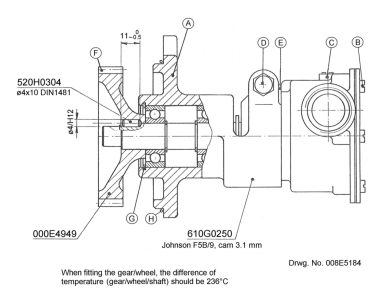
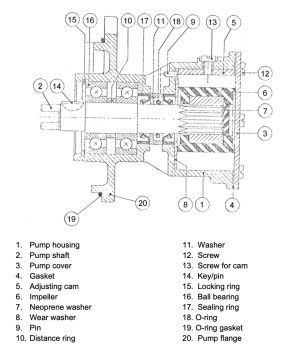
In case it helps commentators/detectives, here's a couple of drawings of the seawater pump and its drive shaft from the DV36 workshop manual.

The first one includes the gear wheel (labelled F) which drives the pump, but it's an older version of the Johnson pump only used on early DV36 models, and this drawing doesn't show all of the internals of the pump itself.

The second one shows the newer version of the pump and more detail of its internals, but hasn't got the drive gear wheel attached. That gearwheel is heat-fitted onto the drive shaft Part 2.

(The positioning of the gearwheel in relation to the engine, and hence the (camshaft?) gearwheel with which it meshes and is driven by, is presumably governed by the flange (labelled A in the first drawing, and 20 in the second drawing) and the opening in the engine casing it mounts onto with 3 screws, and no apparent adjustment available. The workshop manual describes removing the pump from the engine as just requiring the 3 screws (and water pipes) removed, then the pump is lifted out, and re-attaching it to the engine just requires care that the sealing O-ring fits tightly against the flange.)

1740832773659.png
------------------------------------------------------------------------------------------------------------------------------------------------------------------------------------------

1740832859824.png
 
Last edited:
Additional Info -

This leads me to question whether the info in the workshop manual in my previous post about the seawater pump drive gear relates only to the direct, seawater-cooled versions (even though the rest of this current manual relates to the indirect (freshwater) cooled versio)n

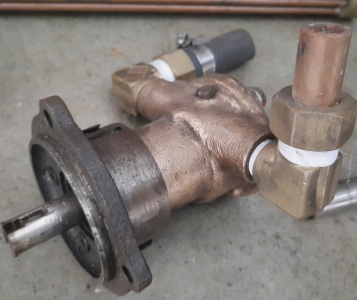
Here's a photo of a seawater pump from a DV36 with indirect cooling, and the end of the seawater pump drive shaft just has a fork in it with no gear.

1740834755070.png


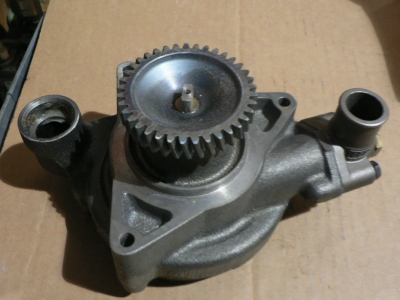
And here's the additional (eye wateringly expensive!) freshwater pump used on the indirect cooled version, with pump drive gear (driving both pumps?) attached.

1740835457848.png


Note that the seawater pump projects forward on the side of the engine, mounted in an opening on the front of the case at the rear of the engine that contains the gears to drive the camshaft, fuel injector pump and cooling pump(s), while the freshwater pump (where fitted) projects rearward from the engine and is fitted to the rear of that same case. (When no freshwater pump is fitted, the rear opening in the case for it is covered by a blanking plate.)

I am guessing (but don't know) that in the indirect-cooled versions the gear is mounted on the freshwater pump as pictured, and fork in the end of the seawater pump shaft engages with the flattened end of the freshwater pump shaft projecting through the gearwheel, but in direct-cooled versions the gearwheel is mounted, facing the opposite direction, onto the seawater pump shaft.

(Perhaps the bit in the workshop manual I reproduced, showing the gearwheel mounted on the seawater pump is an anachronism. While this recent version of the workshop manual relates to the current engines which are all (or almost all) freshwater cooled (because they are now almost exclusively fitted to lifeboats), has been carried forward from earlier versions of the manual when direct (seawater only) cooled engines were much more common?)
 
Last edited:
Additional Info -

This leads me to question whether the info in the workshop manual in my previous post about the seawater pump drive gear relates only to the direct, seawater-cooled versions (even though the rest of this current manual relates to the indirect (freshwater) cooled versio)n

Here's a photo of a seawater pump from a DV36 with indirect cooling, and the end of the seawater pump drive shaft just has a fork in it with no gear.

View attachment 190170


And here's the additional (eye wateringly expensive!) freshwater pump used on the indirect cooled version, with pump drive gear (driving both pumps?) attached.

View attachment 190171


Note that the seawater pump projects forward on the side of the engine, mounted in an opening on the front of the case at the rear of the engine that contains the gears to drive the camshaft, fuel injector pump and cooling pump(s), while the freshwater pump (where fitted) projects rearward from the engine and is fitted to the rear of that same case. (When no freshwater pump is fitted, the rear opening in the case for it is covered by a blanking plate.)

I am guessing (but don't know) that in the indirect-cooled versions the gear is mounted on the freshwater pump as pictured, and fork in the end of the seawater pump shaft engages with the flattened end of the freshwater pump shaft projecting through the gearwheel, but in direct-cooled versions the gearwheel is mounted, facing the opposite direction, onto the seawater pump shaft.

(Perhaps the bit in the workshop manual I reproduced, showing the gearwheel mounted on the seawater pump is an anachronism. While this recent version of the workshop manual relates to the current engines which are all (or almost all) freshwater cooled (because they are now almost exclusively fitted to lifeboats), has been carried forward from earlier versions of the manual when direct (seawater only) cooled engines were much more common?)
Additional Info -

This leads me to question whether the info in the workshop manual in my previous post about the seawater pump drive gear relates only to the direct, seawater-cooled versions (even though the rest of this current manual relates to the indirect (freshwater) cooled versio)n

Here's a photo of a seawater pump from a DV36 with indirect cooling, and the end of the seawater pump drive shaft just has a fork in it with no gear.

View attachment 190170


And here's the additional (eye wateringly expensive!) freshwater pump used on the indirect cooled version, with pump drive gear (driving both pumps?) attached.

View attachment 190171


Note that the seawater pump projects forward on the side of the engine, mounted in an opening on the front of the case at the rear of the engine that contains the gears to drive the camshaft, fuel injector pump and cooling pump(s), while the freshwater pump (where fitted) projects rearward from the engine and is fitted to the rear of that same case. (When no freshwater pump is fitted, the rear opening in the case for it is covered by a blanking plate.)

I am guessing (but don't know) that in the indirect-cooled versions the gear is mounted on the freshwater pump as pictured, and fork in the end of the seawater pump shaft engages with the flattened end of the freshwater pump shaft projecting through the gearwheel, but in direct-cooled versions the gearwheel is mounted, facing the opposite direction, onto the seawater pump shaft.

(Perhaps the bit in the workshop manual I reproduced, showing the gearwheel mounted on the seawater pump is an anachronism. While this recent version of the workshop manual relates to the current engines which are all (or almost all) freshwater cooled (because they are now almost exclusively fitted to lifeboats), has been carried forward from earlier versions of the manual when direct (seawater only) cooled engines were much more common?)
Thanks to everyone for their insights. I’ll visit the mechanic today and get the photos and details some of you requested. Lying in bed last night it occurred to me that the instruction from my mechanic to fit a coolant pressure cap of higher pressure might possibly be a contributing factor. Let me explain. Last year coolant started to leak, I thought it might be coming past the pressure cap on the coolant tank. We had no hot water at the time also. I discussed this on the phone will my mechanic, he suggested I fit a 15psi cap. I couldn’t find one, the highest I found was 7psi. I believe the factory cap was.3-4 psi. The 7psi cap don’t solve either the leak or the lack of hot water. (No surprise now I think about it). In Dec 24, the mechanic visited to inspect the leak, the pumps were removed the partially broken shaft was discovered. They supposedly found and fixed the leak, and as I mentioned they fitted a refurbished raw water pump while I waited for a new replacement. I went away cruising for 7weeks, the 7psi cap remained and to my disappointment so did the leak. In Feb I got back from 2 months cruising and the mechanics came to fit the new raw water pump and revisit the leak which they tell me appeared to be coming from a different spot. ( so not their fault??). Another whooping bill and less than 1 hour running time later the new pump had sheared the shaft. So both the original and the refurbished pumps ran with a 7psi cap but with a substantial leak and therefore pressure relief, which would explain why they showed wear rather than a shear. The leaks were fixed when the 3rd new pump went in, so no pressure relief. This might explain the clean shearing of the shaft. The 7psi cap is still on there, what say you folk, am I on to something here, is it possible doubling the coolant pressure could result in this type of failure?
 
I Thanks to everyone for their insights. I’ll visit the mechanic today and get the photos and details some of you requested. Lying in bed last night it occurred to me that the instruction from my mechanic to fit a coolant pressure cap of higher pressure might possibly be a contributing factor. Let me explain. Last year coolant started to leak, I thought it might be coming past the pressure cap on the coolant tank. We had no hot water at the time also. I discussed this on the phone will my mechanic, he suggested I fit a 15psi cap. I couldn’t find one, the highest I found was 7psi. I believe the factory cap was.3-4 psi. The 7psi cap don’t solve either the leak or the lack of hot water. (No surprise now I think about it). In Dec 24, the mechanic visited to inspect the leak, the pumps were removed the partially broken shaft was discovered. They supposedly found and fixed the leak, and as I mentioned they fitted a refurbished raw water pump while I waited for a new replacement. I went away cruising for 7weeks, the 7psi cap remained and to my disappointment so did the leak. In Feb I got back from 2 months cruising and the mechanics came to fit the new raw water pump and revisit the leak which they tell me appeared to be coming from a different spot. ( so not their fault??). Another whooping bill and less than 1 hour running time later the new pump had sheared the shaft. So both the original and the refurbished pumps ran with a 7psi cap but with a substantial leak and therefore pressure relief, which would explain why they showed wear rather than a shear. The leaks were fixed when the 3rd new pump went in, so no pressure relief. This might explain the clean shearing of the shaft. The 7psi cap is still on there, what say you folk, am I on to something here, is it possible doubling the coolant pressure could result in this type of failure?
 
I find it hard to believe that the mechanic thought it was a good idea to fit a higher value pressure cap, especially to solve a leak! There's a good reason the factory didn't want the pressure getting higher than the chosen value. It is there for safety and to avoid damage to other bits of the engine, not to mention leaks.

I'd definitely be looking to get the opinion of a different mechanic on the whole sorry saga. He has seemingly cost you a lot of money without solving your problems, or even having a plausible explahation for them.

Some random thoughts following -

I can't see the connection between a leak and the raw water pump shaft breaking repeatedly. The pressure cap is on the freshwater coolant side of the system, is it not? You specifically said the leak was 'coolant', presumably as opposed to seawater?

Do you have a temperature gauge? A problem with the seawater side of things could result in the freshwater coolant boiling, which would significantlyraise pressure and tend to cause leaks.

That your (domestic?) hot water is not working seems an important clue. Is your circulating pump definitely working? Is there a blockage in the freshwater coolant circuit?

I can imagine a possibility that a blockage in the raw water side of the cooling system could result in higher pressure 'upstream' of it, and that could potentially cause seawater leaks, and put extra load on the seawater pump, but I imagine the impeller blades would lift long before there was enough strain on the drive shaft to break it (repeatedly!).

Just because you have two (three it seems) problems at the same time doesn't necessarily mean they are related. The might or might not be.
 
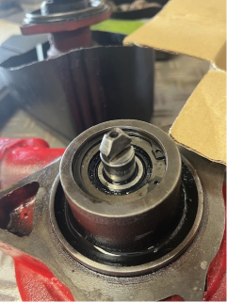
I've got a little more information and some photos. Looks like I was off track with the pressure cap having anything to do with the failures. Brief summary-
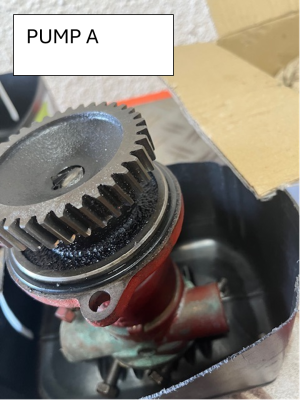
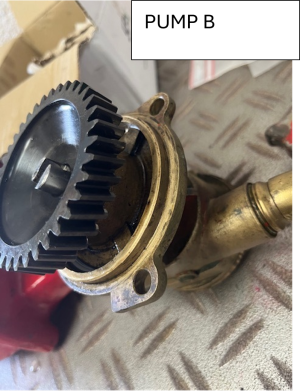
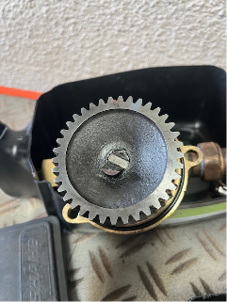
December 24 the raw water (A) and circulation pumps were found to have damaged shafts, a new raw water pump (C) was ordered, the circulation was over hauled and fitted with a new shaft. A second hand raw water pump (B) was installed with the repaired circulation pump.
February, the new raw water arrived and was fitted, no damage to the temporary pump or the circulation pump was noted and yet lest than 1 hour of running and the shafts failed and the motor over heated, something it has never done previously. See the photos attached.
no explanation can be found the repeated failure, nor can it be explained why the temporary second hand pump (B) suffered no damage, when the new replacement pump (C) failed immediately.
In all of this I have discovered something, not sure iit offers a solution to the cause, but Little Sister referred to this in his last post. The drive gear in my case was fitted to the raw water pump shaft as can be seen in the photos, this is normal only when the engine is raw water cooled. When a heat exchanger is used the drive gear is normally fitted to the circulation pump shaft. Perhaps this has something to do with the failure?
My mechanic found the drive gear installed on the raw water shaft and suspects the heat exchanger was retrofitted by the previous owner. He installed both the secondhand and the new replacement pump step up in the same manor. Again photos show this detail. If this additional information helps someone present a probable cause to the failures, I'd very much like to hear it.
 

Attachments

  • circulation pump.png
    circulation pump.png
    176.1 KB · Views: 10
  • Pump A.png
    Pump A.png
    1.3 MB · Views: 10
  • Pump B.png
    Pump B.png
    1.6 MB · Views: 11
  • Pump C.png
    Pump C.png
    168.6 KB · Views: 10
The photos of the fractures are not good enough for a diagnosis. My first thought would be fatigue but the Pump C photo does not look like it to me and Pump A could be anything. Is there any possibility that the single flat pin part has been hammered or otherwise forced into the slotted one?

The Pump C failure looks more like a ductile fracture due to the side pieces being bent outwards but this is very difficult to determine.
 
That revised account changes the picture significantly, it seems to me.

I am guessing that the drive gearwheel being mounted on the raw water pump shaft, when it seems it should be on the freshwater circulation pump shaft on this indirect cooled engine is the likely problem. There presumably was a reason why apparently the gearwheel is mounted differently in the indirect versus direct cooled versions. (It's a pity neither the Workshop Manual text, nor the Parts List's drawings, make this apparent difference explicit.) Even if this is not actually the cause, it could be eliminated as a suspect only by mounting it on the circulation pump shaft.

Clearly, mounting the gearwheel on the raw water pump works fine when there is no circulation pump. There are many direct seawater-cooled Bukh 36 that (like mine) have been working satisfactorily for many decades. Ditto for indirect cooled versions with the gearwheel presumably on the circulation pump shaft. On the other hand, your engine had also worked fine for years, apparently with the gearwheel on the 'wrong' shaft during that time.

I suspect the issue could be that the apparent tongue-in-slot (I don't know the proper name) joint between the two shafts is satisfactory for driving the raw water pump, but not for the circulation pump. Perhaps this is due to the loading (total and 'chattering') on the joint from each of the two different types of pump? I note that according to the DV36 Owner's Manual, in the indirect cooled versions (only) at max revs (3,600rpm) the raw water pump capacity is 36-42 litres per minute, while the circulation pump capacity is 135 litres per minute, about three and a half times the volume. (The direct cooled version has the same raw water pump as the indirect version, but with a lower cam in it, and a capacity of only 24-30 litres per minute.)

I notice, too, that both shaft have broken at the 'root' of the fork in the raw water pump shaft. That fork is redundant in the direct cooled version, but is vital in the indirect cooled version. In addition to the presumably higher loading to the joint from the circulation pump, there is a potential additional hard point loading at the root of the fork when the gearwheel is mounted on the raw water pump shaft, because the gearwheel is an interference(?) fit on the shaft (the gearwheel has to be heated to get it on the shaft) and presumably adds to the shaft's stiffness at the root of the fork, and hence increases the chance of failing at that particular point.

Another factor seemingly potentially affecting the loading of the fork/slot joint is need to accommodate presumably greater changes in length of the circulation pump shaft vs. the raw water pump shaft, because the circulation pump shaft will, I assume, get much hotter and the raw water pump stay relatively cooler, and when the former is cooler the fork and slot will not be fully engaged together resulting in additional loading/deflection on the fork. This might help (along with the previous considerations) explain the failure of Pump C within an hour of use.

None of which goes any way to explaining why the hot water is not working, which may or may not be relevant. I previously mentioned the possibility of some blockage in the freshwater coolant circuit. This would add to the loading on the circulation pump, and hence the loading on the fork/slot joint between the shafts when the gearwheel is mounted on the raw water pump shaft. Could such a blockage help explain why the set-up had seemingly previously worked OK for years, then failed about the same time as the hot water problem? Might it even help explain the appearance of a leak around the same time, with pressure being higher upstream of any blockage?
 
Top