TNLI
Well-Known Member
Iro
You need to read the Blackstones advice about wear metals, obviously I've been involved in cross checking FAA and CAA reports for various aircraft gearboxes and engines. If you ask any big rig or diesel train driver what the Iron is about in their UOA which they all do to figure out when to change the oil, they should know, although for some reason the UK is behind the curve in failing to use oil labs.
IRON is the main element in steel, it is by far the best general wear indicator because it tracks engine hours. I pay a lot of attention to keeping it as low as possible which oddly enough often means using the oil for longer, as a dirty oil filter is more efficient than a clean one, and the detergents in the oil are a tad too agressive when the oil is first changed.
Apart from Lead, the worst thing to have the lab report is a high level of anti freeze and water in the oil. If you have a dodey head gasket, and it's warm, then flush out the coolant and just use filtered rain water and cheap soluble oil, (Machine oil), to prevent corrosion. The water in the oil tends to evapourate so is less of a concern.
Fuel contamination from a bad injection pump or lift pump seal is not good news. More than 2% is not good in long term wear terms, 5% is the change the oil ASAP limit. It can also be from bad rings or too much time at low power, BUT you also get a high Carbon figure if it is. Carbon is the main element in oil sludge, and if you see it at the start of a drain or pump out, the oil and filter need changing more often.
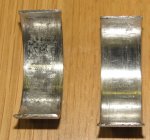
The only bearing in a diesel that has Lead in it is the mains, so if all is well it should be close to zero. If the mass spectrograph results show more than 5 ppm I start to get interested in using a thicker oil and one that has a higher level of Zinc based additive. The 16 ppm in a UOA of the old BMC 1500 was about the highest I've ever seen. The crankshaft specialists D & R James Engineering Ltd in Poole did a good job of a full rebuild for 650 quid, BUT then damaged the top of the coolant tank and bodged the repair. I got the Beta dealer to do that repair correctly and then won a local court case for 200 quid, as D & R James refused to pay for the repair. One of my sponsors then decided to pay for a new BETA 30. Pity he did not say that at the start as I wasted a bunch of time rebuilding the old BMC.
If an engine is under warranty, use the correct BETA oil and filter, out of warranty use a major brand oil with the correct API/ACEA regs. By major brand, I mean Castrol, Mobil, Shell or Liqui Moly. Liqui Moly also make good oil and fuel additives that do exactly what is says in their description. I've used them a few times for old problem diesels.
Apart from using the best oil and filters, and used oil labs to figure out when to change it, fitting heat pads, (I use Wolverine as they make a real good range of 12 or 240V stick on heat pads), to warm up the oil makes a very big difference if your engine bay is not heated in winter. Cold starts are a real main block killer, so I try to avoid them.
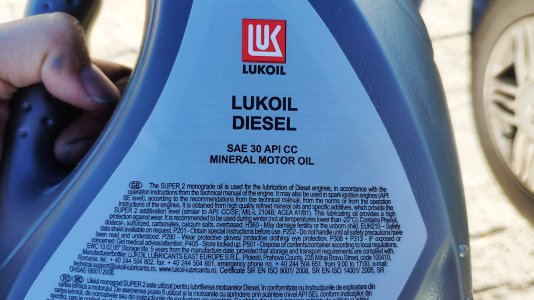
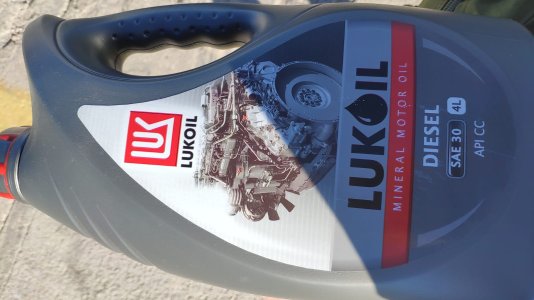
PS: If you are overseas and imported oils are too expensive, just use the local most poular oil that the truck or bus company use. For example I just used Cepsa SAE 30 for hot weather in the Cannery Islands. Single grade oil last longer than multigrades as the multi grades have to use VI's, (Viscosity Inhibitors), to thin the oil when cold, but alas they also weaken it in terms of high temp shearing that thins the oil. So it needs changing more often than single grades. You can get SAE 40 and 50 in hot countries.
The lead is lost from copper-lead bearings preferentially as it is corroded by weak organic acids - the combustion products. The tin alloy overlay helps to prevent this but it is a very thin flash coat.
As I said, I have never come across an iron based plain bearing and understood that iron in oil analysis mostly derived from camshaft and follower wear. But that is not my speciality, whereas bearings is.
You need to read the Blackstones advice about wear metals, obviously I've been involved in cross checking FAA and CAA reports for various aircraft gearboxes and engines. If you ask any big rig or diesel train driver what the Iron is about in their UOA which they all do to figure out when to change the oil, they should know, although for some reason the UK is behind the curve in failing to use oil labs.
IRON is the main element in steel, it is by far the best general wear indicator because it tracks engine hours. I pay a lot of attention to keeping it as low as possible which oddly enough often means using the oil for longer, as a dirty oil filter is more efficient than a clean one, and the detergents in the oil are a tad too agressive when the oil is first changed.
Apart from Lead, the worst thing to have the lab report is a high level of anti freeze and water in the oil. If you have a dodey head gasket, and it's warm, then flush out the coolant and just use filtered rain water and cheap soluble oil, (Machine oil), to prevent corrosion. The water in the oil tends to evapourate so is less of a concern.
Fuel contamination from a bad injection pump or lift pump seal is not good news. More than 2% is not good in long term wear terms, 5% is the change the oil ASAP limit. It can also be from bad rings or too much time at low power, BUT you also get a high Carbon figure if it is. Carbon is the main element in oil sludge, and if you see it at the start of a drain or pump out, the oil and filter need changing more often.
The only bearing in a diesel that has Lead in it is the mains, so if all is well it should be close to zero. If the mass spectrograph results show more than 5 ppm I start to get interested in using a thicker oil and one that has a higher level of Zinc based additive. The 16 ppm in a UOA of the old BMC 1500 was about the highest I've ever seen. The crankshaft specialists D & R James Engineering Ltd in Poole did a good job of a full rebuild for 650 quid, BUT then damaged the top of the coolant tank and bodged the repair. I got the Beta dealer to do that repair correctly and then won a local court case for 200 quid, as D & R James refused to pay for the repair. One of my sponsors then decided to pay for a new BETA 30. Pity he did not say that at the start as I wasted a bunch of time rebuilding the old BMC.
If an engine is under warranty, use the correct BETA oil and filter, out of warranty use a major brand oil with the correct API/ACEA regs. By major brand, I mean Castrol, Mobil, Shell or Liqui Moly. Liqui Moly also make good oil and fuel additives that do exactly what is says in their description. I've used them a few times for old problem diesels.
Apart from using the best oil and filters, and used oil labs to figure out when to change it, fitting heat pads, (I use Wolverine as they make a real good range of 12 or 240V stick on heat pads), to warm up the oil makes a very big difference if your engine bay is not heated in winter. Cold starts are a real main block killer, so I try to avoid them.
PS: If you are overseas and imported oils are too expensive, just use the local most poular oil that the truck or bus company use. For example I just used Cepsa SAE 30 for hot weather in the Cannery Islands. Single grade oil last longer than multigrades as the multi grades have to use VI's, (Viscosity Inhibitors), to thin the oil when cold, but alas they also weaken it in terms of high temp shearing that thins the oil. So it needs changing more often than single grades. You can get SAE 40 and 50 in hot countries.