Bukh DV20 oil change. SAE30 ? plus how to drain the sludge

Iro
The lead is lost from copper-lead bearings preferentially as it is corroded by weak organic acids - the combustion products. The tin alloy overlay helps to prevent this but it is a very thin flash coat.

As I said, I have never come across an iron based plain bearing and understood that iron in oil analysis mostly derived from camshaft and follower wear. But that is not my speciality, whereas bearings is.

You need to read the Blackstones advice about wear metals, obviously I've been involved in cross checking FAA and CAA reports for various aircraft gearboxes and engines. If you ask any big rig or diesel train driver what the Iron is about in their UOA which they all do to figure out when to change the oil, they should know, although for some reason the UK is behind the curve in failing to use oil labs.

IRON is the main element in steel, it is by far the best general wear indicator because it tracks engine hours. I pay a lot of attention to keeping it as low as possible which oddly enough often means using the oil for longer, as a dirty oil filter is more efficient than a clean one, and the detergents in the oil are a tad too agressive when the oil is first changed.

Apart from Lead, the worst thing to have the lab report is a high level of anti freeze and water in the oil. If you have a dodey head gasket, and it's warm, then flush out the coolant and just use filtered rain water and cheap soluble oil, (Machine oil), to prevent corrosion. The water in the oil tends to evapourate so is less of a concern.
Fuel contamination from a bad injection pump or lift pump seal is not good news. More than 2% is not good in long term wear terms, 5% is the change the oil ASAP limit. It can also be from bad rings or too much time at low power, BUT you also get a high Carbon figure if it is. Carbon is the main element in oil sludge, and if you see it at the start of a drain or pump out, the oil and filter need changing more often.

The only bearing in a diesel that has Lead in it is the mains, so if all is well it should be close to zero. If the mass spectrograph results show more than 5 ppm I start to get interested in using a thicker oil and one that has a higher level of Zinc based additive. The 16 ppm in a UOA of the old BMC 1500 was about the highest I've ever seen. The crankshaft specialists D & R James Engineering Ltd in Poole did a good job of a full rebuild for 650 quid, BUT then damaged the top of the coolant tank and bodged the repair. I got the Beta dealer to do that repair correctly and then won a local court case for 200 quid, as D & R James refused to pay for the repair. One of my sponsors then decided to pay for a new BETA 30. Pity he did not say that at the start as I wasted a bunch of time rebuilding the old BMC.

If an engine is under warranty, use the correct BETA oil and filter, out of warranty use a major brand oil with the correct API/ACEA regs. By major brand, I mean Castrol, Mobil, Shell or Liqui Moly. Liqui Moly also make good oil and fuel additives that do exactly what is says in their description. I've used them a few times for old problem diesels.

Apart from using the best oil and filters, and used oil labs to figure out when to change it, fitting heat pads, (I use Wolverine as they make a real good range of 12 or 240V stick on heat pads), to warm up the oil makes a very big difference if your engine bay is not heated in winter. Cold starts are a real main block killer, so I try to avoid them.

PS: If you are overseas and imported oils are too expensive, just use the local most poular oil that the truck or bus company use. For example I just used Cepsa SAE 30 for hot weather in the Cannery Islands. Single grade oil last longer than multigrades as the multi grades have to use VI's, (Viscosity Inhibitors), to thin the oil when cold, but alas they also weaken it in terms of high temp shearing that thins the oil. So it needs changing more often than single grades. You can get SAE 40 and 50 in hot countries.
 
Iro


You need to read the Blackstones advice about wear metals, obviously I've been involved in cross checking FAA and CAA reports for various aircraft gearboxes and engines. If you ask any big rig or diesel train driver what the Iron is about in their UOA which they all do to figure out when to change the oil, they should know, although for some reason the UK is behind the curve in failing to use oil labs.

IRON is the main element in steel, it is by far the best general wear indicator because it tracks engine hours. I pay a lot of attention to keeping it as low as possible which oddly enough often means using the oil for longer, as a dirty oil filter is more efficient than a clean one, and the detergents in the oil are a tad too agressive when the oil is first changed.

Apart from Lead, the worst thing to have the lab report is a high level of anti freeze and water in the oil. If you have a dodey head gasket, and it's warm, then flush out the coolant and just use filtered rain water and cheap soluble oil, (Machine oil), to prevent corrosion. The water in the oil tends to evapourate so is less of a concern.
Fuel contamination from a bad injection pump or lift pump seal is not good news. More than 2% is not good in long term wear terms, 5% is the change the oil ASAP limit. It can also be from bad rings or too much time at low power, BUT you also get a high Carbon figure if it is. Carbon is the main element in oil sludge, and if you see it at the start of a drain or pump out, the oil and filter need changing more often.

The only bearing in a diesel that has Lead in it is the mains, so if all is well it should be close to zero. If the mass spectrograph results show more than 5 ppm I start to get interested in using a thicker oil and one that has a higher level of Zinc based additive. The 16 ppm in a UOA of the old BMC 1500 was about the highest I've ever seen. The crankshaft specialists D & R James Engineering Ltd in Poole did a good job of a full rebuild for 650 quid, BUT then damaged the top of the coolant tank and bodged the repair. I got the Beta dealer to do that repair correctly and then won a local court case for 200 quid, as D & R James refused to pay for the repair. One of my sponsors then decided to pay for a new BETA 30. Pity he did not say that at the start as I wasted a bunch of time rebuilding the old BMC.

If an engine is under warranty, use the correct BETA oil and filter, out of warranty use a major brand oil with the correct API/ACEA regs. By major brand, I mean Castrol, Mobil, Shell or Liqui Moly. Liqui Moly also make good oil and fuel additives that do exactly what is says in their description. I've used them a few times for old problem diesels.

Apart from using the best oil and filters, and used oil labs to figure out when to change it, fitting heat pads, (I use Wolverine as they make a real good range of 12 or 240V stick on heat pads), to warm up the oil makes a very big difference if your engine bay is not heated in winter. Cold starts are a real main block killer, so I try to avoid them.

PS: If you are overseas and imported oils are too expensive, just use the local most poular oil that the truck or bus company use. For example I just used Cepsa SAE 30 for hot weather in the Cannery Islands. Single grade oil last longer than multigrades as the multi grades have to use VI's, (Viscosity Inhibitors), to thin the oil when cold, but alas they also weaken it in terms of high temp shearing that thins the oil. So it needs changing more often than single grades. You can get SAE 40 and 50 in hot countries.
Ill-informed nonsense as usual. I was involved in Ferrography and oil debris particulate analysis for years . All diesel engines to my knowledge have copper-lead main and big-end bearings. I used to investigate truck engine big-end condition regularly.
Iron in oil comes from steel on steel contacts, maybe gears but most commonly cams and tappets. SEM analysis gives the composition so easily determined
 
Iro


You need to read the Blackstones advice about wear metals, obviously I've been involved in cross checking FAA and CAA reports for various aircraft gearboxes and engines. If you ask any big rig or diesel train driver what the Iron is about in their UOA which they all do to figure out when to change the oil, they should know, although for some reason the UK is behind the curve in failing to use oil labs.

IRON is the main element in steel, it is by far the best general wear indicator because it tracks engine hours. I pay a lot of attention to keeping it as low as possible which oddly enough often means using the oil for longer, as a dirty oil filter is more efficient than a clean one, and the detergents in the oil are a tad too agressive when the oil is first changed.

Apart from Lead, the worst thing to have the lab report is a high level of anti freeze and water in the oil. If you have a dodey head gasket, and it's warm, then flush out the coolant and just use filtered rain water and cheap soluble oil, (Machine oil), to prevent corrosion. The water in the oil tends to evapourate so is less of a concern.
Fuel contamination from a bad injection pump or lift pump seal is not good news. More than 2% is not good in long term wear terms, 5% is the change the oil ASAP limit. It can also be from bad rings or too much time at low power, BUT you also get a high Carbon figure if it is. Carbon is the main element in oil sludge, and if you see it at the start of a drain or pump out, the oil and filter need changing more often.

The only bearing in a diesel that has Lead in it is the mains, so if all is well it should be close to zero. If the mass spectrograph results show more than 5 ppm I start to get interested in using a thicker oil and one that has a higher level of Zinc based additive. The 16 ppm in a UOA of the old BMC 1500 was about the highest I've ever seen. The crankshaft specialists D & R James Engineering Ltd in Poole did a good job of a full rebuild for 650 quid, BUT then damaged the top of the coolant tank and bodged the repair. I got the Beta dealer to do that repair correctly and then won a local court case for 200 quid, as D & R James refused to pay for the repair. One of my sponsors then decided to pay for a new BETA 30. Pity he did not say that at the start as I wasted a bunch of time rebuilding the old BMC.

If an engine is under warranty, use the correct BETA oil and filter, out of warranty use a major brand oil with the correct API/ACEA regs. By major brand, I mean Castrol, Mobil, Shell or Liqui Moly. Liqui Moly also make good oil and fuel additives that do exactly what is says in their description. I've used them a few times for old problem diesels.

Apart from using the best oil and filters, and used oil labs to figure out when to change it, fitting heat pads, (I use Wolverine as they make a real good range of 12 or 240V stick on heat pads), to warm up the oil makes a very big difference if your engine bay is not heated in winter. Cold starts are a real main block killer, so I try to avoid them.

PS: If you are overseas and imported oils are too expensive, just use the local most poular oil that the truck or bus company use. For example I just used Cepsa SAE 30 for hot weather in the Cannery Islands. Single grade oil last longer than multigrades as the multi grades have to use VI's, (Viscosity Inhibitors), to thin the oil when cold, but alas they also weaken it in terms of high temp shearing that thins the oil. So it needs changing more often than single grades. You can get SAE 40 and 50 in hot countries.
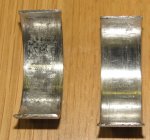
Here is a photo of a big-end taken from a Volvo D2 40 around five years ago. The lead-tin overlay is mostly intact but a small area bottom left has flaked off, revealing the copper-lead beneath.
 

Attachments

  • Big end bearing.jpg
    Big end bearing.jpg
    851.3 KB · Views: 11
Iro


You need to read the Blackstones advice about wear metals, obviously I've been involved in cross checking FAA and CAA reports for various aircraft gearboxes and engines. If you ask any big rig or diesel train driver what the Iron is about in their UOA which they all do to figure out when to change the oil, they should know, although for some reason the UK is behind the curve in failing to use oil labs.

IRON is the main element in steel, it is by far the best general wear indicator because it tracks engine hours. I pay a lot of attention to keeping it as low as possible which oddly enough often means using the oil for longer, as a dirty oil filter is more efficient than a clean one, and the detergents in the oil are a tad too agressive when the oil is first changed.

Apart from Lead, the worst thing to have the lab report is a high level of anti freeze and water in the oil. If you have a dodey head gasket, and it's warm, then flush out the coolant and just use filtered rain water and cheap soluble oil, (Machine oil), to prevent corrosion. The water in the oil tends to evapourate so is less of a concern.
Fuel contamination from a bad injection pump or lift pump seal is not good news. More than 2% is not good in long term wear terms, 5% is the change the oil ASAP limit. It can also be from bad rings or too much time at low power, BUT you also get a high Carbon figure if it is. Carbon is the main element in oil sludge, and if you see it at the start of a drain or pump out, the oil and filter need changing more often.

The only bearing in a diesel that has Lead in it is the mains, so if all is well it should be close to zero. If the mass spectrograph results show more than 5 ppm I start to get interested in using a thicker oil and one that has a higher level of Zinc based additive. The 16 ppm in a UOA of the old BMC 1500 was about the highest I've ever seen. The crankshaft specialists D & R James Engineering Ltd in Poole did a good job of a full rebuild for 650 quid, BUT then damaged the top of the coolant tank and bodged the repair. I got the Beta dealer to do that repair correctly and then won a local court case for 200 quid, as D & R James refused to pay for the repair. One of my sponsors then decided to pay for a new BETA 30. Pity he did not say that at the start as I wasted a bunch of time rebuilding the old BMC.

If an engine is under warranty, use the correct BETA oil and filter, out of warranty use a major brand oil with the correct API/ACEA regs. By major brand, I mean Castrol, Mobil, Shell or Liqui Moly. Liqui Moly also make good oil and fuel additives that do exactly what is says in their description. I've used them a few times for old problem diesels.

Apart from using the best oil and filters, and used oil labs to figure out when to change it, fitting heat pads, (I use Wolverine as they make a real good range of 12 or 240V stick on heat pads), to warm up the oil makes a very big difference if your engine bay is not heated in winter. Cold starts are a real main block killer, so I try to avoid them.

PS: If you are overseas and imported oils are too expensive, just use the local most poular oil that the truck or bus company use. For example I just used Cepsa SAE 30 for hot weather in the Cannery Islands. Single grade oil last longer than multigrades as the multi grades have to use VI's, (Viscosity Inhibitors), to thin the oil when cold, but alas they also weaken it in terms of high temp shearing that thins the oil. So it needs changing more often than single grades. You can get SAE 40 and 50 in hot countries.
I met a guy on a steel boat a few years ago up the Guadiana River, he had a pseudo American accent which varied with the amount of sherbets consumed. Reckoned he flew Hueys in Vietnam, had thinning hair tied in a pony tail, in his early sixties. Was a motormouth with weird views. Said Americans never went to the moon, Covid was a conspiracy, wouldn’t moor off Alcoutim because the cell towers were propagating stuff into your brain. Last lived in California. His “views” shall we say were “entertaining” ?
 
I met a guy on a steel boat a few years ago up the Guadiana River, he had a pseudo American accent which varied with the amount of sherbets consumed. Reckoned he flew Hueys in Vietnam, had thinning hair tied in a pony tail, in his early sixties. Was a motormouth with weird views. Said Americans never went to the moon, Covid was a conspiracy, wouldn’t moor off Alcoutim because the cell towers were propagating stuff into your brain. Last lived in California. His “views” shall we say were “entertaining” ?

mmm met a few of those in Southern States !!
 
Ill-informed nonsense as usual. I was involved in Ferrography and oil debris particulate analysis for years . All diesel engines to my knowledge have copper-lead main and big-end bearings. I used to investigate truck engine big-end condition regularly.
Iron in oil comes from steel on steel contacts, maybe gears but most commonly cams and tappets. SEM analysis gives the composition so easily determined

Most labs charge extra for particle count analysis if it's done correctly. Blackstones only charge 30 usd a basic UOA and call if the results are real bad. You need to get a VOA of the oil used to figure out if there are Copper compounds in it to act as an anti foaming agent. Cu is a trace element in lots of different bearings, and along with the way it does not track engine hours, it's a confusing wear metal. HIGH IRON IS A GENERAL WEAR METAL THAT DOES TRACK HOURS. I too associate it more with cylinder and top end wear, BUT without the universal average figures for the exact engine, it's tough to define a limit. The BMC Iron figure was still below 50 ppm which was good news. If the mains are bad, any bearing associated with the crank will also wear. You are correct about the timing chain and gears, as they will show high Iron if wearing.
Blackstones make a lot of noise about trends being important, which they are, but one single UOA can tell you a lot about the engine and oil, but I always get one done to get an trend and to allow me to experiment with different oils.

Liqui Moly are an interesting oil company that have a radiometric oil lab that can count actual particles whilst the engine or box is bring tested, (Zeppelin ZF have a much better oil lab to do that). That way they can test a new oil live, although the engine has to be made slightly radio active first, otherwise what is in effect a geiger counter can't count each particle. I used to live near to the ZF oil lab. LM are world leaders in the all important oil additives included in an oil, but I've tested a few of their add on oil additives and service products in turbo diesels, and CERATEC is one first class additive that does exactly what they say. It contains 200 ppm of Moly, (Often not needed and can cause corrosion in some bigger diesels), but also has Boron Nitride in hexagonal form. Bn is an upper cylinder lubricant but the better version of it in Ceratec gets into crevice corrosion and pitting in an old engine where it then helps reduce the general wear. It's about the only oil additive that produces reliable results, assuming you are using a good oil of the right viscosity in the first place. Don't use it during warranty as it's easy to detect in used oil.
Here is some more info from Blackstones that is worth reading:
Feb-19-AC.pdf (blackstone-labs.com)

PS: Blackstones do post free test kits:
Free Test Kits | Blackstone Laboratories (blackstone-labs.com)

PPS: If you look at the Liqui Moly main web site contacts page, it's possible to ask for an engine specific recommendation. The reply is always a good one and they often point out that some non turbo diesels should not use a German standard full synthetic, as it can be too good at cleaning a block. Alas that can result in oil leak issues in a very few cases. So make 100% sure you ask them first before using one of their expensive oils. Good news is that convential oils are cheaper, as they recommended Liqui Moly Nova or Touring 10W50, which is about 30 quid for 5 liters. I've used LM Synthoil 5W40 for tubo diesels in the past, BUT it costs 60 quid for 5 liters! Oddly enough I compared it with Shell's best oil, Ultra 5w40 and got almost exactly the same UOA, (Used oil analysis), results. Ultra costs about 40 quid and does not have any crude oil derived contents as it is a GTL, (Gas To Liquids), base stock from natural gas liquifaction byproducts. Do be careful of copies a they abound in the UK, so make sure it does not say, "Ultra professional", as it's a bad junk oil made from a Bulgarian base stock and almost no inclusive additives. OK for an old low compresion tractor diesel but nothing else.
Contact us | LIQUI MOLY (liqui-moly.com)

ALWAYS ASSUME ANY OF MY POSTS ARE ILL INFORMED NONSENSE from a lunatic that knows nothing about safety, diesels or anchors in particular !!
If you are buying a new diesel for your pride and joy, think about getting a keel cooled version, as they are more reliable and easier to maintain. All offshore lifeboats and any ice worthy boats have keel cooling. Quite why anyone thinks that suck and spit cooling makes sense I don't understand, but there again I don't understand why boats are built that can be sunk by knocking a small hole in them !!
 
Last edited:
Most labs charge extra for particle count analysis if it's correct correctly. Blackstones only charge 30 usd and call if the results are real bad. You need to get a VOA of the oil used to figure out if there is Copper compounds in it to act as an anti foaming agent. Cu is a trace element in lots of different bearings, and along with the way it does not track engine hours, it's a wear confusing wear metal. HIGH IRON IS A GENERAL WEAR METAL THAT DOES TRACK HOURS. I associate it more with cylinder and top end wear, BUT without the universal average figures for the exact engine, it's tough to define a limit. The BMC Iron figure was still below 50 ppm which was good news. If the mains are bad, any bearing associated with the crank will also wear. You are correct about the timing chain and gears, as they will show high Iron if wearing.
Blackstones make a lot of noise about trends being important, which they are, but one single UOA can tell you a lot about the engine and oil, but I always get one done to get an trend and to allow me to experiment with different oils.

Liqui Moly are an interesting oil company that have a radiometric oil lab that can count actual particles whilst the engine or box is bring tested, (Zeppelin ZF have a much better oil lab to do that). That way they can test a new oil live, although the engine has to be made slightly radio active first, otherwise what is in effect a geiger counter can't count each particle. I used to live near to the ZF oil lab. LM are world leaders in the all important oil additives included in an oil, but I've tested a few of their oil additives in turbo diesels and CERATEC is one first class additive that does exactly what they say. It contains 200 ppm of Moly, (Often not needed and can cause corrosion in some bigger diesels), but also has Boron Nitride in hexagonal form. Bn is an upper cylinder lubricant but the better version of it in Ceratec gets into the crevice corrosion and pitting in an old engine where is then helps reduce the general wear. It's about the only oil additive that produces reliable results, assuming you are using a good oil of the right viscosity. Don't use it during warranty as it's easy to detect in used oil.
Here is some more info from Blackstones that is worth reading:
Feb-19-AC.pdf (blackstone-labs.com)

PS: Blackstones do post free test kits:
Free Test Kits | Blackstone Laboratories (blackstone-labs.com)

PPS: If you look at the Liqui Moly main web site contacts page, it's possible to ask for an engine specific recommendation. The reply is always a good one and they often point out that some non turbo dieaels should not use a German standard full synthetic, as it can be too good at cleaning a block. Alas that can result in oil leak issues in a very few cases. So make 100% sure you ask them first before using one of their expensive oils. Good news is that convential oils are cheaper.
Contact us | LIQUI MOLY (liqui-moly.com)

ALWAYS ASSUME ANY OF MY POSTS ARE ILL INFORMED NONSENSE from a lunatic that knows nothing about safety, diesels or anchors in particular !!
The one incontrovertible rule about oil particle analysis is that it should never be used as a one-off condition indicator. Particle counts are influenced by many factors that may give confusing results. The technique should be used for trend analysis only.
 
The one incontrovertible rule about oil particle analysis is that it should never be used as a one-off condition indicator. Particle counts are influenced by many factors that may give confusing results. The technique should be used for trend analysis only.

I thought about highlighting same - then decided not to ....

Too often people lose sight of trend rather than single definitive.
 
OFF TOPIC WARNING

mmm met a few of those in Southern States !!

I flew with a few old timers who had a lot of B52 hours, but the ex Nam chopper pilots did like their Southern Comfort too much on occasions. Sad the US lost 500 chopper pilots in Nam. Some of the ex Nam choppers are still flying. Alas for many in the lost 500 pilots list, none of the choppers were bullet proof if it was a Chinese heavy machine gun round. I'd sure like to sail to Nam one day and go for a tour of the old tunnels and wrecks. Great country with lovely beaches and a real future if the military Mafia don't fork things up and get too greedy. Seen some real nasty chopper crashes over the years, although their crumple zone, seat belt pullers and frontal air bags, along with fire surpression systems have made a huge difference in crash survivability terms.
 
OFF TOPIC WARNING


I flew with a few old timers who had a lot of B52 hours, but the ex Nam chopper pilots did like their Southern Comfort too much on occasions. Sad the US lost 500 chopper pilots in Nam. Some of the ex Nam choppers are still flying. Alas for many in the lost 500 pilots list, none of the choppers were bullet proof if it was a Chinese heavy machine gun round. I'd sure like to sail to Nam one day and go for a tour of the old tunnels and wrecks. Great country with lovely beaches and a real future if the military Mafia don't fork things up and get too greedy. Seen some real nasty chopper crashes over the years, although their crumple zone, seat belt pullers and frontal air bags, along with fire surpression systems have made a huge difference in crash survivability terms.

My Father was required to train for Helicopters when I was young ... he was Senior Flight Operations Inspector, UK CAA. He hated it and reckoned Heli's were an accident looking for a place to happen.
Bristow- a family friend - put aside one of his best pilots to teach my Father at the old Beehive, Gatwick Airport. I still have 8mm cine of him flying.

Myself ? I often had Heli rides out to ships in various areas of the world ... in Iraq / Iran conflict - got to experience a Bolkow in full combat mode .... boy did I feel strange when we landed !!

Republic Helicopters - Texas :>

61Jr26Fl.jpg


vB5EulYl.jpg


0oVC4a6l.jpg
 
Some of the ex Nam choppers are still flying.

A US pilot who started flying on the last day of the war would be nearly 70 now so there can't be many left. 70 is beyond the age of commercial heli piloting & pushing it for private pilots because of the medical. I'd be pleased to still have my heli pilot's license at 70, but accept that I probably won't.
 
BACK ON TOPIC, with a car if it is a sludge monster you can drain it then flush with diesel fuel, turn over by hand, fill with real cheap oil and drain again to get the diesel out, BUT for a proper job clean out the sump needs to be removed and the oil pump intake cleaned. Alas you can't do that with a marine diesel, so if it's not under warranty Liqui Moly make a pre oil change flush that I've used to sort out the odd marine diesel:
Pro-Line Engine Flush | LIQUI MOLY (liqui-moly.com)

That additive must be used according to the instructions, DO NOT USE THE ENGINE until the sludge has been removed and a new oil and filter fitted. That flush costs about 15 quid. If it's not too bad and the old oil just a bit too gooey with the odd lump, CHANGE TO A HIGH DETERGENT OIL and reduce the OCI, (Oil Change Interval), to half that that caused the sludge. Make sure the new detergent oil has plenty of detergent additives, (3K ppm), and is made by a major brand like Castrol, Mobil, Shell or Liqui Moly. It's hard to find the actual detergent figures, but the PDS, (Product Data Sheet), might have a TBN, (Total Base Number), and that needs to be above 8. Diesel only oils like Acea B4 or API equivalent often have more detergents, so you are looking for a truck or tractor oil like Mobil Delvac, (4K ppm of Calcium and TBN of 14).

Oil filters are very important and should be changed at least every 2 years, perferably annually, as the seals can rot , start a leak and even dry out to the point where the block face starts to corrode. The best oil filters are Mobil 1 Synthetic long life ones, but there might not be an equivalent for an older engine. In the UK or EU just stick to the OEM one, or Bosch, Mann or Hengst, all made in Germany. Forget the Halfrauds special. Don't buy oil filters from Fleabay or Amazinzone unless you take a real good look at the genuine article, as there are a bunch of copies around. The internal elements do not have even or zig zag, (Slightly more efficient), pleats and are often missing the box. Once you have got rid of the sludge, think about doinf 2 for 1 oil & filter changes like Yanmar list. The results in UOA terms should improve unless it's a Mobil synthetic oil filter, when it makes no difference.

Apart from using bad oil and filters, sludge can be caused by worn injector tip and poor compression resulting in blowby products getting past the rings and valve guide oil seals. Although using a thicker oil might help, (Change fro an SAE 30 to 10W60 in a real bad case), make sure the injectors are cleaned every few years with Liqui Moly Purge, alas it's not a fuel additive, (Try not to use them), but a serice product that has to be used exactly as the instructions says or it will not work:
Diesel Purge | LIQUI MOLY (liqui-moly.com)

Note both the Diesel Purge and flush are not additives but service products, so I doubt if they would invalidate the warranty, and most Bukh diesels can use full synthetic high detergent oils, like an 0W30 that is required to allow them to start in the Artic. If you use a normal SAE 30 in the Artic or even just below 0C you could find it real bad news, IF, the engine starts. The result will be a very high initial oil pressure, a filter is bypassed as the relief valve opens and some serious extra wear each start. The best solution to cold starts is not a multigrade, but heat pads like the Wolverine series or even a small safe heater in the engine bay. German doctors car that are on standby use a full coolant heater, but they are a nightmare to fit, but allow full power after start and their system for the Volvo and Merc SUV's even keeps the windows ice free and the cabin nice and toasty.
Engine Heater Pads for sale | eBay
 
OFF TOPIC
A US pilot who started flying on the last day of the war would be nearly 70 now so there can't be many left. 70 is beyond the age of commercial heli piloting & pushing it for private pilots because of the medical. I'd be pleased to still have my heli pilot's license at 70, but accept that I probably won't.

You can fly until you fail the medical if the operation is not defined as an airline one. Even if you need an FAA ATP or CAA/EASA ATPL it's still possible to fly business jets until you fail the annual medical. If all else fails, (Not too sure if I can still pass the hearing test), there are some countries that will accept older pilots flying military registered aircraft, although they will expect you to try and get an FAA class 2 first. Not so easy if the medial folks know you are the only captain required, but luckily if I go back to flying for a crust or just the fun of the job, I will be flying with 2 captains for sure, and often 3 or 4 pilots total as I would only fly surveillance aircraft or systems flight testing.
 
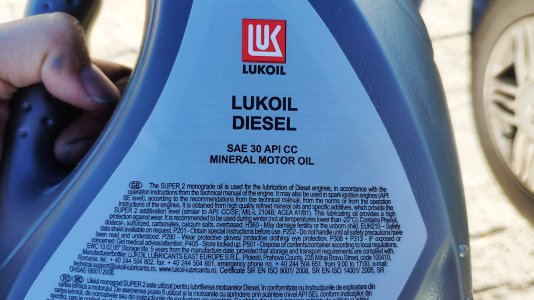
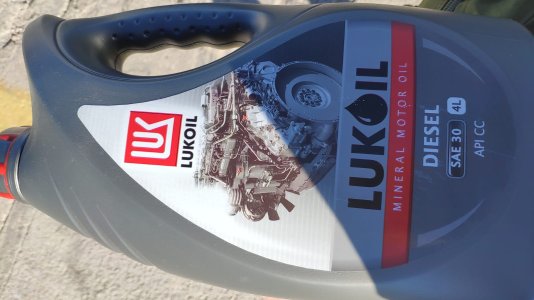
Hi guys! Does anyone use same oil for engine and gearbox? It's about dv20 and saildrive.. i found this monograde oil and curious can I use it for my saildrive as well..
 

Attachments

  • IMG-20200904-WA0008.jpg
    IMG-20200904-WA0008.jpg
    191.5 KB · Views: 5
  • IMG-20200904-WA0007.jpg
    IMG-20200904-WA0007.jpg
    129.5 KB · Views: 5
Hi guys! Does anyone use same oil for engine and gearbox? It's about dv20 and saildrive.. i found this monograde oil and curious can I use it for my saildrive as well..
IF IN DOUBT, READ THE INSTRUCTIONS FOR THE EXACT TYPE OF ENGINE AND GEARBOX, Some manual gearboxes like the old BMC use the same oil for their gearboxes, but some like the more modern Yanmars do not.
Also do yourself a big favour if you want a block to last and use the best oil and filters available. In my opinion that means if the dealers Bukh oil is too expensive then look up the required API ratings for engine and box, then select an oil made by a real good major brand oil company like Castrol, Mobil, Shell or Liqui Moly. API do not checks oils sold in the UK or EU, so if you use a cheap junk oil like LUKOIL it can be out of specification. It's also a good idea to look at the required viscosity vs start temperature graphs for a Bukh, as the vary from an 0W30 in the artic to a 20W50 in the summer etc. Apart from the quality of oil and filters, try to avoid cold starts by heating the engine bay or using heat pads on the sump.
 
so if you use a cheap junk oil like LUKOIL it can be out of specification.

Really ? You sure about that ?

Lukoil is one of the largest Russian International Oil Companies - its products are up with the very best in the world.

Their subsidiary's own some well known Refinerys in EU and around the world.

As to API - correct that API are not directly certifying UK products - but their specifications are on par with BS-EN / GOST / EU etc. In fact API specs on many levels have been copied over to other standards as have BS-EN etc.

Lukoil products are not cheap recycled or supermarket products.
 
IF IN DOUBT, READ THE INSTRUCTIONS FOR THE EXACT TYPE OF ENGINE AND GEARBOX, Some manual gearboxes like the old BMC use the same oil for their gearboxes, but some like the more modern Yanmars do not.
Also do yourself a big favour if you want a block to last and use the best oil and filters available. In my opinion that means if the dealers Bukh oil is too expensive then look up the required API ratings for engine and box, then select an oil made by a real good major brand oil company like Castrol, Mobil, Shell or Liqui Moly. API do not checks oils sold in the UK or EU, so if you use a cheap junk oil like LUKOIL it can be out of specification. It's also a good idea to look at the required viscosity vs start temperature graphs for a Bukh, as the vary from an 0W30 in the artic to a 20W50 in the summer etc. Apart from the quality of oil and filters, try to avoid cold starts by heating the engine bay or using heat pads on the sump.


You have very well entrenched and, may I say, dogmatic, views on lubricants and engines.

My experience, lots of it, it from antiques like Veteran hot tube ignition petrol engines that needed very special aromatic fuel, through petrol, diesel and methanol fueled engines for racing, leads me to believe that although lubrication is of primary importance, some engines, like the Bukh marine range, are VERY tolerant of less than ideal oils.

The last motorcycle I restored professionaly was a 1913 AJS. It was still using its OE cast iron piston - I dont expect you even knew such things were ever used - I replaced the simple bronze bushes in the big end and timing side main, which I 'knocked up' on my lathe and polished internally to size using a lap, only the drive side main was loose balls in hardened tracks. The lubrication system was, as a wag once stated "entirely external splash". This WAS incorrect, it had a drip feed, boosted by a tank mounted hand pump, which shot oil directly in front of the revolving con rod. Excess was shot up the bore by the internal rotating bits and pressure from the cylinder/piston clearance which turned oval and increased quite dramaticaly around the exhaust port when hot.

Despite these considerable shortcomings, in 1910 an AJS factory special won the IOM TT at about 50MPH average. The engine was the base for the one I restored.

I am wondering what the oil lab would have made of an oil sample from that engine......................................................
 
Top