bronze skin fittings Qs

  • Thread starter Thread starter vas
  • Start date Start date

vas

Well-Known Member
Joined
21 Jun 2011
Messages
8,200
Location
Volos-Athens
Visit site
Dear all,

Finishing soon with the paint stripping on top of MiToS and got to continue with the hull. I got over a dozen skin fittings some are dangerously orangy in colour so thinking of replacing the lot... Due to rearranging the whole layout, half of them are going to change placing anyway.

Only managed to find brass and ss fittings down here.
I understand that for sea use I should really be getting DZR bronze ones but I'm worried what I'll end up getting down here, so looking for a reasonably priced, reputable chandlery that has a decent webpresence for me to mail order what I need (don't want US for tax reasons).
I've used (and I'm very happy with them!) coastalrides.co.uk before, but they don't seem to have what I want :(

Looking for:
2X2inch engine intakes,
strainers - unless I can get away without them! What do the experts think?
intake for the genny,
2X for the heads,
anchor wash,
aircon
extra one for when I fit a watermaker

that's 8bleeding skin fittings!

can I do some hole cutting economy by using one intake for both heads?

There's obviously a matching # of outlets was thinking of going plastic on them, OK or no-no?

any ideas welcomed

V.
 
Last edited:
Second ASAP. They will send things out to Greece without any problems.

ASAP are good as are Aquafax.

You should think about Marelon plastic ones too.

DZR is not bronze, its a variation of brass with added tin, I've got bronze skin fittings are DZR ball valves and hose tales.
 
thanks for all the pointers, I'm still slightly lost, although it's clearing up a bit.
Main problem is that bronze and brass have the same translation in Greek and chandlers down here don't bother differenciating/clarifying. So I'm scared to get anything locally tbh.

Anyone care to comment on the size of engine water intake that I should have for 7lt 330hp iveco engines?
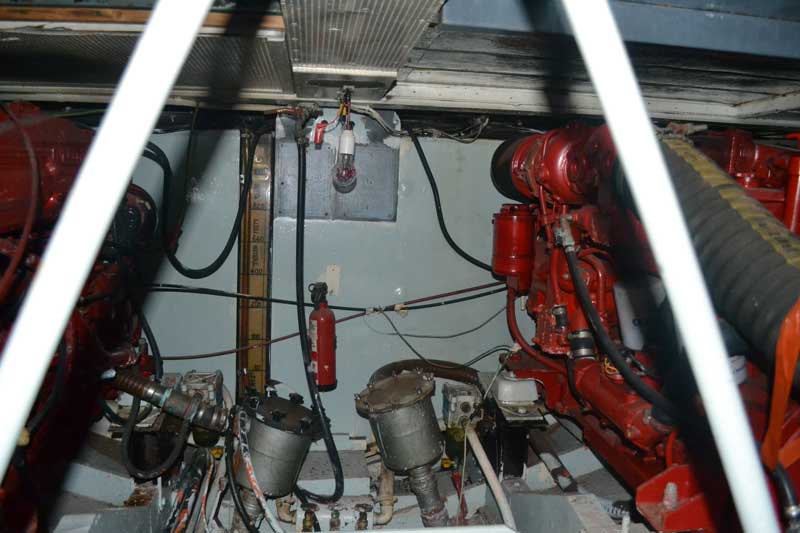
I'm only asking as the installation according to LS is not the best in the world so I wonder if it needs to be 2inch intakes or if I can get away with 1 1/2 as due to the hull slanting and hole placement the two strainers are fitted the one lower than the other to make it all fit.
ATM I seem to have 2inch intakes with a combo of brass skin fitting (I say as it's turned carroty), ss sea cock, crappy tin large strainer with corroded ss filtermesh in it. To me it seems like a recipe for disaster.
engine_room.jpg


and a closeup

engine_water_intakes.jpg


So I was wondering if I could use 1.5inch intakes and match them with a fisherman water strainer type thing that is around 3inch wide compared to the wide ones I currently have installed. Or best fit a Y strainer and tidy the area up nicely.

Opinions?
 
Don't know about the size of intake required - that depends on the waterflow requirements of the engine, so guess you need to check with the engine builder.

The more common set up now is to have water filters/traps above the waterline immediately above the through hulls. Bronze through hulls and DZR ball valves. I know the problem in Greece which is why I bought valves for my boat in the UK so I was sure of getting DZR.

You can see schematics in the Vetus catalogue www.vetus.com but ASAP also do similar water filters. The advantage of having them above the waterline is that you can clean the filter without shutting the valve, and if necessary, rod the hose and intake if it gets blocked.
 
thanks Tranona,

I've figured out a nice setup with bronze skin fitting and dzr seacock (only it's not available in 2inch...)
Placing the strainers above waterline is I'm afraid a no go, as waterline is approx level to the top of this small extinguisher, ie need another 20-30cm!
I'll skip that and opt for a thinner intake grille.

I actually wonder if strainers are necessary in clear Med waters, I guess you need them in case something unexpected is collected, hasn't happened yet but you never know...
Hence I'm toying with the idea of smallish (in volume) Y-strainers with proper non-leaky caps. Had a hell of a job trying to seal the 150mm wide, thick perspex cover of my strainers with sticky fly nuts and hardened rubber seals. Eventually had to clean all surfaces, discard the seal, apply instant rubber seal thing and tightening them up.

cheers

V.
 
Looks like you have plenty of space for strainers on the bulkhead above the fire extinguisher.

Yes, you do need strainers - I regularly cleaned mine when the boat was in the Med.

You can get bronze strainers that mount directly onto the ball valves, but not sure if you can get them bigger than 1 1/2".
 
As I mentioned in the main rebuilt thread, engine intakes are 1.5inch not 2.0inch. I guess they where left in there when they swapped engines.

Good thing is that I found a real chandlery in Pireaus port (decided to stop frequenting the fancy, shinny and v.expensive ones :rolleyes: ) and found decent quality bronze through hull fittings at decent prices.
They guy also insisted on fitting the strainfilters above waterline. I've yet to find one saying its ok to have the strainers down where they are now, so I'll obay and move them up. Mind it's easier as I only have to bolt the hose fittings and job's done.

Regarding the rest of the fittings, I guess I need scoops on the genny intake and possibly on the aircon.
Toilet, anchor wash and watermaker should be plain intakes, correct?

Big Q:
do I "wire" all below water skinfittings to the earth/engine block/whatever???
I'm asking as the bronze 1.5inch skin fittings DONT have washers with a point to bolt an earthing wire, SS ones do have. Do I just pattent some bronze mounts or what?

Also, say 3/4inch skin fitting for the two toilets, do I earth that?
It's only going to be a pipe from there to the toilets (with hopefully a Y fitting in the middle) I'm happy to do it, just not sure I have to.

cheers

V.
 
I understand the general advice on wooden hulls is that bronze skin fittings do not (and should not) be bonded to the anode.

It is very very important to know that you have got bronze not brass.

ETA - Metal Corrosion in Boats by Nigel Warren is very good.

ETA2 - for questions like this of a specific wooden boat nature, woodenboatvb is the best place to ask.
 
Last edited:
Yes, no need to bond to an anode as they are not electrically connected to anything else (assuming you are not using metal pipes!).
 
Hi Virtuvas,

Skin fittings are becoming the next 'issue' or 'get out of jail free card' with insurance pay outs. Last year a yacht sank in the Channel Islands because of a sea-cock failure. Given the yacht was more than five years old and the owner coudn't prove that the sea-cocks had been serviced in accordance with manufacturers instructions, the insurers payout was dismal.

The issue surrounds skin fittings made from the wrong material. I believe any with 617N on them are the current culprits.

I think you'll find the issue to be along these lines - RCD calls for skin fittings to have a 5 year life. After that, you need to be able to show they've been serviced in accordance with etc etc. If not, insurance disappears.

However, to check this out, PM Bandit of this forum who knows far more than I do about this.
 
Yes, no need to bond to an anode as they are not electrically connected to anything else (assuming you are not using metal pipes!).
We had this discussion a while ago so i wont repeat it all, but i firmly disagree. Seacocks are always themselves made of multiple metals which are electrically connected inside the boat (by the ball shaft, which means the ptfe seal's insulating properties are bypassed) and are immersed together in seawater. Therefore a galvanic cell. So they should be bonded to the main anodes in my book. All mine are and i wouldn't have it any other way

This seems to have become an "each to their own" topic rahter than the scientific one it should be, so I'll add "imho" to keep the peace :D
 
We had this discussion a while ago so i wont repeat it all, but i firmly disagree. Seacocks are always themselves made of multiple metals which are electrically connected inside the boat and are immersed together in seawater. Therefore a galvanic cell. So they should be bonded to the main anodes in my book. All mine are and i wouldn't have it any other way

This seems to have become an "each to their own" topic rahter than the scientific one it should be, so I'll add "imho" to keep the peace :D

I have to add my agreement to jfm's. All Play d'eau's skin fittings are bonded as have the fittings been in previous boats I've had. I would add (IMHO!) why run the risk when if a fitting fails the boat will likely sink.
 
We had this discussion a while ago so i wont repeat it all, but i firmly disagree. Seacocks are always themselves made of multiple metals which are electrically connected inside the boat (by the ball shaft, which means the ptfe seal's insulating properties are bypassed) and are immersed together in seawater. Therefore a galvanic cell. So they should be bonded to the main anodes in my book. All mine are and i wouldn't have it any other way

This seems to have become an "each to their own" topic rahter than the scientific one it should be, so I'll add "imho" to keep the peace :D

Except on a wooden boat there is the issue of electrolytic damage to the timber caused by the presence of the metal. In this respect, with wooden boats and bronze fittings I believe best practice is no earth bonding.
 
If your engine has 1.5" intakes then I can't see any need to use 2" skin fittings and filters. I would however definitely mount the filters above the waterline if you can. Bronze skin fittings and DZR ball valves seem the norm these days and ASAP supplies do all of these in various sizes. For me, the jury is out on whether to bond the fittings to the main anode. If they are electrically isolated they should not need bonding although bonding won't do anyharm unless you have stray currents or have chafed wires which might reverse the polarity :eek:. I have bonded the engine intake on our boat but not the heads. The RCD guidelines just say that skin fittings should last at least 5 yrs (which brass usually does). It is not the same as saying they have to be checked or replaced every five years although insurance small print might say different :mad:
 
thanks guys for all points raised!
Some clarifications/points

@keith-i, yes, I'll only be fitting 1.5inch (wasn't clear on my previous post)

@jfm, I do remember carefully reading the thread and discussion on multiple materials and ptfe insulation issues and I now remember that it all made sense to me back then. Got to trace this thread again.

@piers yes, I've read all the scary stories on the 5yo brass fittings used by manufacturers these days. I do have a feeling that some of the fittings on MiToS are as old as the boat (36+...)

@bb, thanks for the pointers, I wonder if the 4-5 coats of west systems epoxy means that this plywood electorlytic damage is not an issue. [of course talking about coating both outside and the double thickness part around the holes] I think I've already read some of that, will have to go back and read them again.


The guys selling these fittings insist they are bronze and they are the first ones that say so (not that it means much). Their ball valves look nickel coated with CW617N printed on them :eek: which according to Piers IS a problem. Looks like on Monday I'll cancel the order for the skin fittings and just get the heavy and expensive to post strainers (again nickel coated). Since I'll be fitting them above WL they can rot as much as they want :rolleyes:
I'll just order the skin fittings/ball valve kit from ASAP, this whole thing is getting me very nervous and I don't like it :(

I wish there was an easy test for brass vs bronze (and a clearly different word for these two in greek :rolleyes: )

thanks for all the insight, I'll come back with further photos of the engine /anodes setup for you lot to laugh at...

V.
 
The guys selling these fittings insist they are bronze and they are the first ones that say so (not that it means much). Their ball valves look nickel coated with CW617N printed on them :eek: which according to Piers IS a problem.

The 617 fitings I saw looked like bronze but weren't. But as I've suggested, do make contact with Bandit of this parish who really knows about this specific issue.
 
Fittings marked with CW617N are brass ( google it ) , generally a red handle identifies it as brass.

Brass is cheap , bronze and DZR are not cheap.

The RCD calls for fittings that last 5 years or more, brass can lst 5 years but not always. when corroded it will go a red colour like a carrot, it will seat and it will leak when in this state the zinc from the alloy is lost and the fitting is porous and weak and can crumble or break in your hand.

Brass should last 5 years but depending on what its connected to it may not, if there are electrical stray currents on the boat or near to the boat they can be significantly weaked in far less time.

I have seen skin fittings break off in engineers hands when he trys to close the valve at under two years on an expensive yacht.

Personally I favour connecting skin fittings and under water components to anodes, VyvCox does not favour connecting bronze fittings but see his website which is full of info
http://coxengineering.sharepoint.com/Pages/Metallurgy.aspx

Use Bronze or DZR, aquafax is a good source if they will export overseas.

Personally I favour seastrainers with a plastic body and spin on clear lids as they are easy to see debris in the filter and dont corrode.
 
Top